Dark and velvety
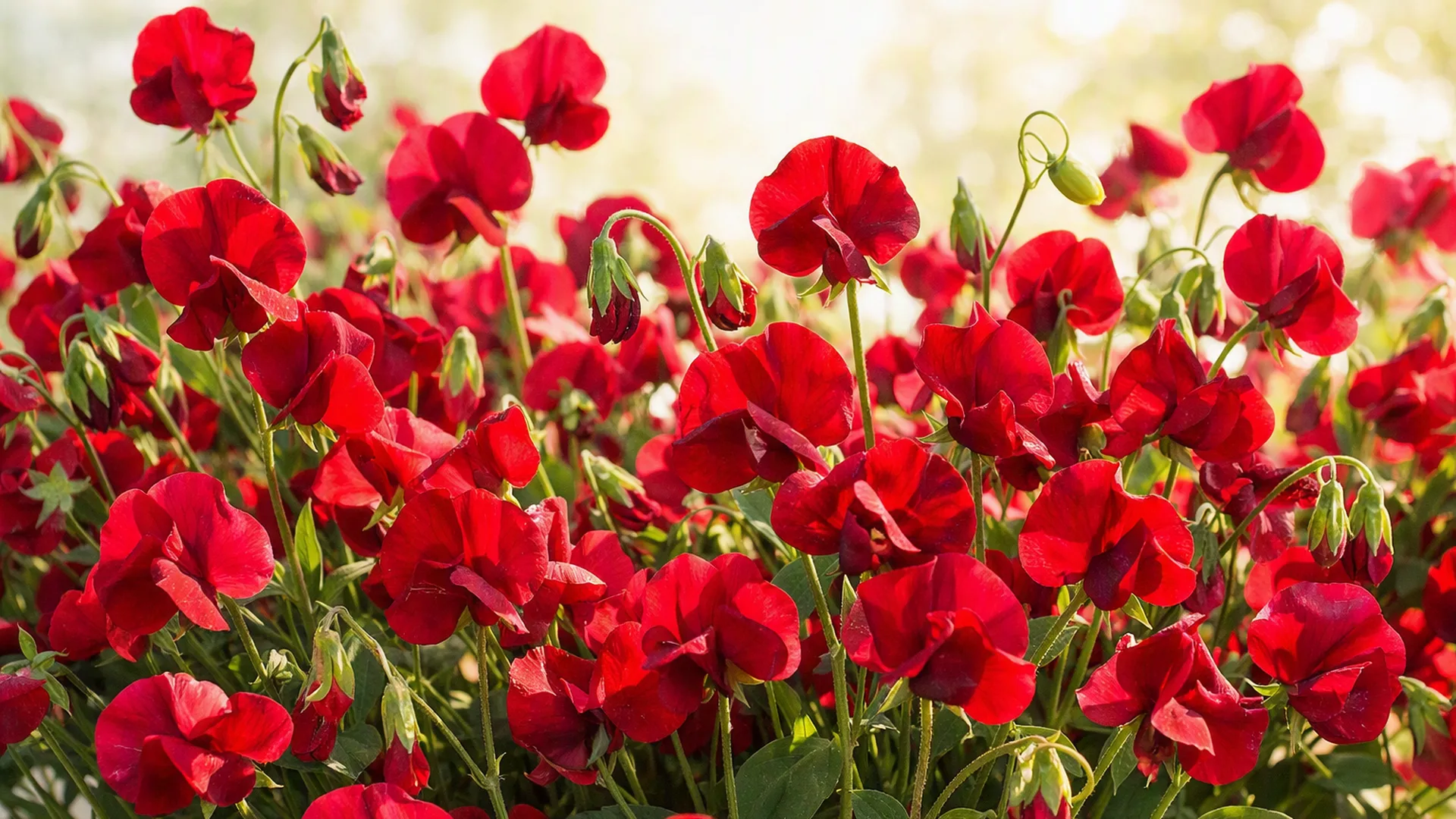
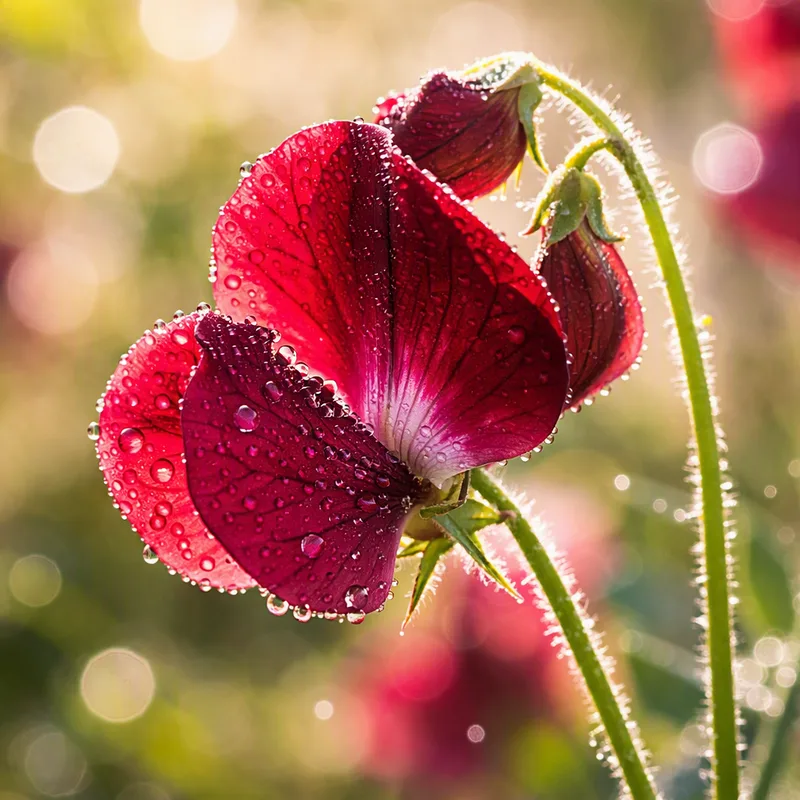
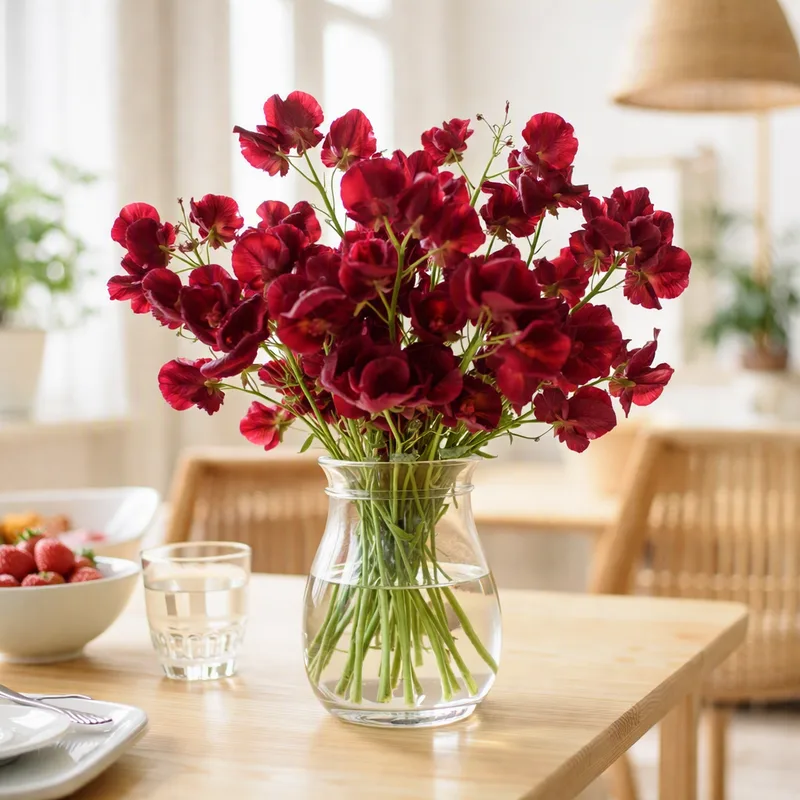
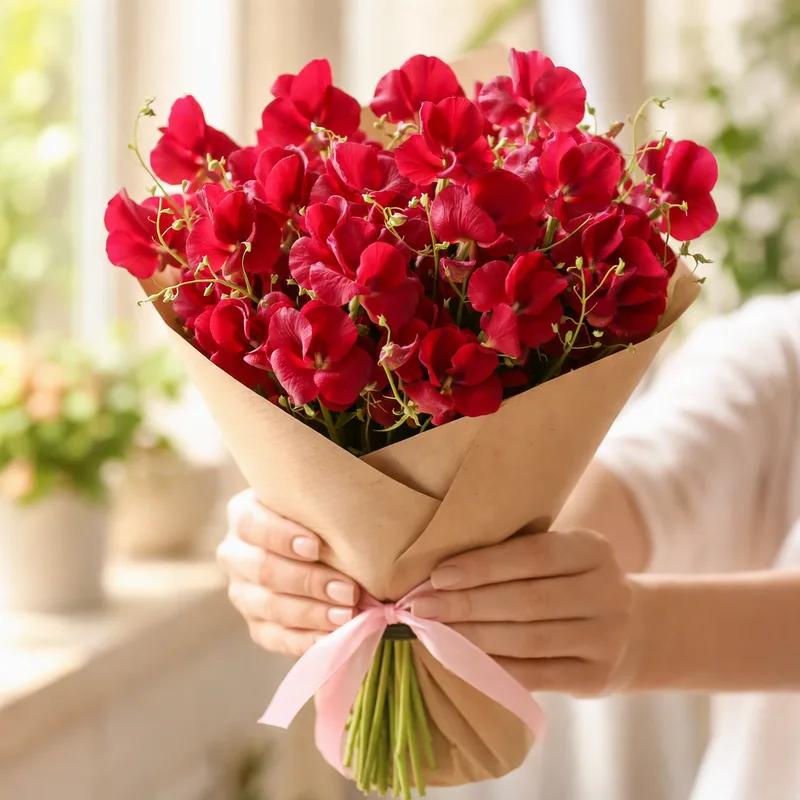
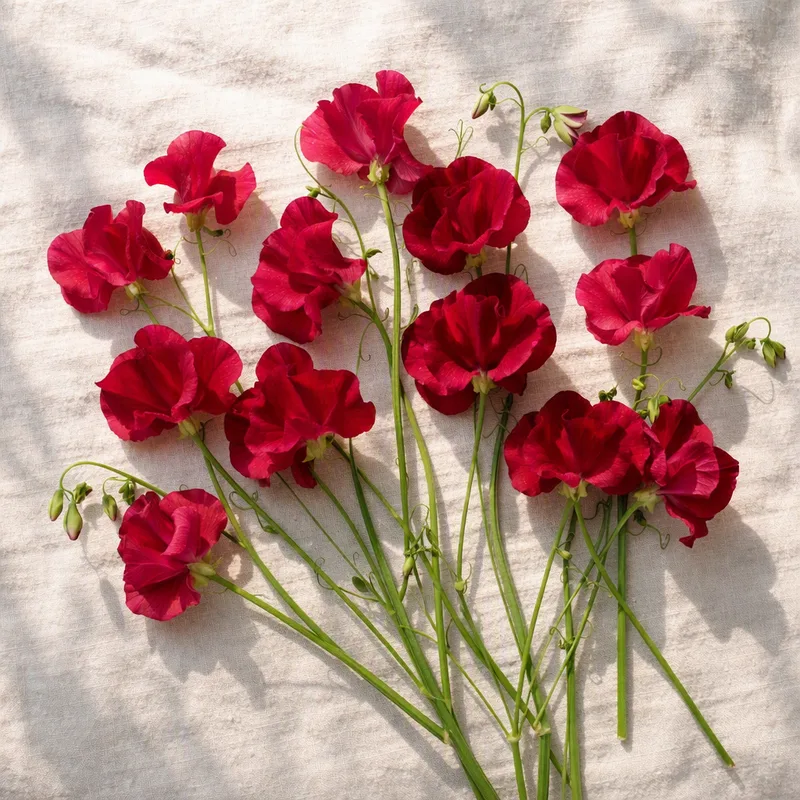
Red in sweet peas rarely means a pillar-box shade. The usual flowers are crimson, cherry, scarlet-orange or dark maroon, with some almost black. Early cultivars noted in the nineteenth century already included red and nearly black forms, so deep colours are part of the plant's long history. 'King Edward VII' is an old crimson variety still offered by specialist seed suppliers.
Colour that lasts
- Strong red can fade or scorch in fierce afternoon sun, so provide a little shade at the hottest time.
- Water at the roots in the morning to stay ahead of the heat.
- Pick often. Plants that set seed lose their vigour and the colour dulls.
- Pair dark reds with white or pale pink sweet peas for a classic jug.
Growing guide
Sweet peas are hardy annuals that climb by tendrils. For British conditions, sow in autumn or late winter under cover, pinch out the tip once there are a few leaf pairs, and plant out into rich soil with canes or netting. Plants can reach one to two metres. The flowering season normally runs from June to August, and some varieties continue into September with regular picking.
Poppies and sweet peas
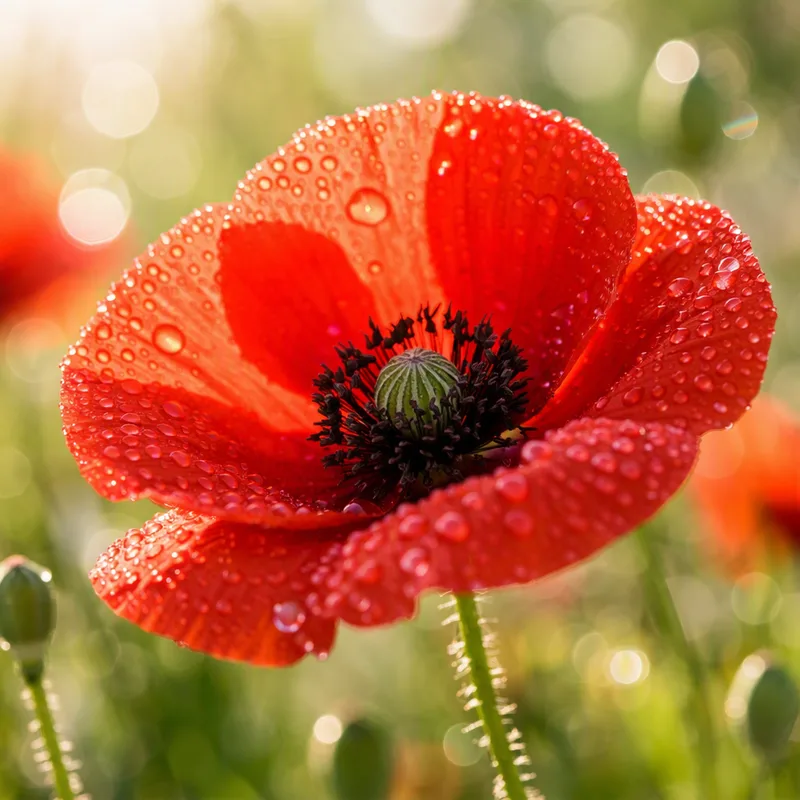
Red flowers are often associated with Remembrance. Poppies are the main November symbol, but a red sweet pea bunch makes a gentler summer tribute for a birthday or anniversary.
Handle with care
The seeds of Lathyrus odoratus are toxic in larger amounts and can cause lathyrism. Keep pods out of reach of children and pets. The ASPCA listing for sweet pea refers to a different plant, Lathyrus latifolius.