Strong colour on a tall spike
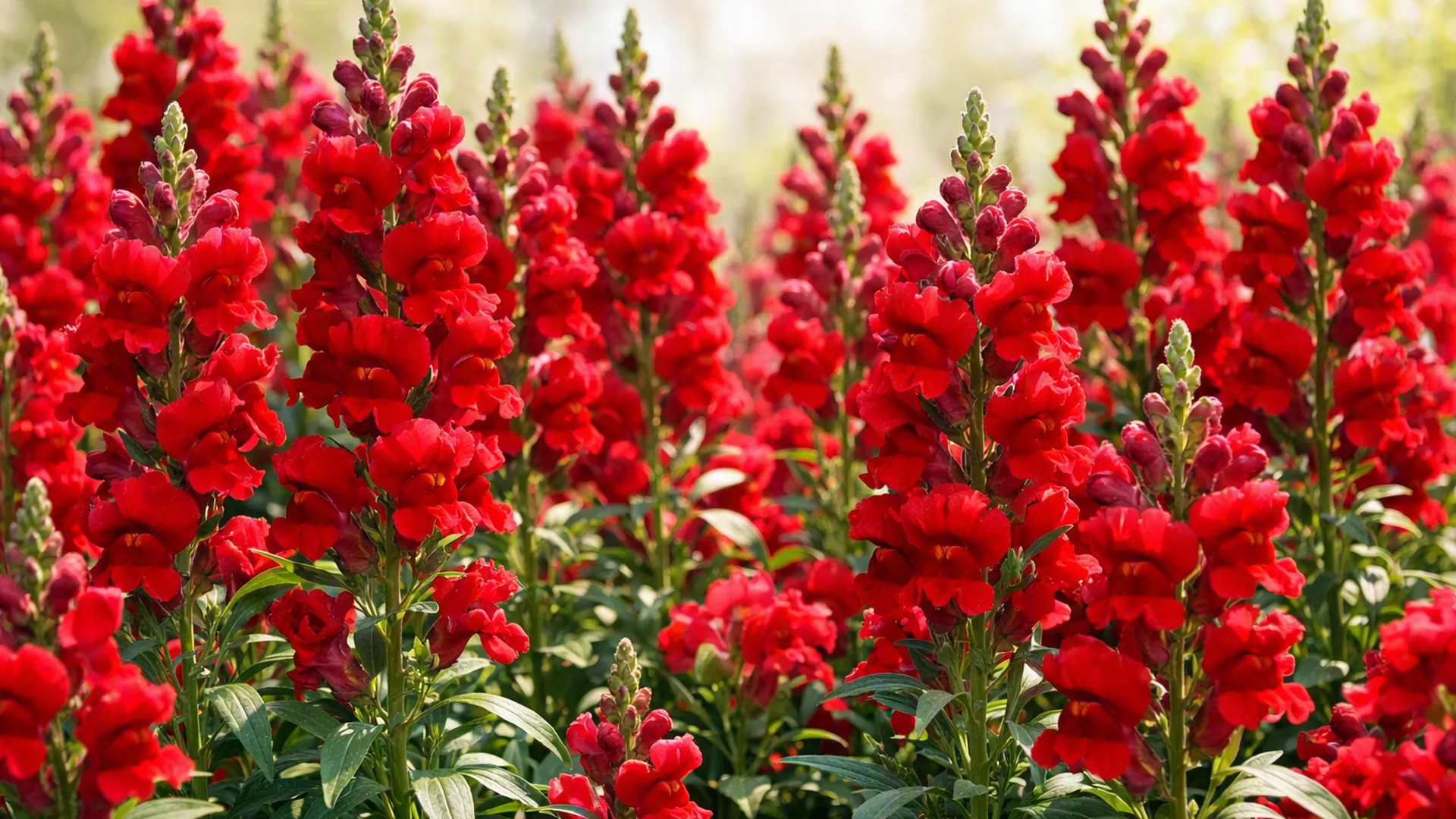
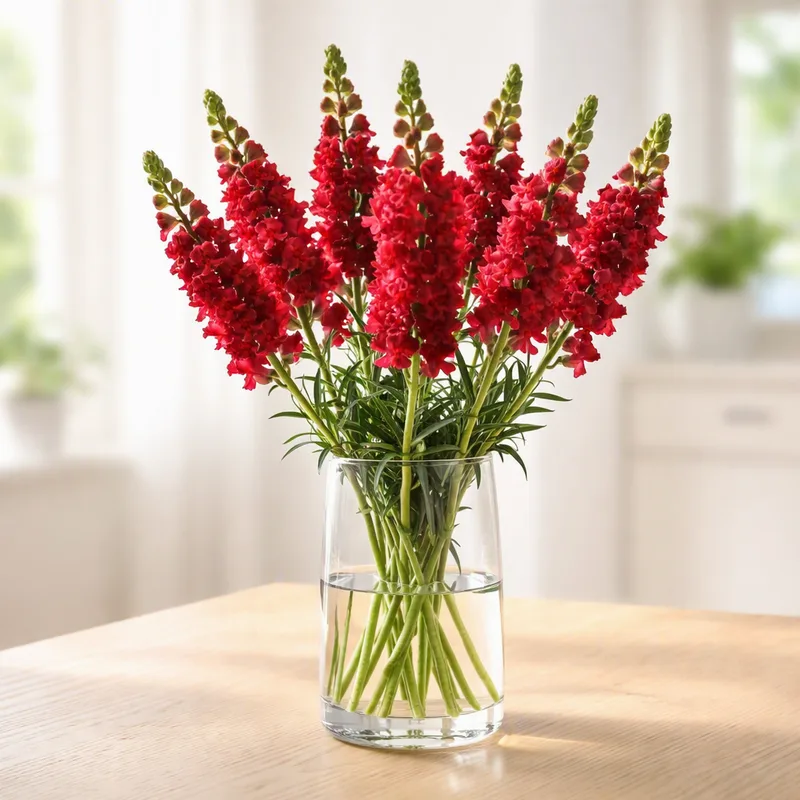
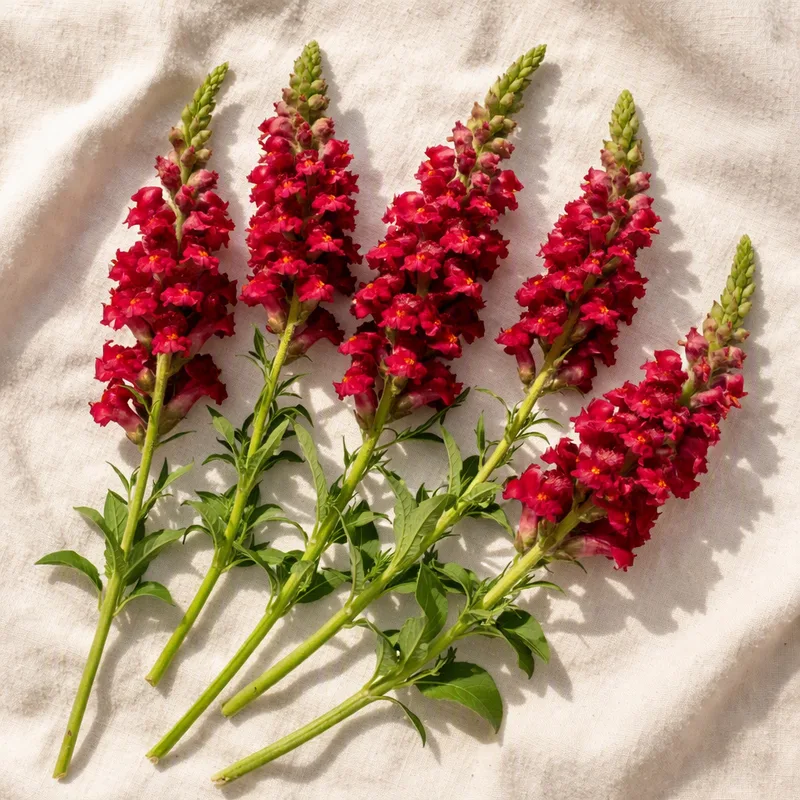
Red snapdragons range from scarlet to deep crimson. The dense spike works as a vertical accent among low, rounded plants, and the colour holds well in full sun. Planting them next to yellow snapdragons or marigolds gives a hot, bright effect, whereas pairing them with silver foliage cools the scheme.
Choosing a red variety
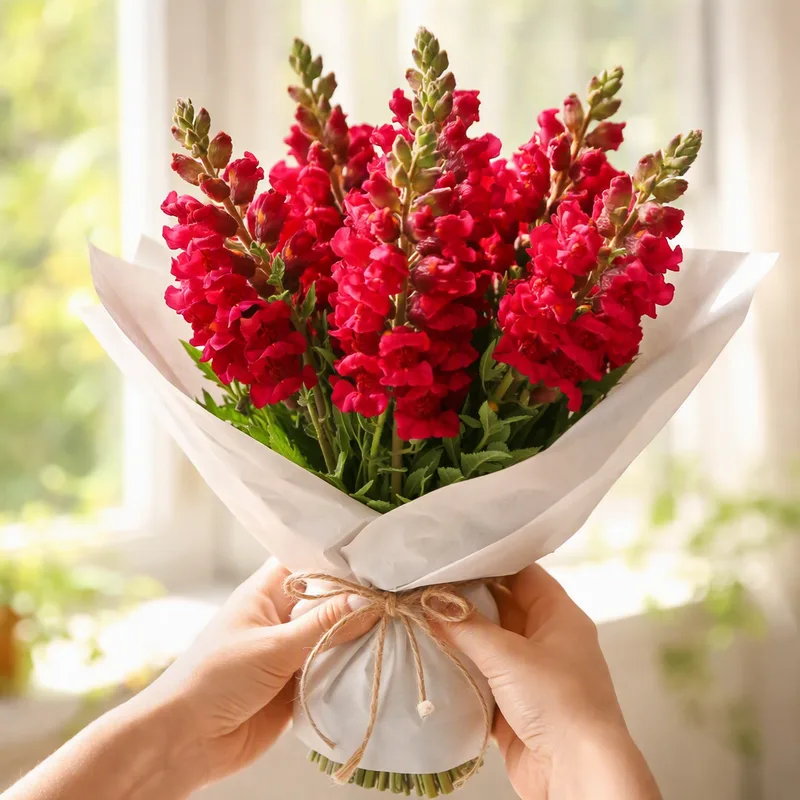
Many seed series are sold by colour, so a red packet is easy to find. Look for rust-resistant types if you have grown snapdragons before and seen leaf spotting. Tall varieties are suited to cutting, whereas dwarf ones stay compact in pots and window boxes. Seed catalogues list dwarf series such as Snapshot, which are bred for compact growth in pots and window boxes.
Growing tips
- Sow seed in late winter and keep it at around 15 to 20 degrees until it germinates.
- Harden plants off before planting out in May.
- Give them sun and free-draining soil, since wet roots rot.
- Deadhead to prolong flowering into October.
- Water the base, not the foliage.
On the chalk downs of southern England, snapdragons enjoy the alkaline soil. In acidic northern gardens, add lime or plant in pots with John Innes compost.
A bumblebee flower
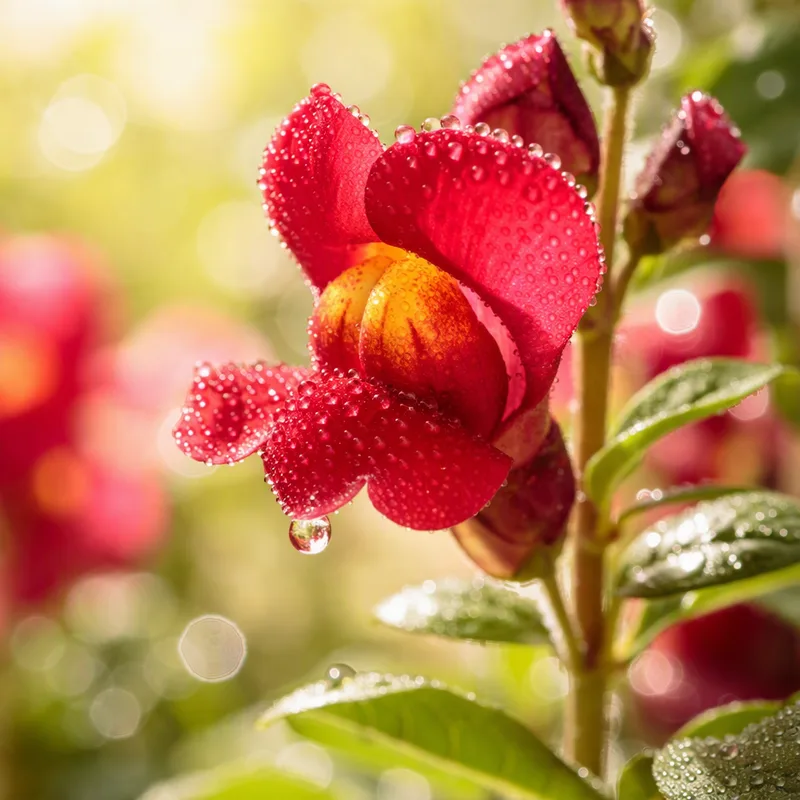
The closed lip acts as a gate. Only strong insects such as bumblebees are heavy enough to push it open and reach the nectar, so snapdragons are valued in wildlife-friendly borders.
Pets
Snapdragon appears on the ASPCA's non-toxic list for dogs, cats and horses.