
Colour from the leaves
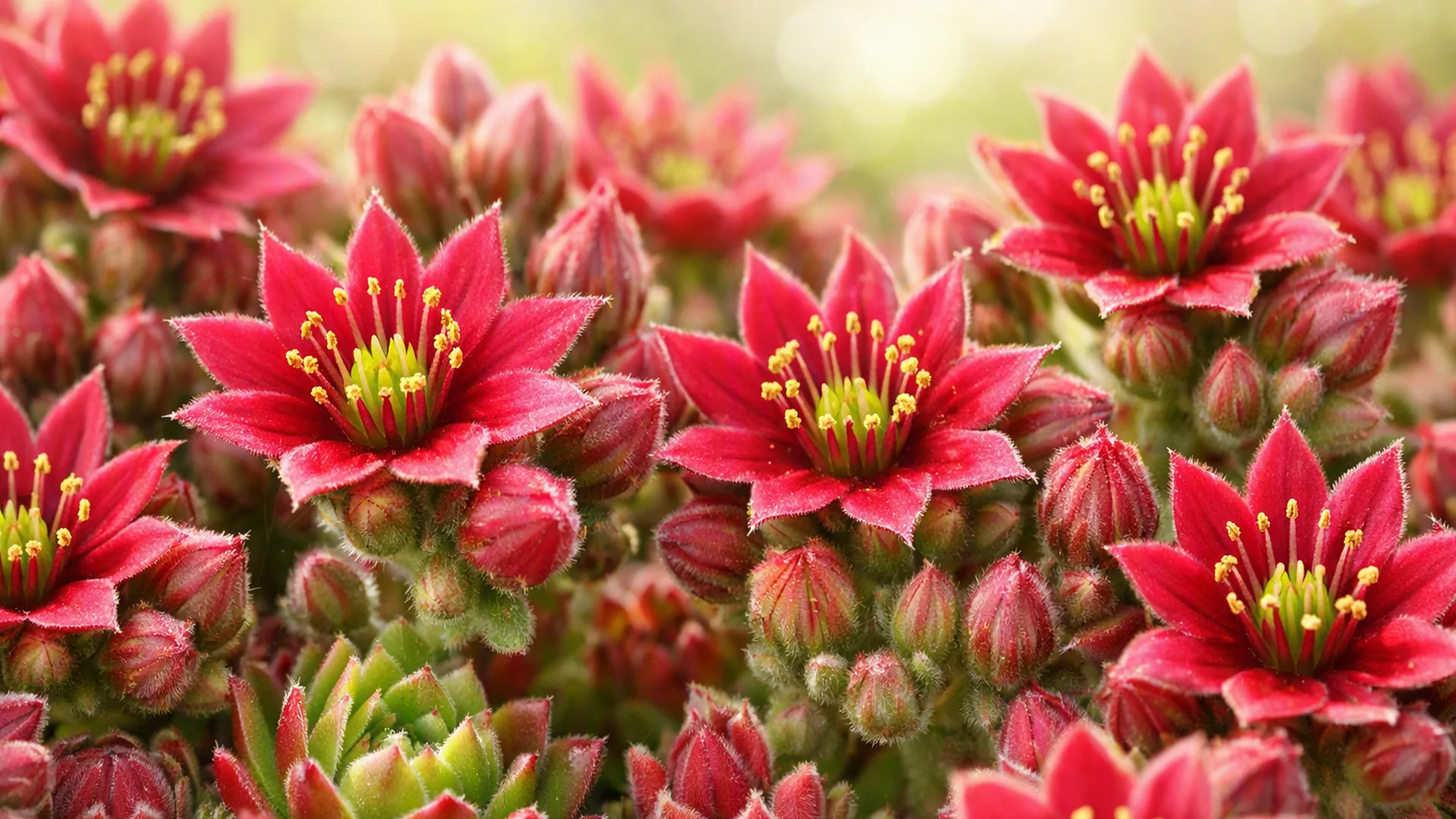
In houseleeks, red comes mainly from the rosettes. Many hybrids have leaves that turn burgundy, wine or brick red, especially in full sun and in cold weather, while others show red only at the tips. Colour often deepens when plants are kept lean and dry, so a poor, gritty compost gives better colour than rich feeding.
Reliable reds
- 'Commander Hay' has large rosettes of dark red-purple with a green rim.
- 'Rubin' is a deep ruby red that stays dark through the year.
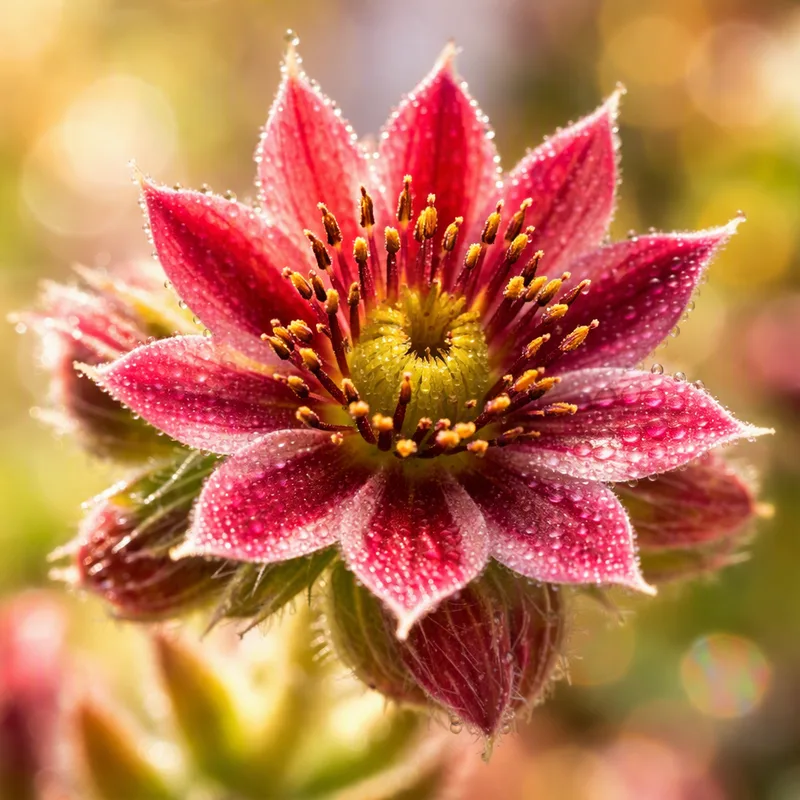
- Sempervivum tectorum itself has green rosettes tipped in red-brown and flowers in reddish pink.
- Sempervivum montanum has smaller green rosettes and purple-red flowers.
The names vary between nurseries, so ask for a hybrid with strong red colour and plant several together.
Using them
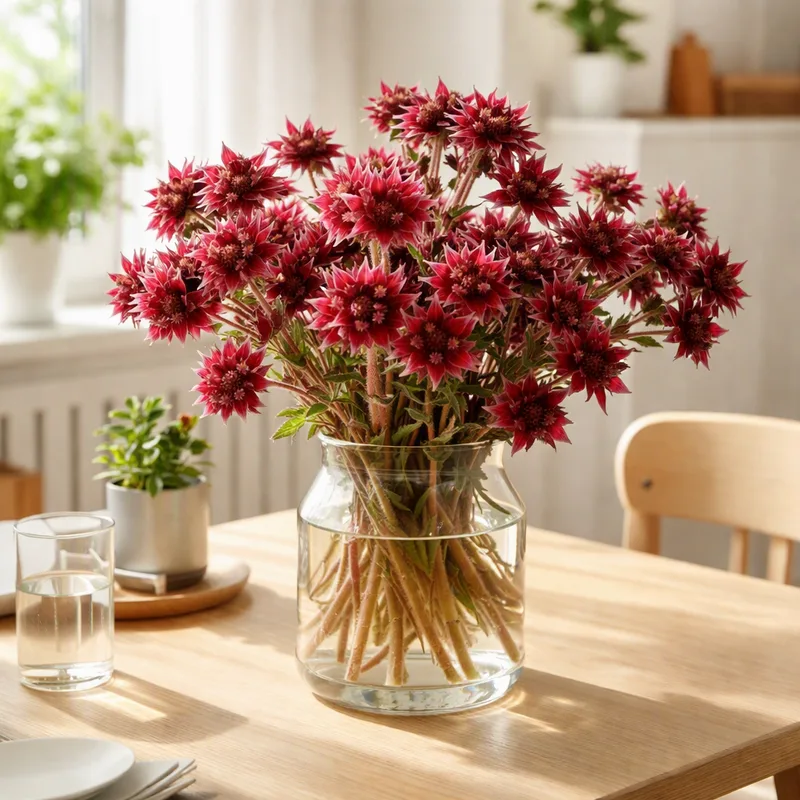
A large shallow bowl planted with red, green and silver houseleeks makes a lovely table-top display for a patio. Because they stay colourful over winter, they are valuable when other plants are dormant. A planting on a shed roof or in a stone sink adds colour at low effort.
Keeping the colour
- Give full sun, and the more light, the richer the red.
- Use a very gritty compost, leaving the top layer dry.
- Water sparingly in summer and rarely at all in winter.
- Remove offsets when the clump becomes crowded and replant them.
- In rain-soaked western areas, tilt pots or shelter them from the worst wet.
Safety
The sap of houseleeks can irritate the mouth and stomach. Keep pets away and ring your vet if one has eaten a good deal of it.