
From battlefield to Remembrance Sunday
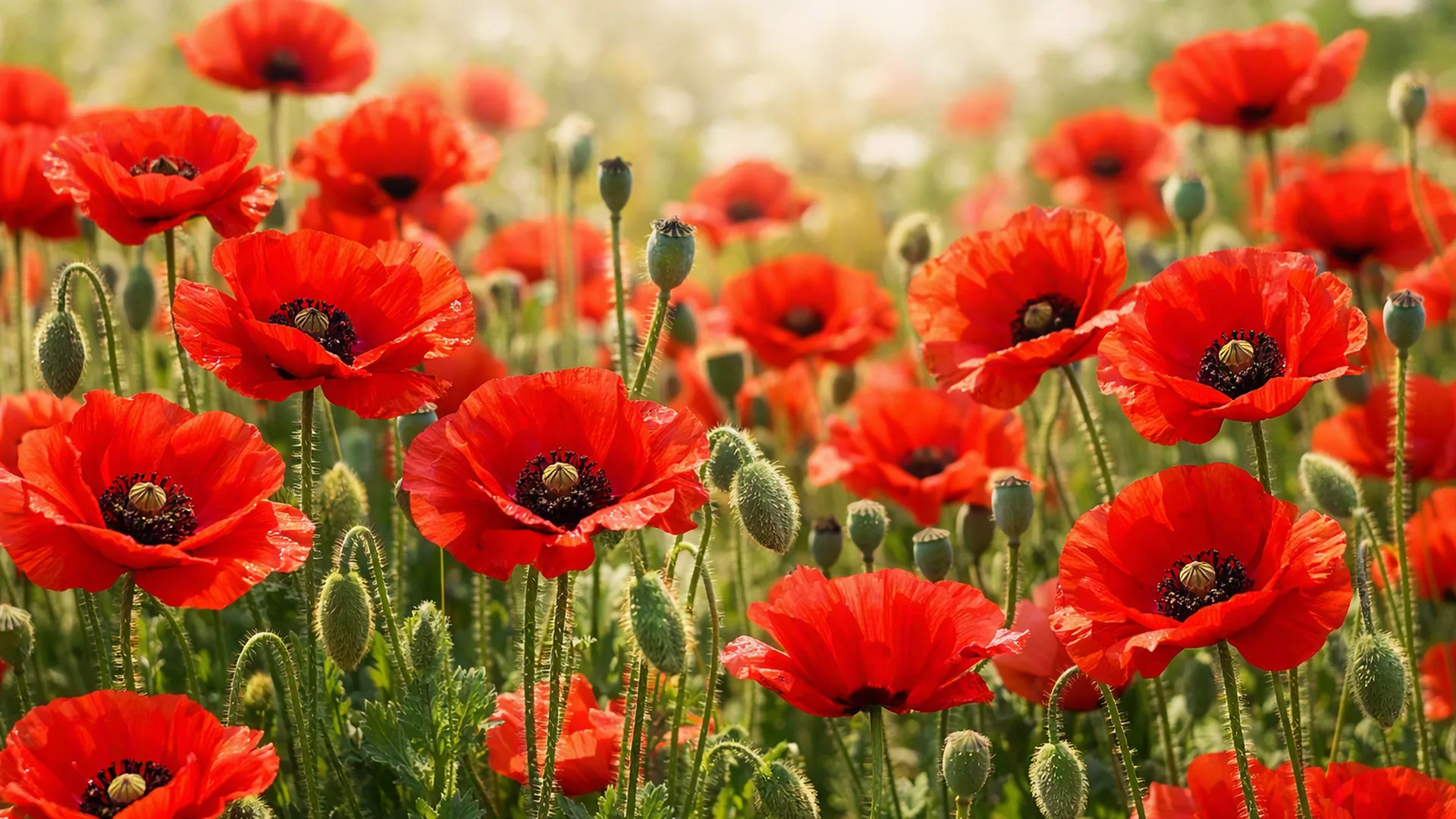
Corn poppies bloomed in the churned ground of the Western Front during the First World War. They are central to the poem "In Flanders Fields" by Canadian Lieutenant Colonel John McCrae, one of the most quoted poems of that war. In 1921 the French campaigner Anna Guerin organised the sale of poppies made by women and children in devastated regions of France, and the British Legion adopted the idea. Artificial red poppies are now sold by the Royal British Legion in the weeks before Remembrance Sunday and Armistice Day on 11 November, and by Poppyscotland in Scotland.
The living plant
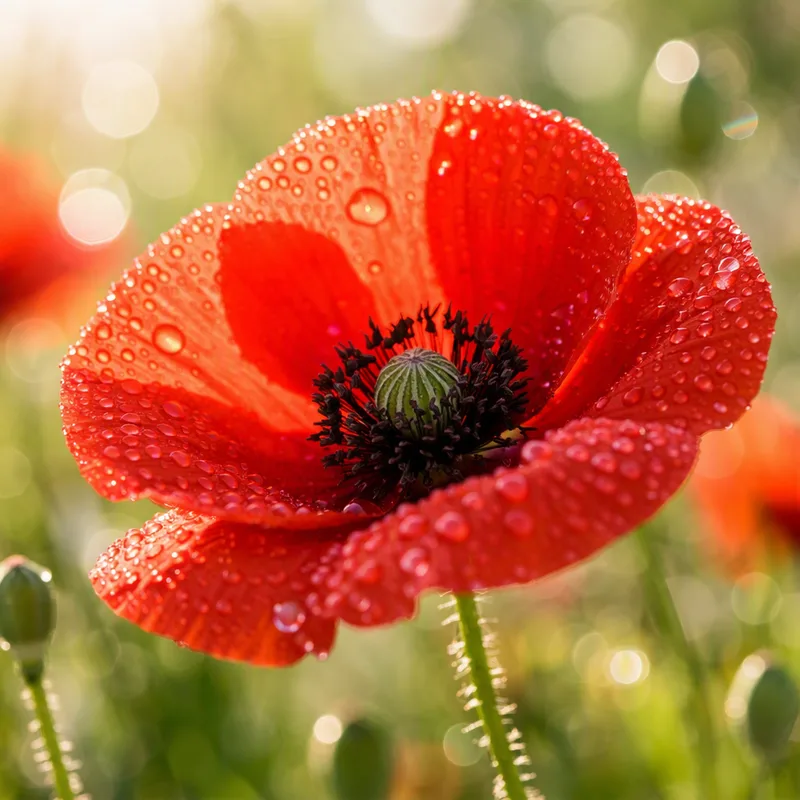
The wild field poppy is a hardy annual. Its seeds wait in the soil until digging brings them to the light, which helps explain why poppies flourished on shelled ground. In Britain they flower mostly from early summer into August.
- Sow in sunshine on bare soil and leave the seed uncovered.
- Expect each flower to open for only a day or two.
- Let some seed heads ripen if you want plants next year.
Red poppies as cut flowers
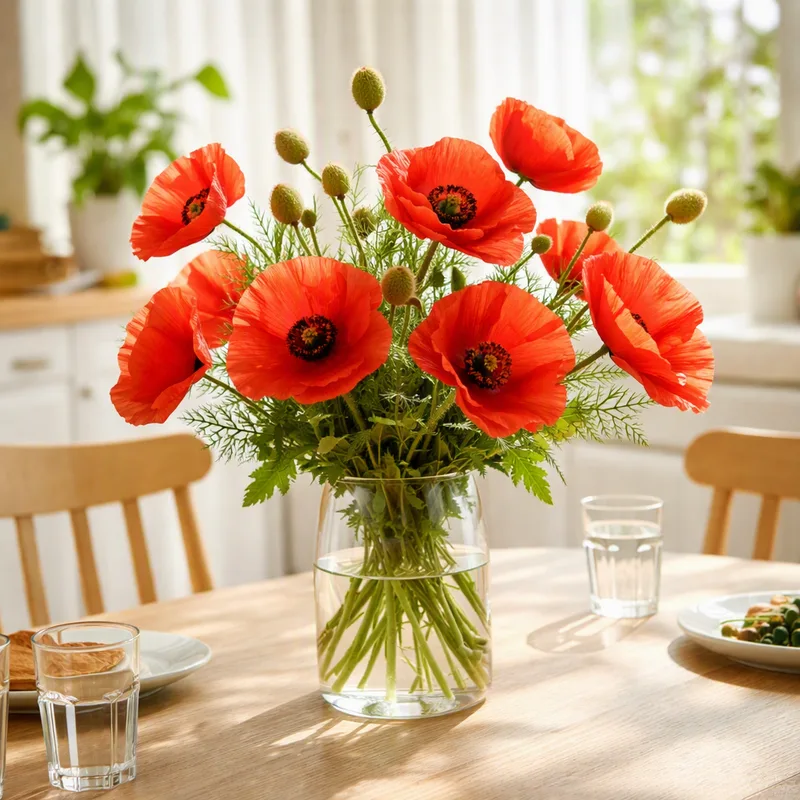
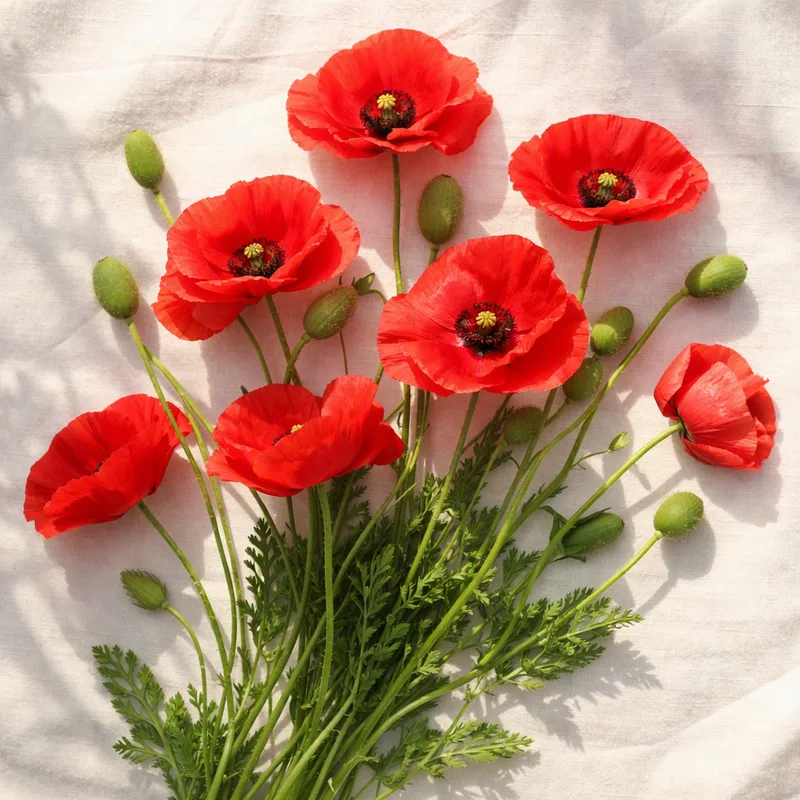
Fresh poppies are fragile. If you do cut them, pick buds that show a slice of red, sear the stems, and place them in deep water. A bunch will not stay long, so many people use paper poppies or wreaths for remembrance and enjoy the real flowers outdoors.
Poison note
The sap is mildly poisonous. Pet Poison Helpline lists stomach upset in dogs, and grazing animals can be affected. Check with your vet if you are concerned, or phone NHS 111 for a person.