


A blue flower in late winter
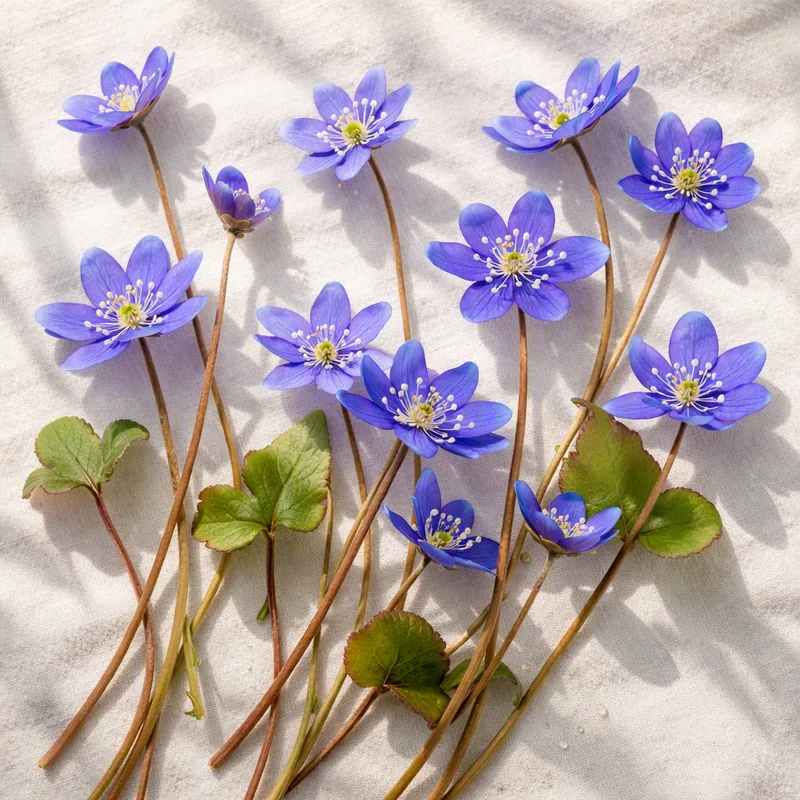
Hepatica nobilis, also called liverleaf or liverwort, is a low plant of the buttercup family, Ranunculaceae, related to anemones. It grows from about 5 to 15 centimetres tall and flowers very early, from February to April, before the trees come into leaf. The petal-like parts are coloured sepals, usually six to ten per flower, in blue-violet, with a ring of pale stamens in the middle. It is native to woods and thickets in mountainous parts of continental Europe, and in Japan, where it is called yukiwariso, "snow-breaking plant".
What the name means
The three-lobed leaves look like a liver, so under the old doctrine of signatures it was thought to cure liver complaints. There is no good evidence that it does. If you have seen "hepatica flower meaning" online, remember that meanings come from Victorian flower dictionaries, which usually link it with confidence, and are not an official guide.
Hepatica in British gardens
You will not find it growing wild in Britain; it is a plant for woodland and alpine gardens. The RHS has given it its Award of Garden Merit. It likes partial shade under deciduous trees, humus-rich soil that does not dry out or stay waterlogged, and a position where it can be left alone. It grows slowly and may take years to bulk up. Buy nursery-raised plants from specialist growers rather than collecting from the wild.
Not a cut flower
The short stems and fragile blooms make it unsuitable for vases.
A mild irritant
Like other buttercup relatives, fresh hepatica contains protoanemonin, which is slightly toxic and can irritate skin and mouth. Rinse your hands after touching it, keep children and pets from eating it and call NHS 111 or a vet if anyone has.