
Mouse ears and scorpion tails
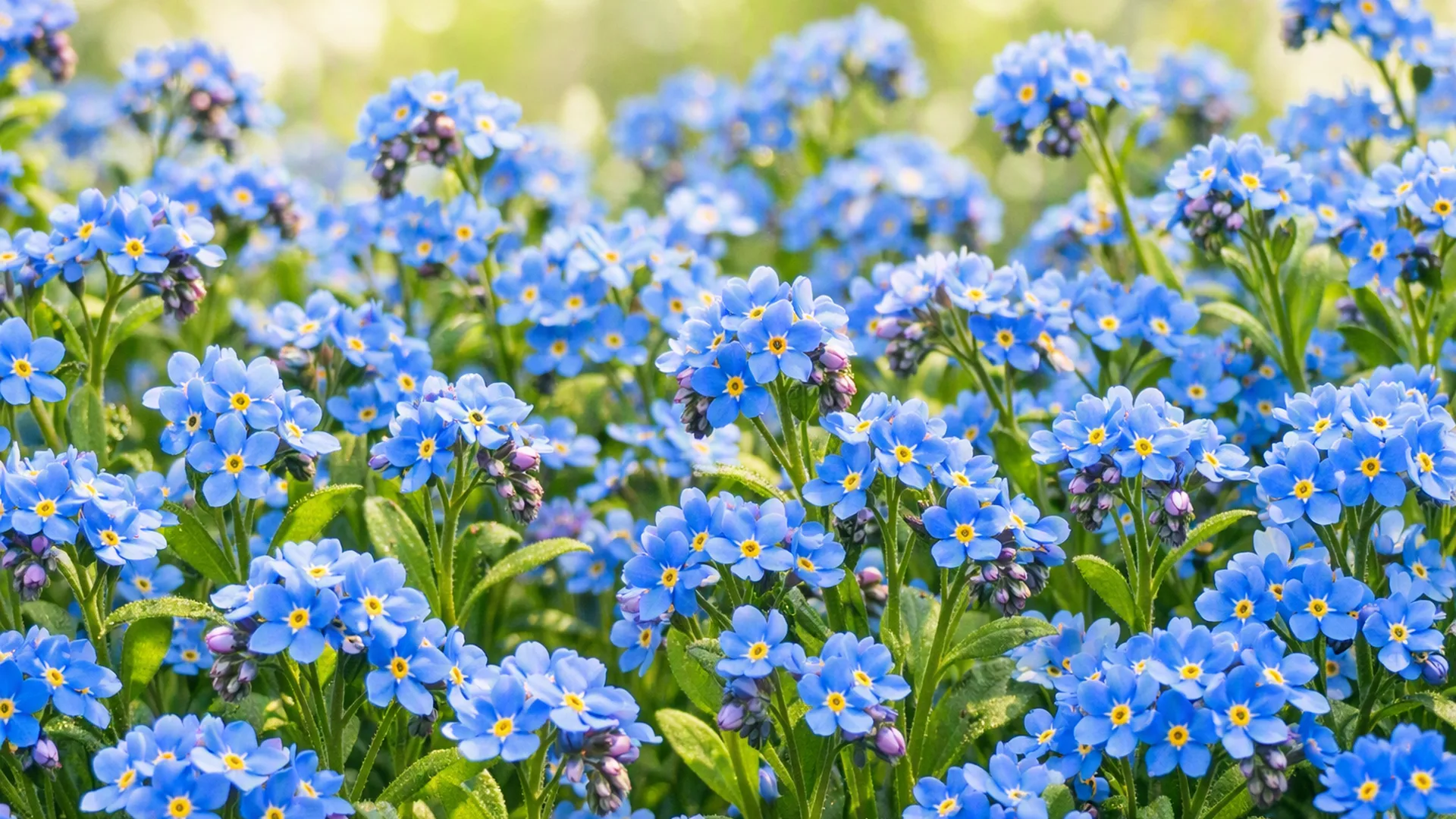
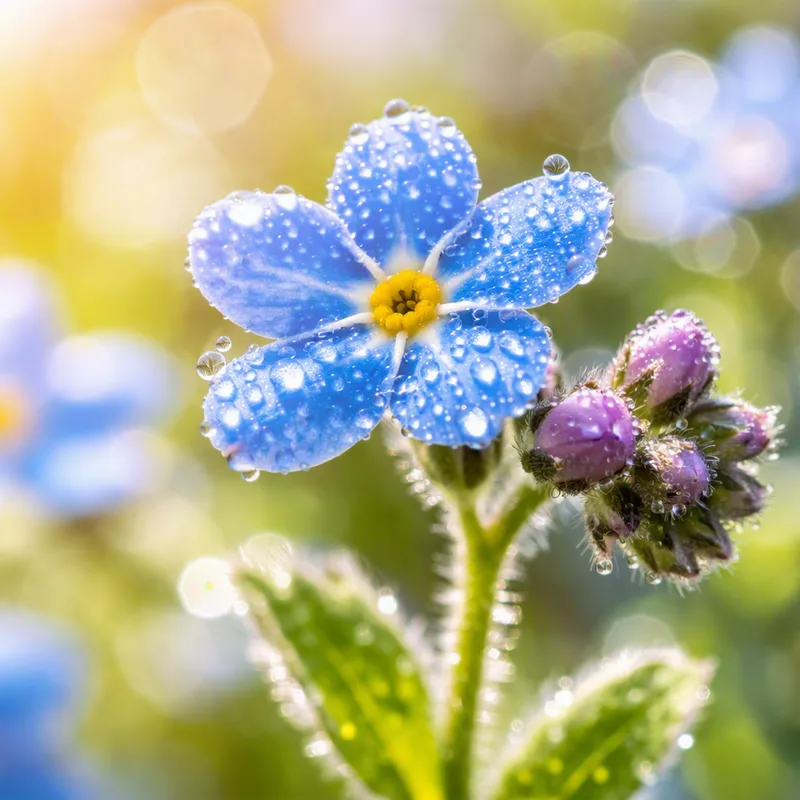
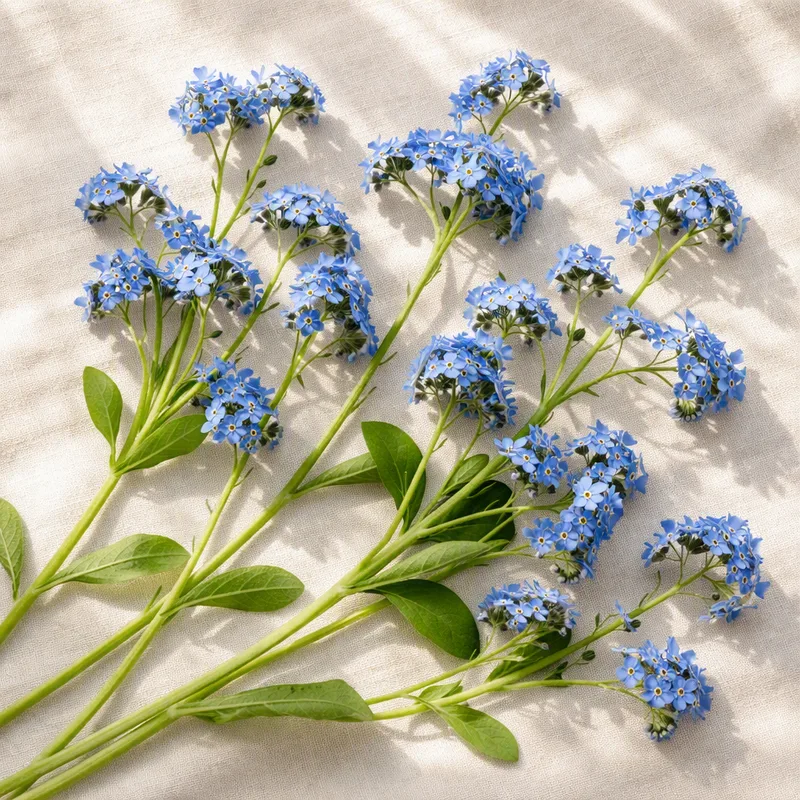
Myosotis is the genus name, and it comes from a Greek word meaning "mouse ear", a nod to the soft, hairy leaves. Over sixty species are recorded in western Eurasia, and the flowers sit on coiled stalks that unroll as they open, which gives scorpion grass as another name. The type most gardeners know is the woodland forget-me-not, Myosotis sylvatica. Flowers are tiny, a centimetre or less across, five-petalled and usually blue.
Blue is the classic
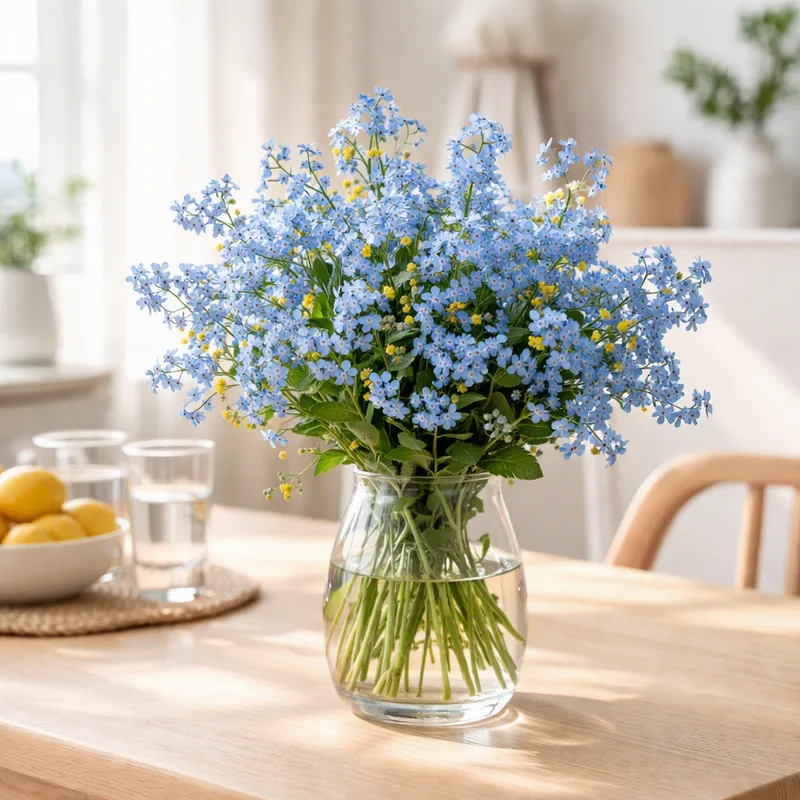
Blue is the classic shade, and a drift of it under tulips and wallflowers is one of the easiest spring effects to produce. Other colours exist, among them pink and white, but a plain "forget-me-not" means blue to nearly everyone. No red or truly scarlet form is recorded, so a red forget-me-not is probably a different flower sold under a nickname.
Growing them
- Seed scattered in June or July gives flowers the next spring, since the plants are biennial or short-lived perennials.
- Choose full sun or partial shade and moist but well-drained soil.
- Let some seed fall before clearing the bed, and the plants will return of their own accord.
- Seed pods are tiny burrs that cling to clothing.
What it stands for
Since the Middle Ages the forget-me-not has symbolised everlasting love and faithful memory. In the United Kingdom it is the emblem of the Alzheimer's Society and is used in some health settings to show that a person lives with dementia. Funeral portraits have long used it to recall the dead.
Safe for animals?
Forget-me-nots are not generally regarded as toxic, and they are missing from the ASPCA lists of poisonous plants.