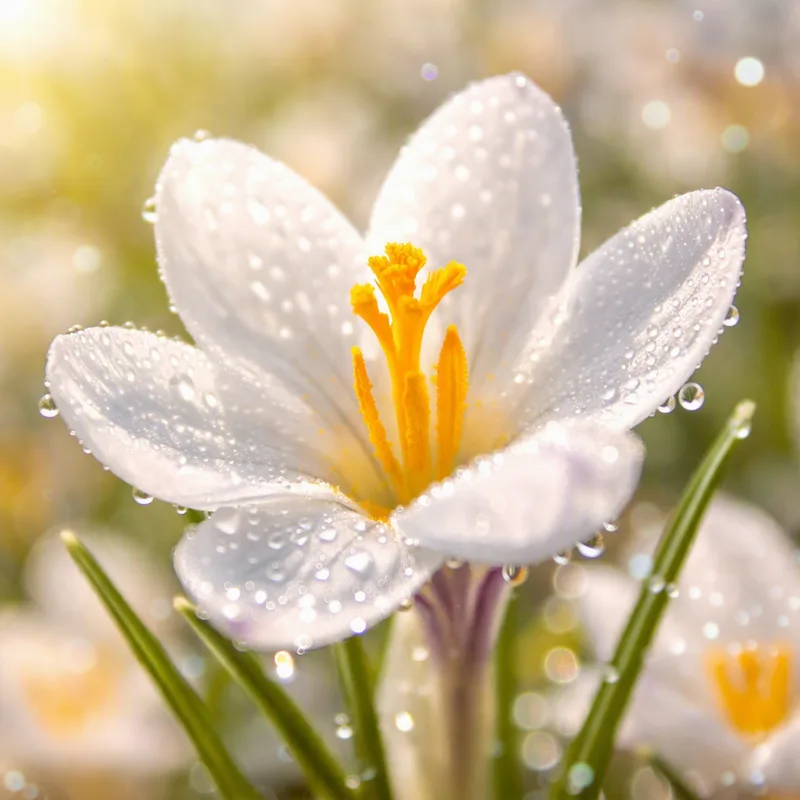
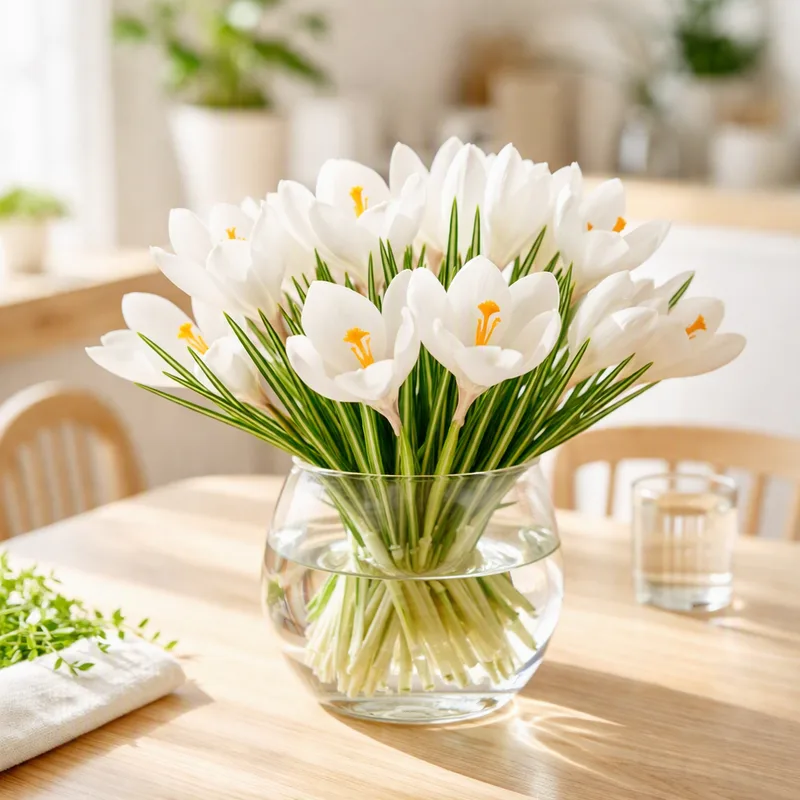

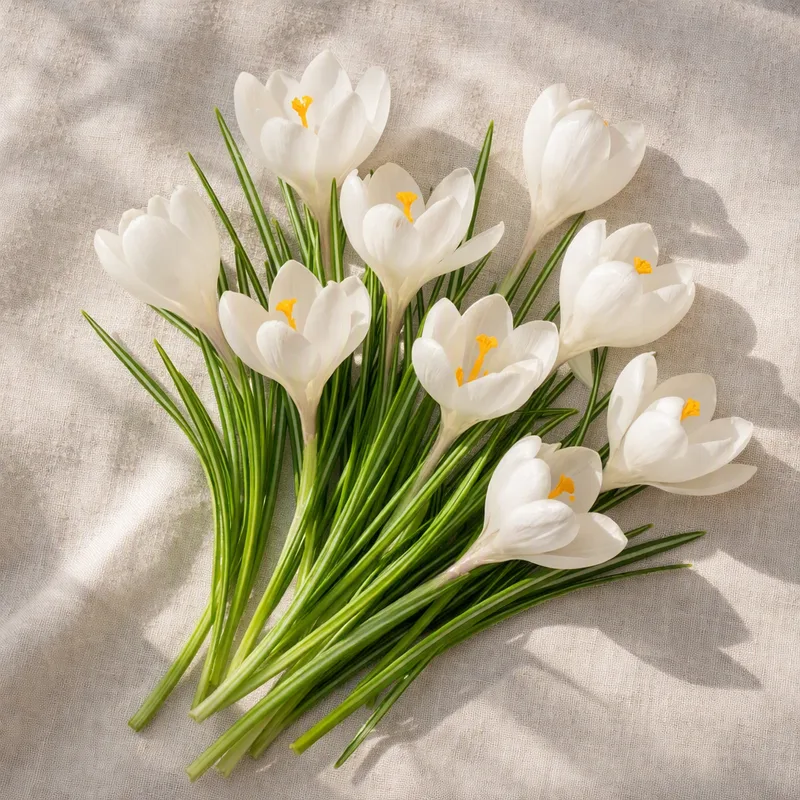
Bright white against bare soil
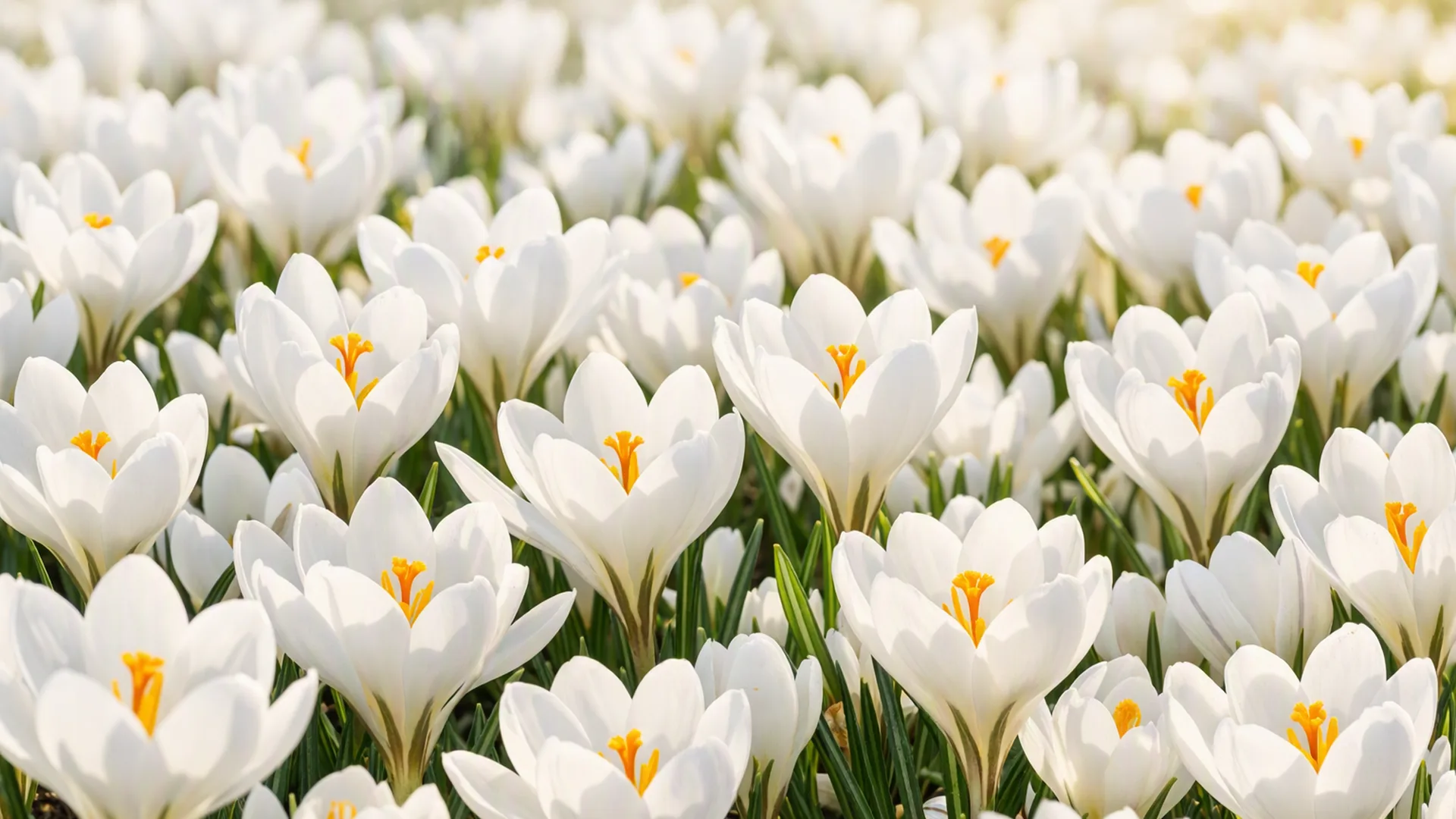
A drift of white crocuses stands out against the dark earth of February and March, and the flowers close in cloudy weather and reopen with the sun. Many white forms have lilac feathering or an orange centre, so check a catalogue picture if you need a pure white.
Good white options
The RHS names the March-flowering Crocus chrysanthus 'Snow Bunting' as a choice for containers. Dutch hybrids of Crocus vernus are the better answer for lawns, because the stout, goblet-shaped flowers hold up well and the larger corms can go a little deeper. White forms exist among both groups.
Putting them in
- Plant corms in autumn, ideally September to October.
- Small species go 7 to 10 cm deep; Dutch hybrids about 12 cm.
- Space individual corms around 9 cm apart.
- Aim for sun and good drainage; chalky soils are fine.
- Leave the foliage after flowering and do not mow until it has died back.
Protecting pale flowers
White flowers are conspicuous, and birds may pull them apart. Wikipedia lists crows, jackdaws and magpies among the culprits, and the RHS advises planting under mesh to reduce damage from birds, squirrels and rodents.
Not to be confused
Do not mix up spring crocuses with the autumn-flowering Colchicum, sometimes known as autumn crocus, which is highly toxic to pets and people. Spring crocuses can still cause stomach upset, so keep dogs from digging.