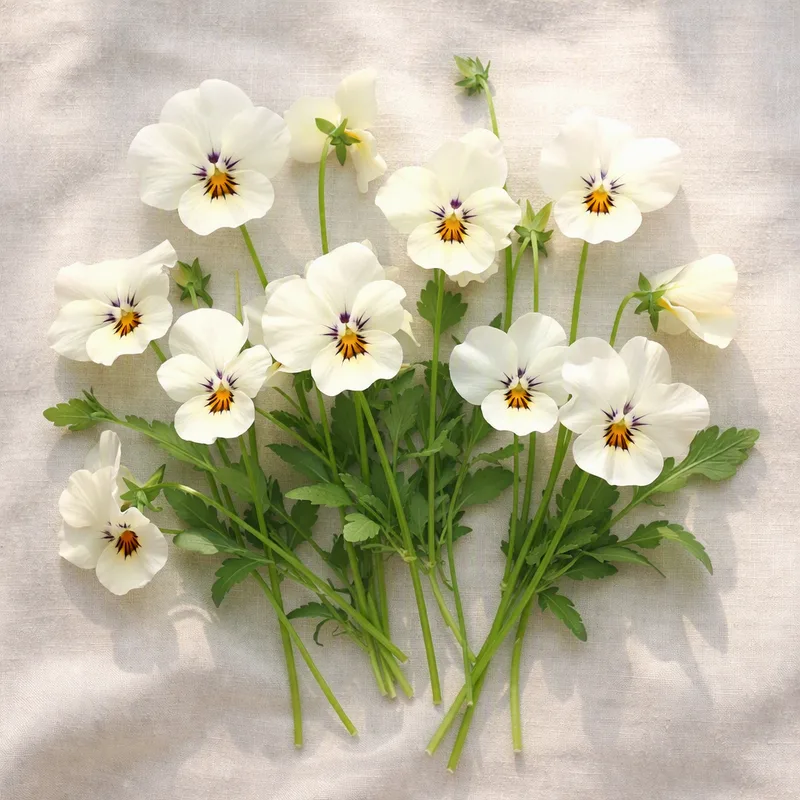
Clean faces for a winter container
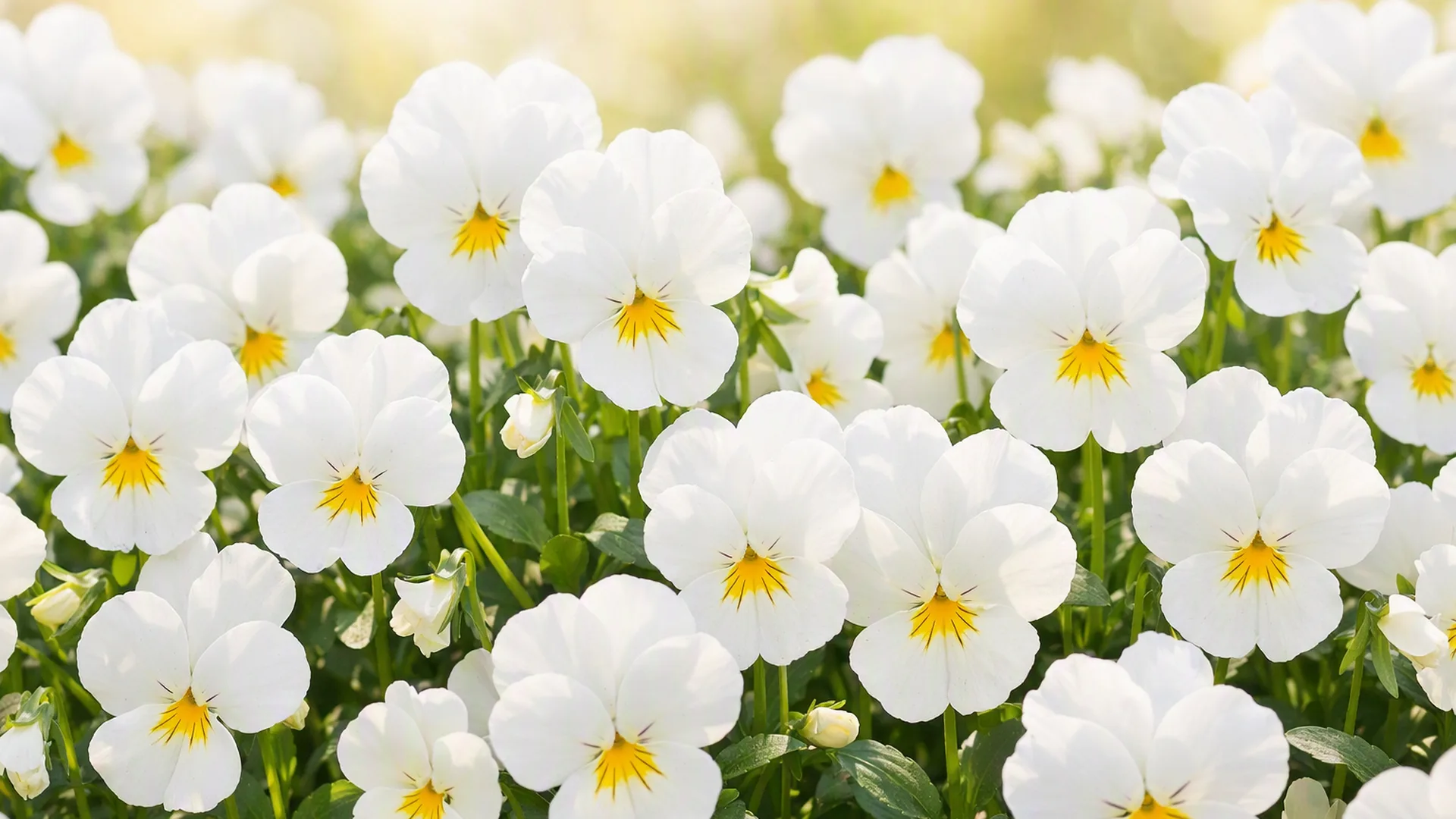
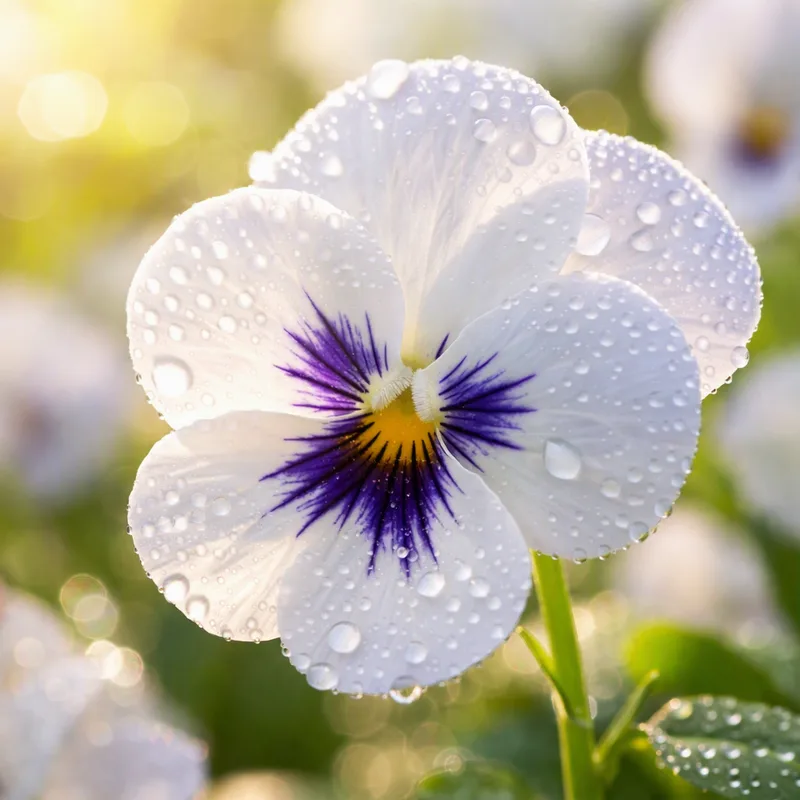
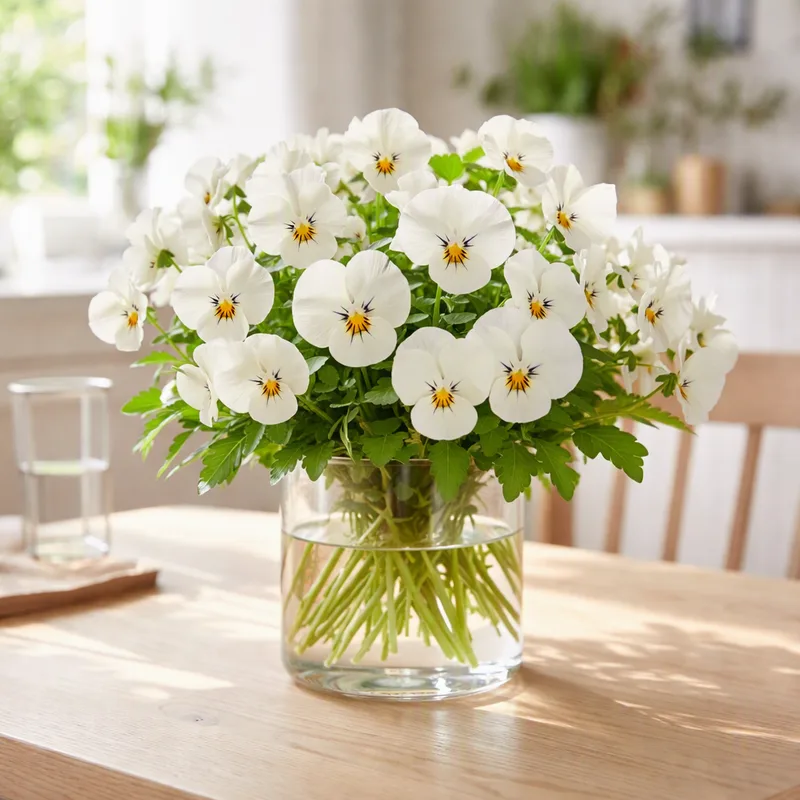
A white pansy is the quiet member of the family, and it earns its place in pots by the front door when everything else has faded. Many white forms carry a small dark blotch in the centre, so the flower seems to look back at you; others are pure white with a faint yellow throat. Under grey November skies the pale petals reflect what little light there is.
Pansy or viola?
Wikipedia explains the useful rule of thumb: "pansy" is normally kept for the large-flowered hybrids grown for bedding, and "viola" for the smaller, finer plants. If you want a white display that lasts for months with less fuss, either will do. Violas tend to produce more, smaller flowers, while true pansies give bigger faces that read better from a distance.
Planting and aftercare
- Plant between September and November for flowers through winter and spring.
- Pick sun or part shade, in free-draining soil.
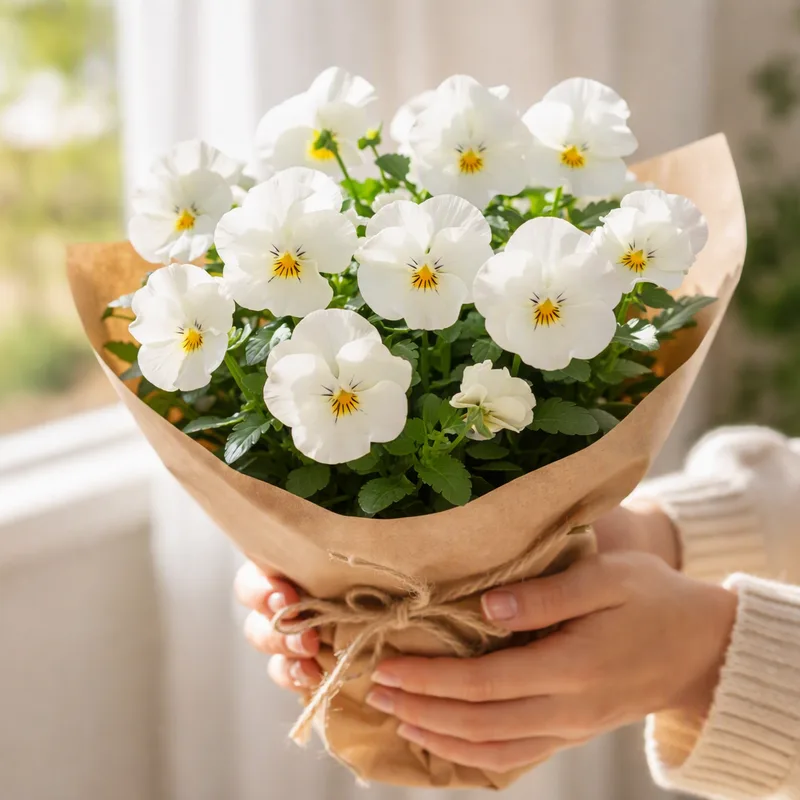
- Pot them up in multipurpose compost with a little grit for drainage.
- Water gently in dry periods, aiming at the soil rather than the petals.
- Remove faded heads so that the plant keeps making buds instead of seed.
White pansies are perennial in principle, but they are normally grown as biennials or annuals because they become leggy. Warm weather puts a stop to flowering, so expect them to finish around early summer.
A note on eating them
Pansy flowers are sometimes scattered over salads and cakes. Only use blooms grown without sprays, and never assume that a garden centre plant is safe to eat.