
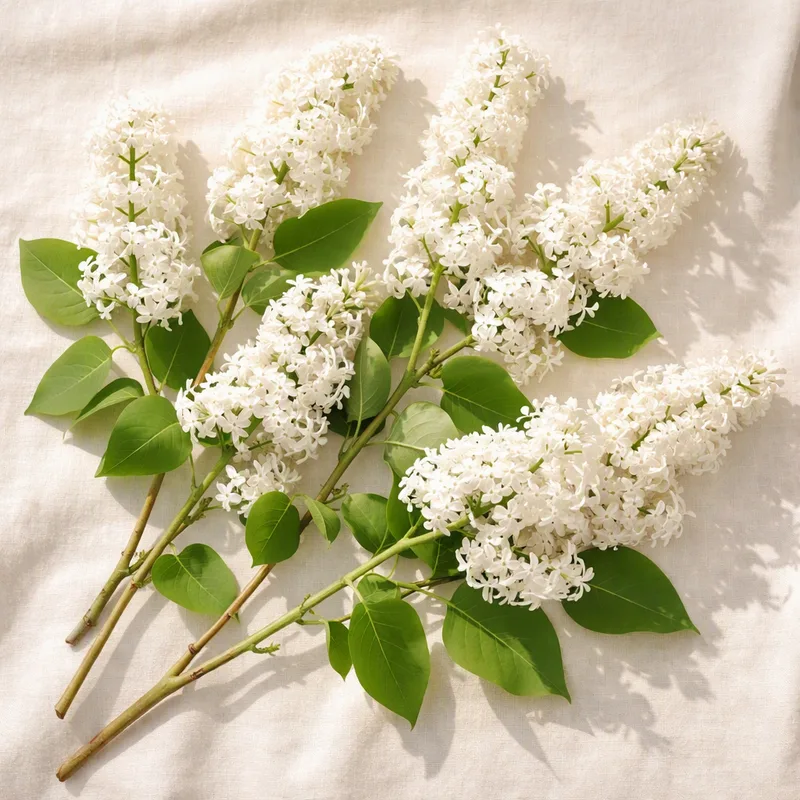
White among the purples
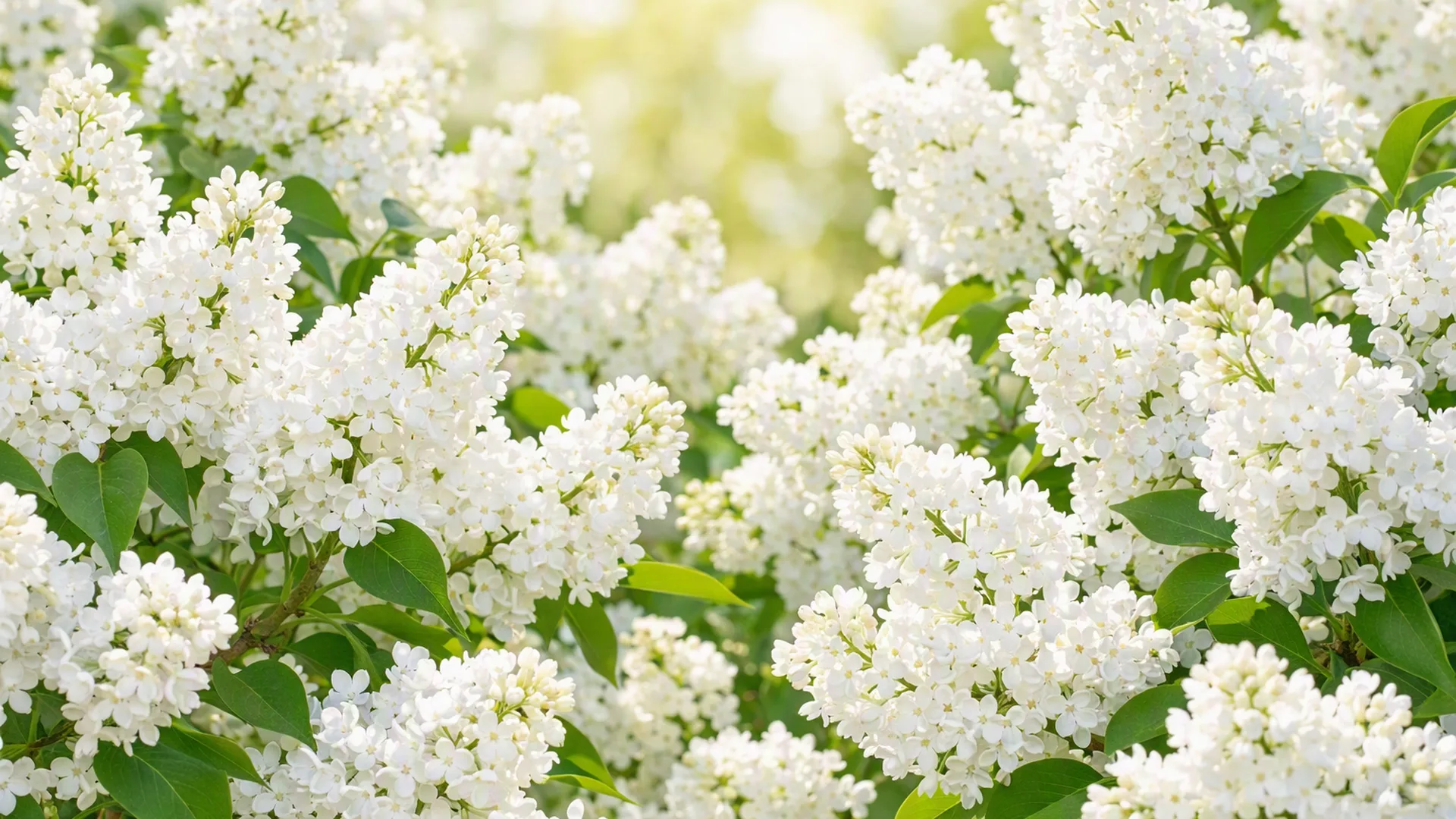
Wild Syringa vulgaris flowers are usually lilac to mauve and occasionally white, so white lilacs were noticed and propagated early on. Garden forms are many. 'Madame Lemoine' is a famous double white from the French nursery family Lemoine, which raised a great many of the best lilacs. 'Primrose' is a creamy-yellow cultivar often grouped with the whites in catalogues. White lilac has long been planted next to purple varieties for contrast in large gardens and churchyards.
Choosing and planting
- Sun and well-drained soil are the key requirements.
- Lilac is happy on alkaline soils, including chalk, and does not like waterlogging.
- Plant bare-root or container shrubs in autumn or spring and leave room for a mature spread of several metres.
- Mulch in spring and water new plants during dry weather in their first summer.
Flowers and fragrance
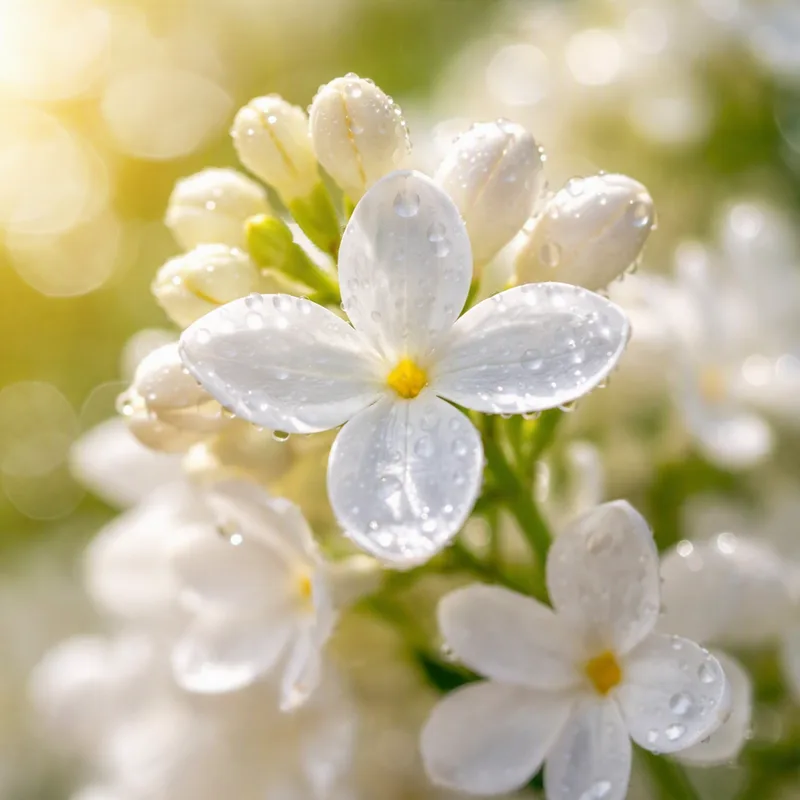
White lilac flowers in May, with big pyramid-shaped heads that last for a couple of weeks on the shrub. The scent is heavy, so a single stem indoors can perfume a whole room. Searches for white lilac often come from people planning weddings or garden borders, and in the language of flowers white lilac is traditionally linked to youthful innocence.
Cutting for the house
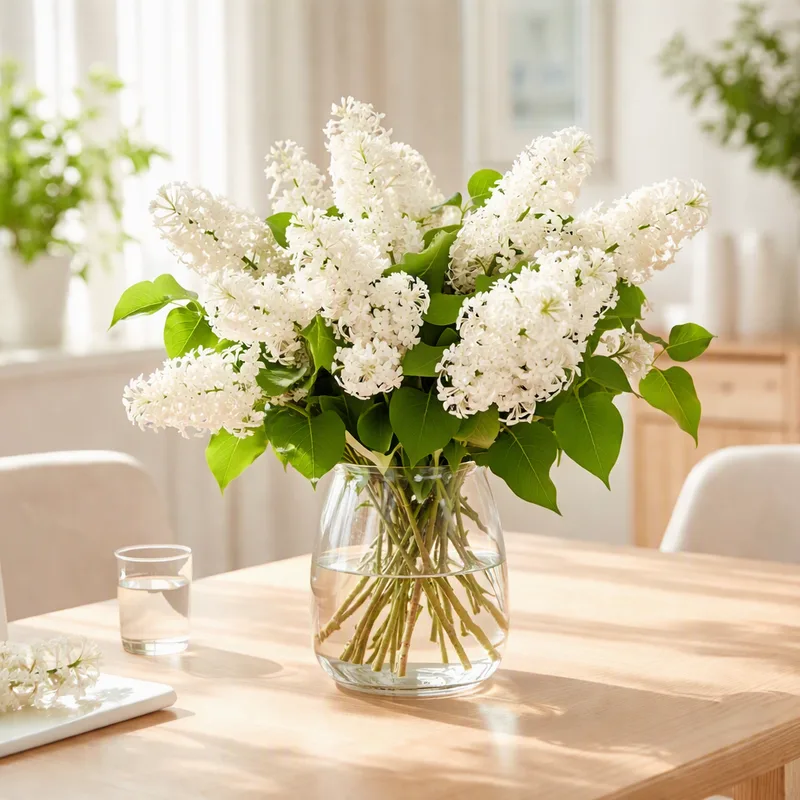
Cut early in the morning, remove most of the leaves so the stems do not wilt, and put them straight into cold water. Branches in a vase last only a few days, so a shrub in the garden gives the longest display.
Is it safe for pets?
Common lilac is not on the ASPCA toxic list, but chewing any plant can upset an animal's stomach.