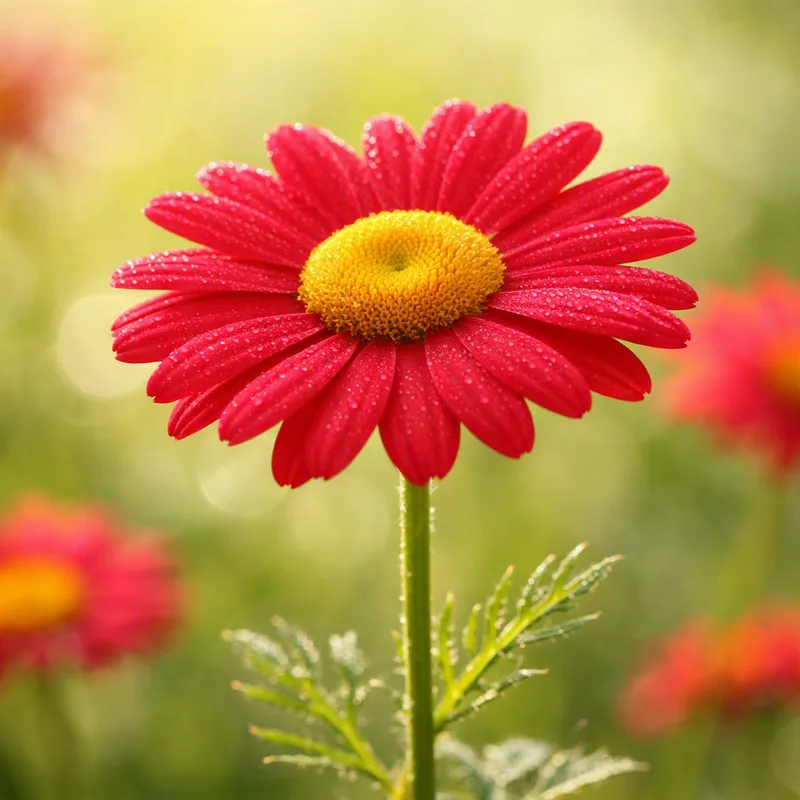
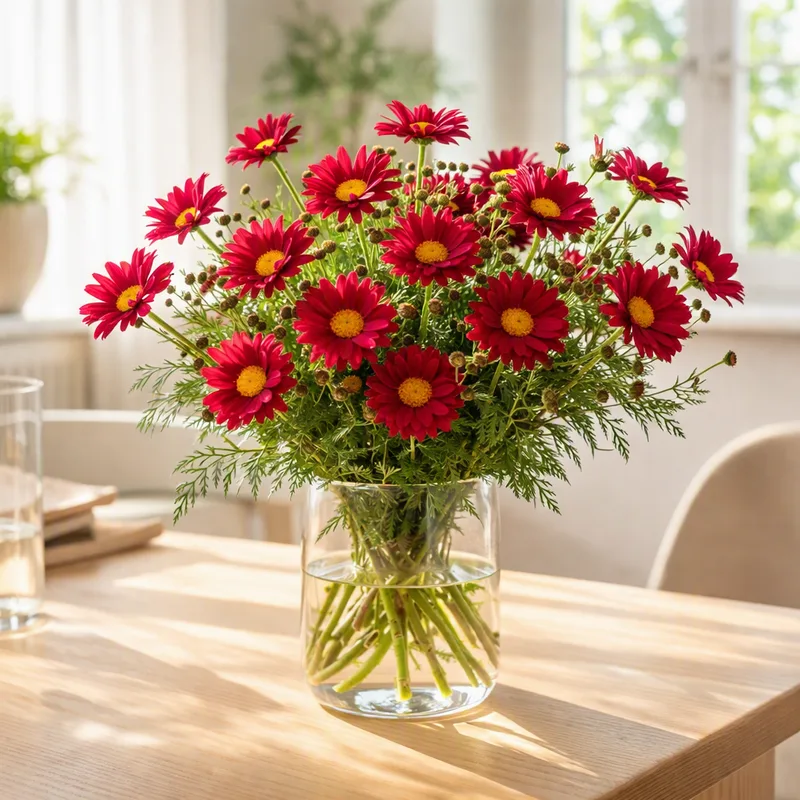

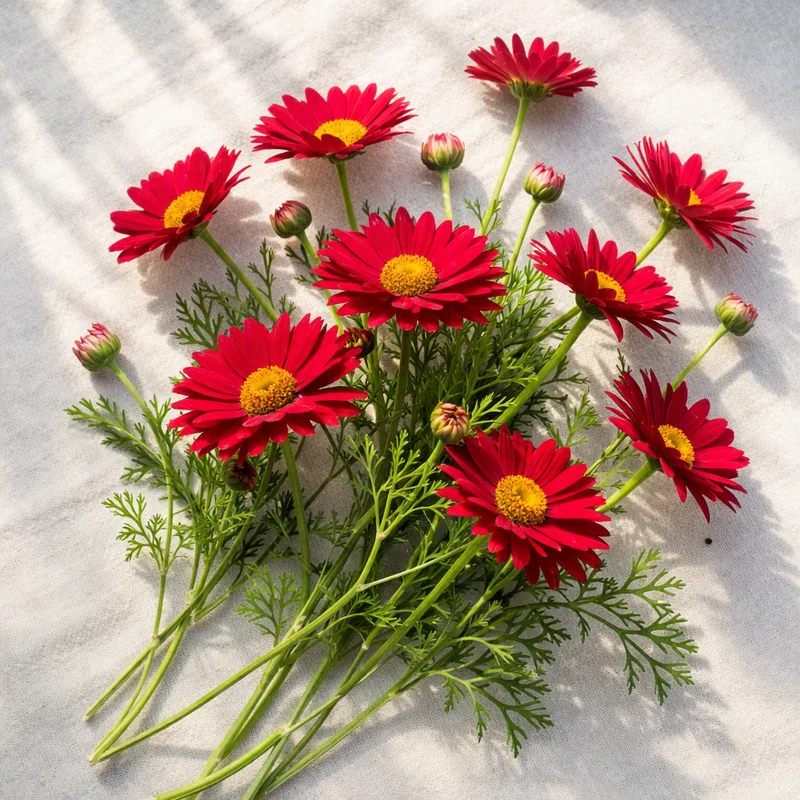
Is a red marguerite really red?
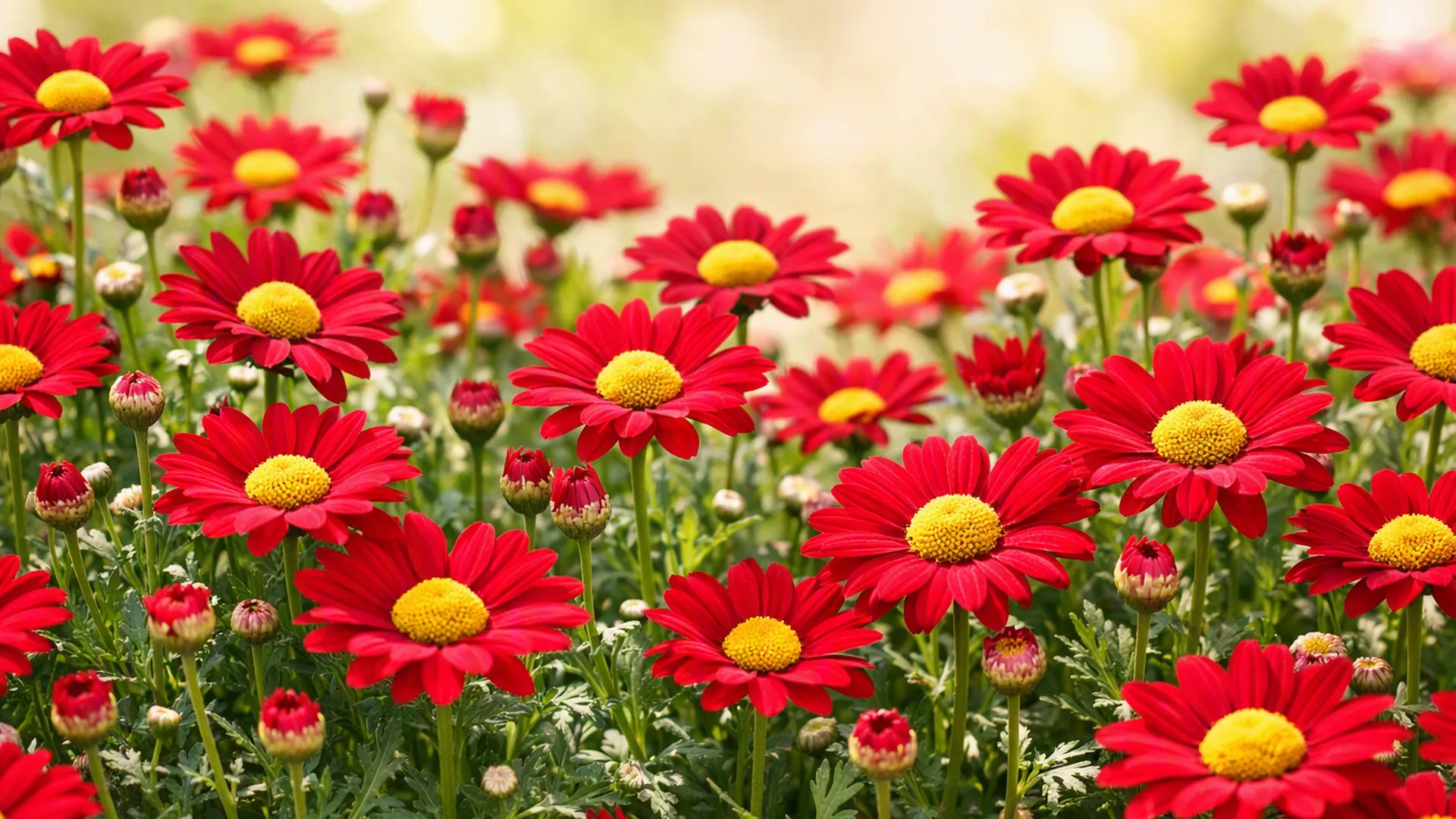
The species itself is white with a yellow centre, so every other colour comes from breeding. Garden marguerites are hybrids, some crossed with related genera, and they appear in white, pink, yellow and purple shades. A marguerite sold as red is usually a deep rose or crimson, and flower colour can lean pinker in cool light. Treat the name as a guide rather than a guarantee.
Where red works
Dark centres and strong petals look bold against grey-green foliage. Set a red marguerite beside silver plants such as helichrysum, or against a pale wall. Avoid pairing it with orange, which can clash. Colour is richest in full sun with shelter from wind.
Practical care
- Use a pot with drainage holes and free-draining compost with plenty of organic matter.
- Water once the surface has dried, and avoid saucers full of water.
- Feed during the growing season if flowering slows.
- Cut back lightly in spring to avoid bare, woody stems.
Half-hardy reality
Marguerites tolerate cool weather but not freezing. Pots should wait indoors until all danger of frost has passed, and then return to shelter in autumn. In colder parts of Britain such as the Pennines or Scotland, that point comes later in spring and arrives earlier in autumn.
Animals and daisies
Daisies and chrysanthemums are listed by the ASPCA as toxic to cats and dogs, with vomiting, diarrhoea and skin irritation reported. Place pots well out of reach.