

A red jasmine is a different species
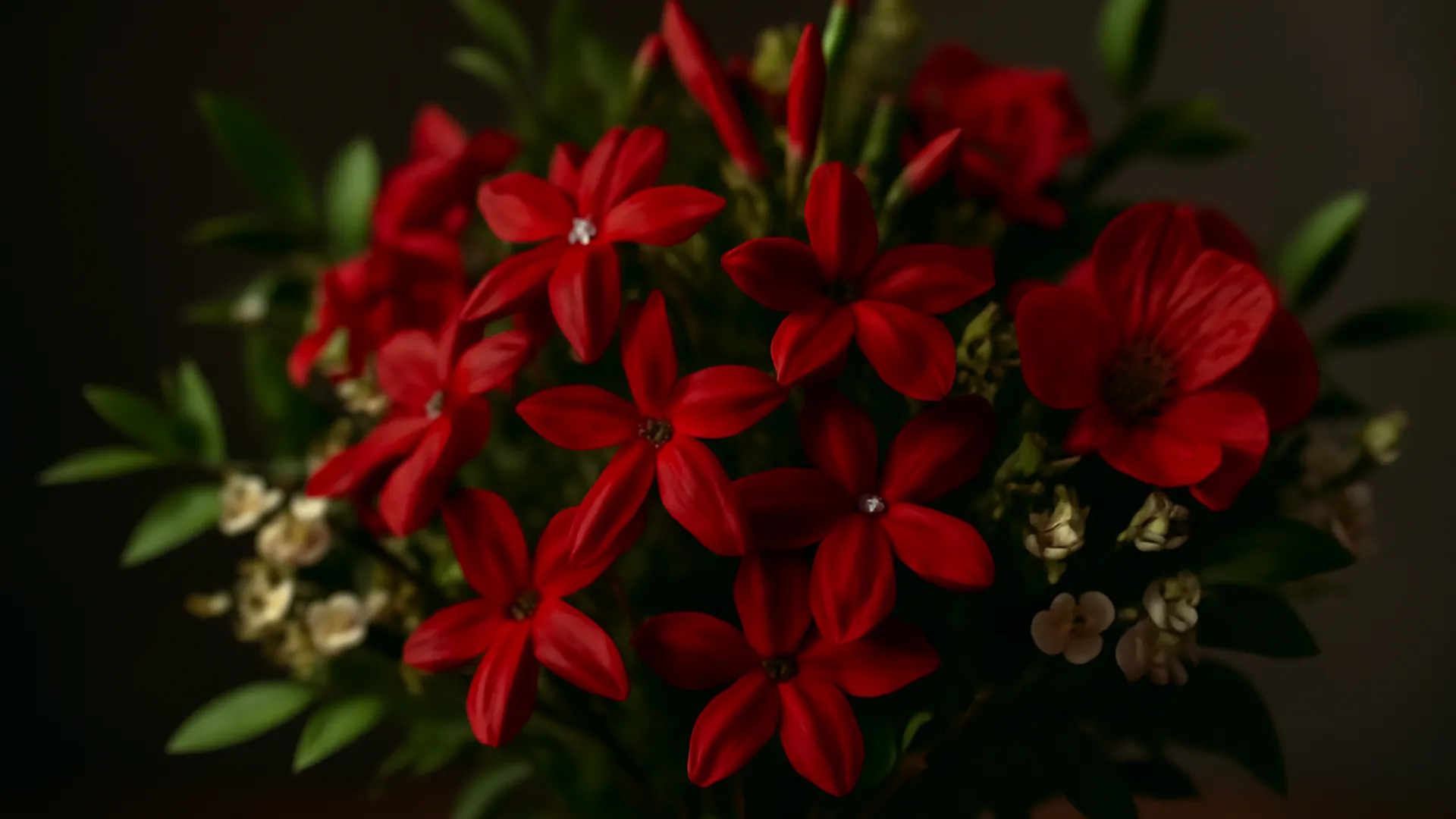
If you are searching for red jasmine, expect a surprise. The houseplant Jasminum polyanthum has white flowers with pink buds and no red form. Real red-flowered jasmine is Jasminum beesianum, native to south-eastern Tibet and central China. Its small, tubular, star-shaped flowers range from pink-red to rose crimson, with a light sweet scent rather than the heady perfume of the white kinds.
What it looks like and how big it gets
Beesianum is a woody, twining climber of roughly two and a half to four and a half metres, needing a trellis, arch, pergola or sheltered fence. After the flowers come glossy black berries in winter. It is an outdoor plant for a border, not a pot for a windowsill, and it spreads further with age and training.
Where it fits in a British garden
Choose a sunny, sheltered wall and soil that drains well. Tie in stems as they grow so they twine against the support instead of flopping. In cold areas, such as the Pennines or inland Scotland, a warm south-facing wall is the safest choice, and young plants appreciate a mulch over the roots in winter. Gardeners in milder regions, for example the south-west, can be more relaxed.
Compared with the white jasmine
If you want a scented, indoor, winter-flowering jasmine, Jasminum polyanthum is the better pick. If you want colour outside, red jasmine adds a warm shade where white would vanish against pale walls. Like other true jasmines, it is not listed as dangerous in the ASPCA entry for Jasminum, which covers dogs, cats and horses.