
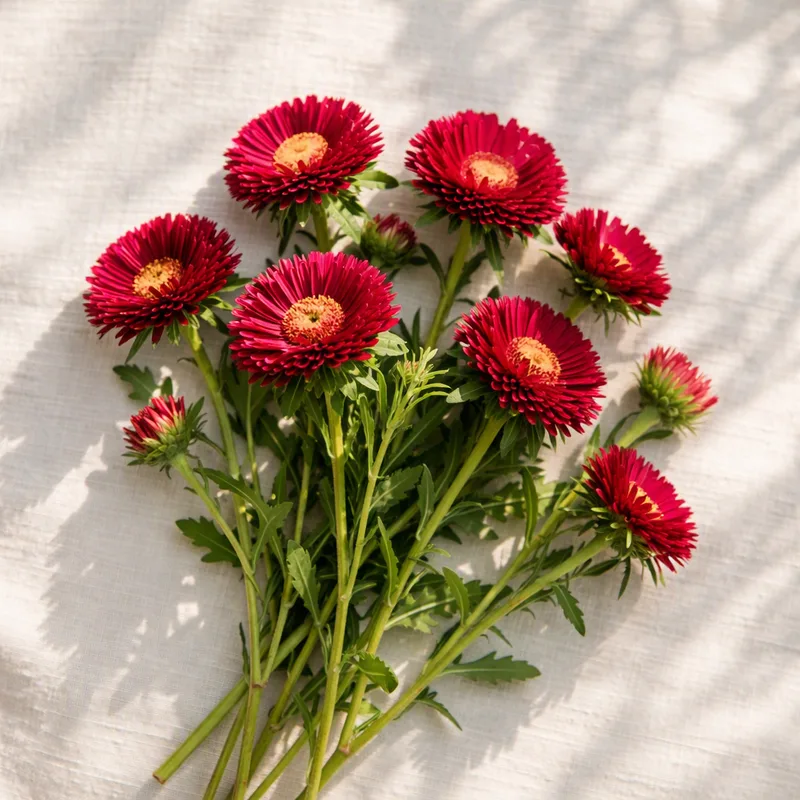
Red, or nearly red
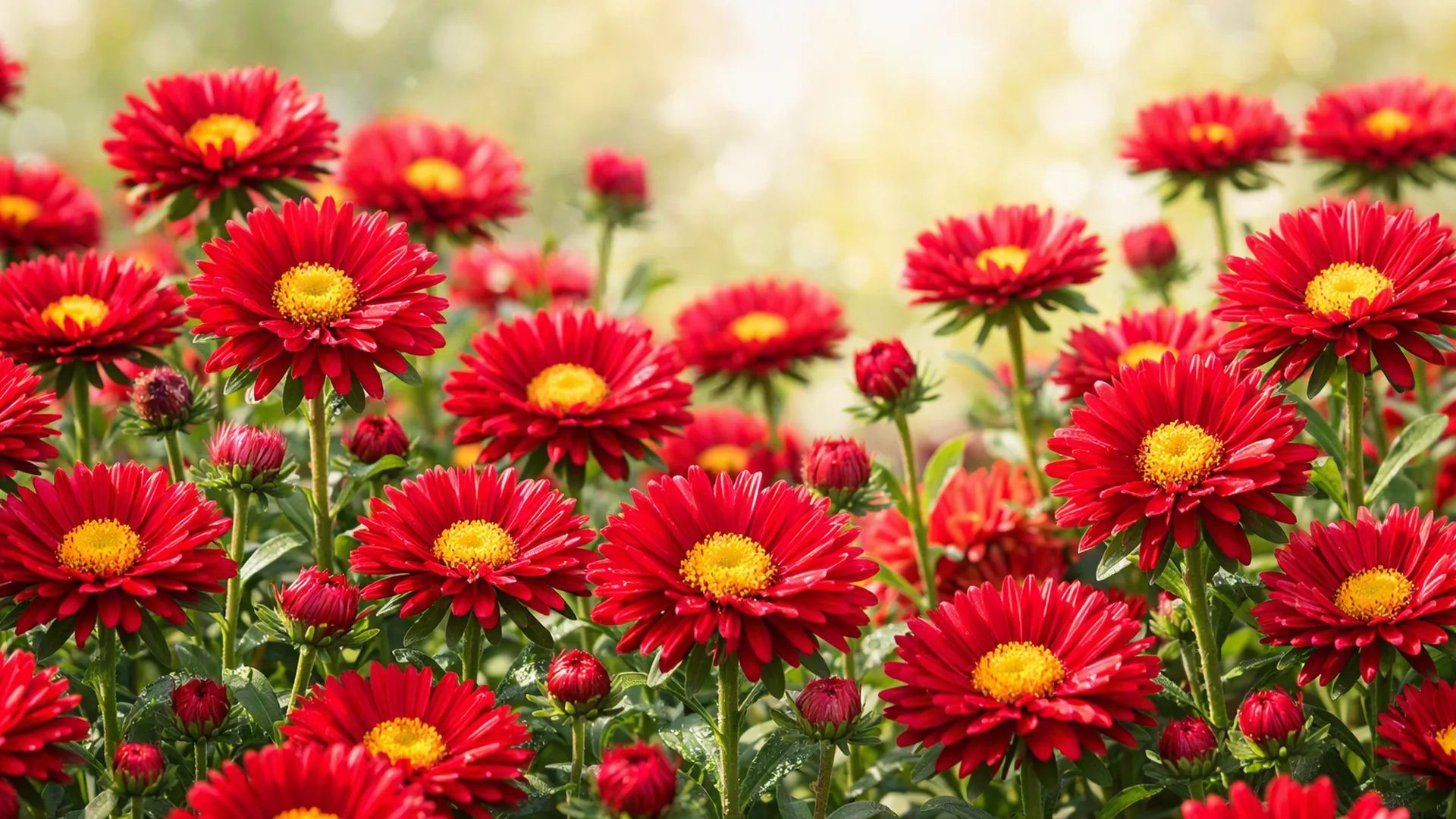
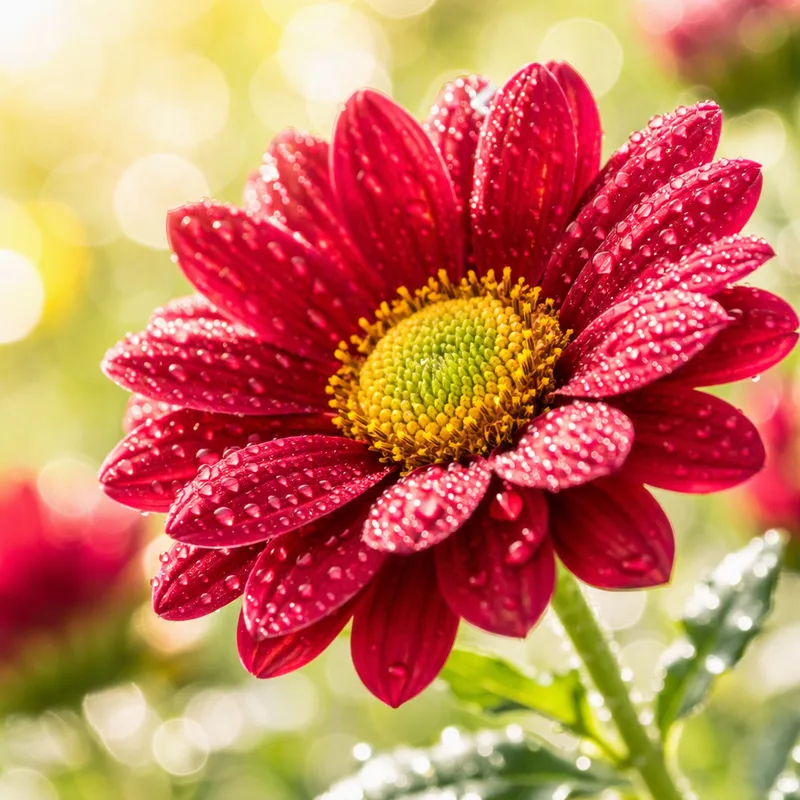
Honestly, rarely scarlet. The aster family runs mainly through blues, purples and pinks, and the so-called red kinds are deep rose, cerise or wine-crimson. If you want a clear red, look at descriptions and photographs closely, since colour can change with the light and the soil.
Warm-toned types to look for
- New England asters (Symphyotrichum novae-angliae) include rich pinkish-red kinds such as 'Andenken an Alma Pötschke', which is a bright cerise.
- New York asters (S. novi-belgii) come in cultivated reds and magenta shades, often as compact plants for the front of a border.
- China asters (Callistephus chinensis), raised from seed each year, include dark red and crimson forms with full, pompom-style heads.
Use a notebook or phone photographs through the season to track what really looks red in your garden, since soil, light and neighbouring plants all alter how a colour reads.
Growing red asters
All of these like sunshine and a soil that does not dry out completely. Mulch in spring and divide crowded clumps in March or April. Taller kinds may need support, and cutting stems by about half in late May produces shorter, bushier plants that flower later.
Dark flowers show up best against silvery foliage or ornamental grasses. They also pair well with golden rudbeckia and late-flowering sedum, an echo of the warm tones of autumn.
For cutting and for wildlife
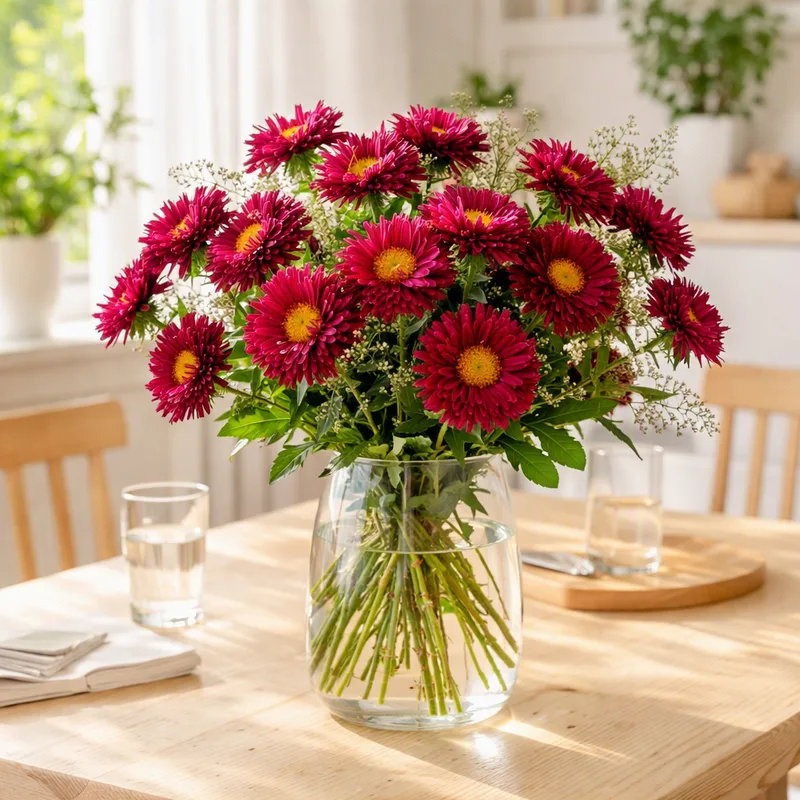
Cut stems when a few flowers on the spray have opened, and keep the water clean. Late-flowering asters give bees and hoverflies a useful nectar supply well into October.
Pet owners can note that the ASPCA counts the China aster as harmless to dogs, cats and horses.