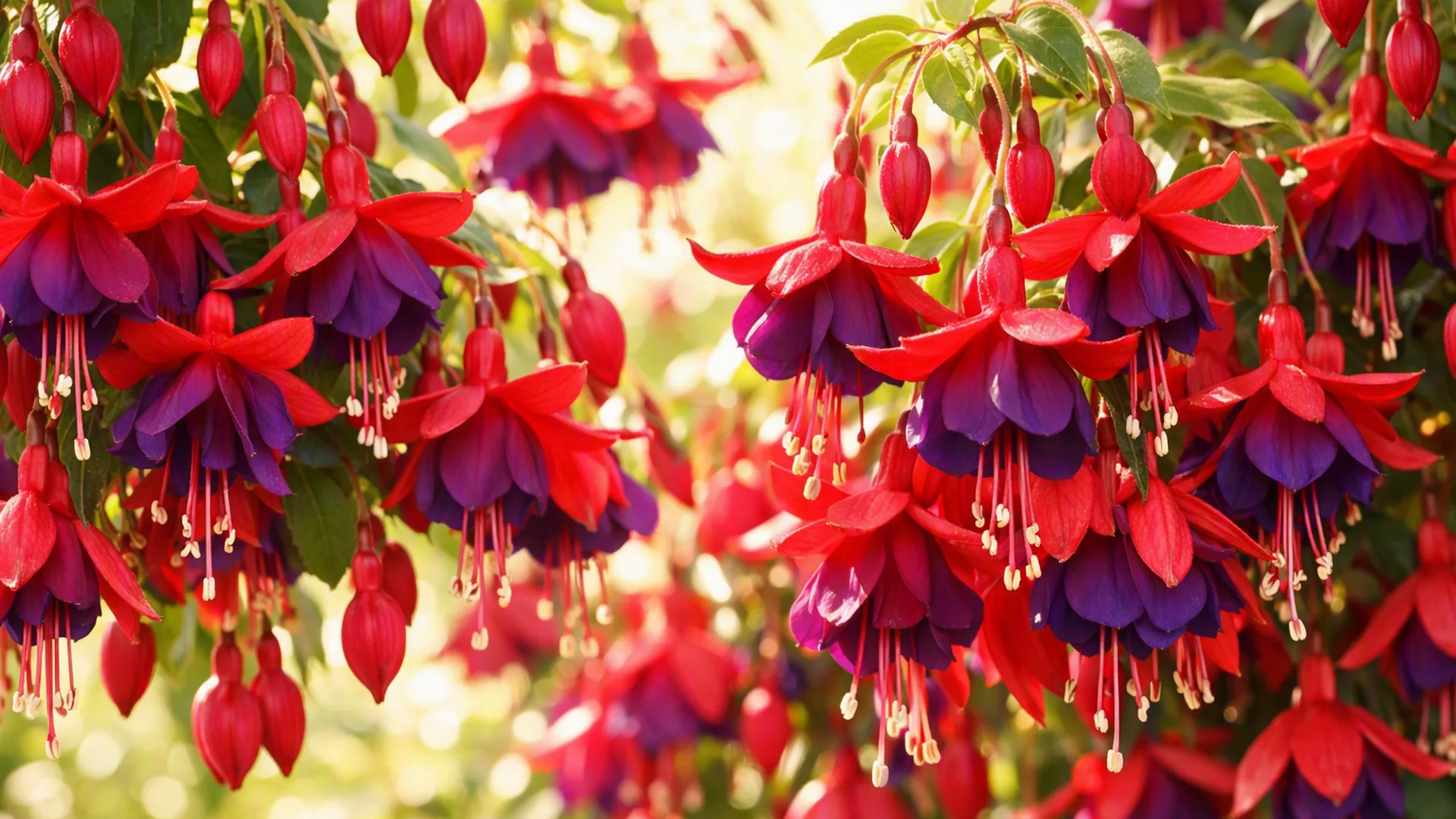
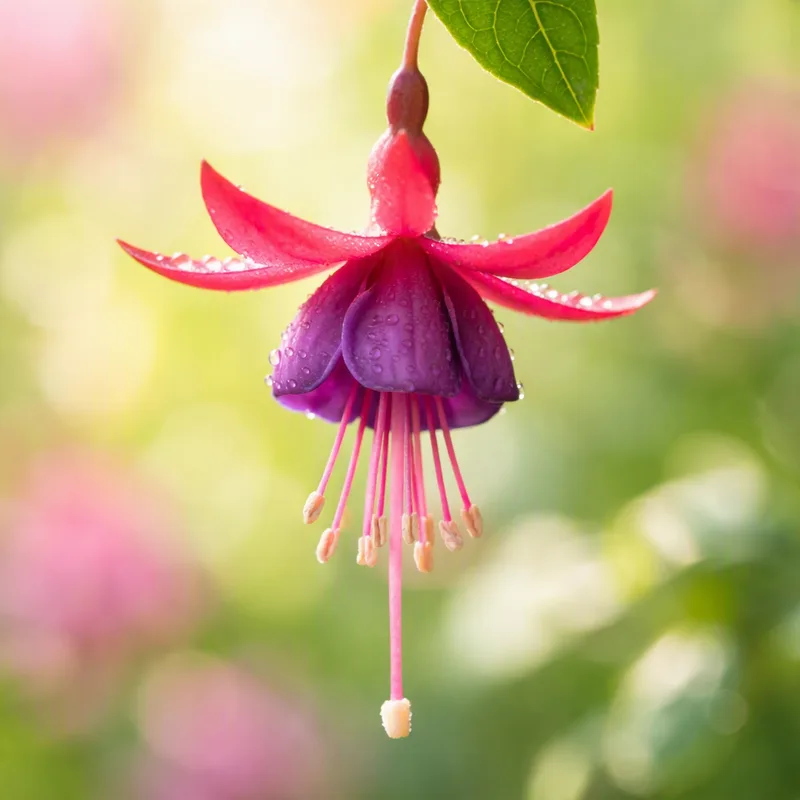
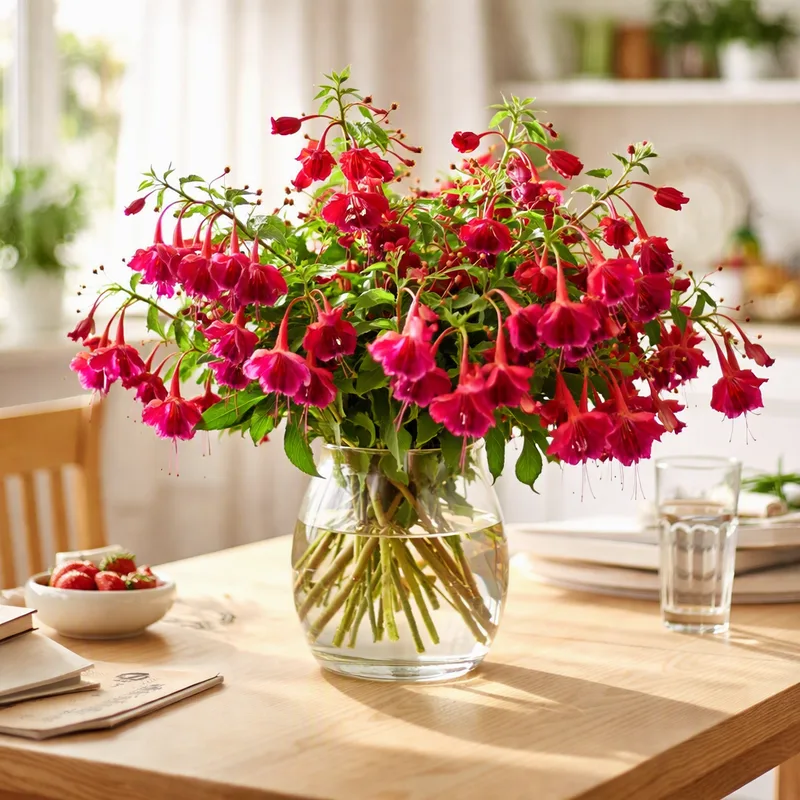
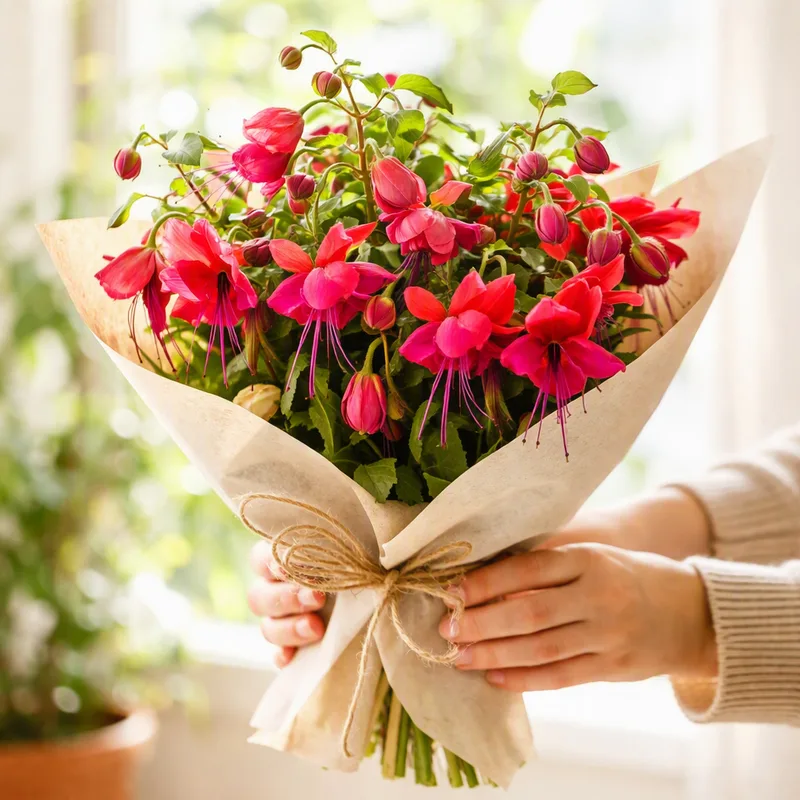
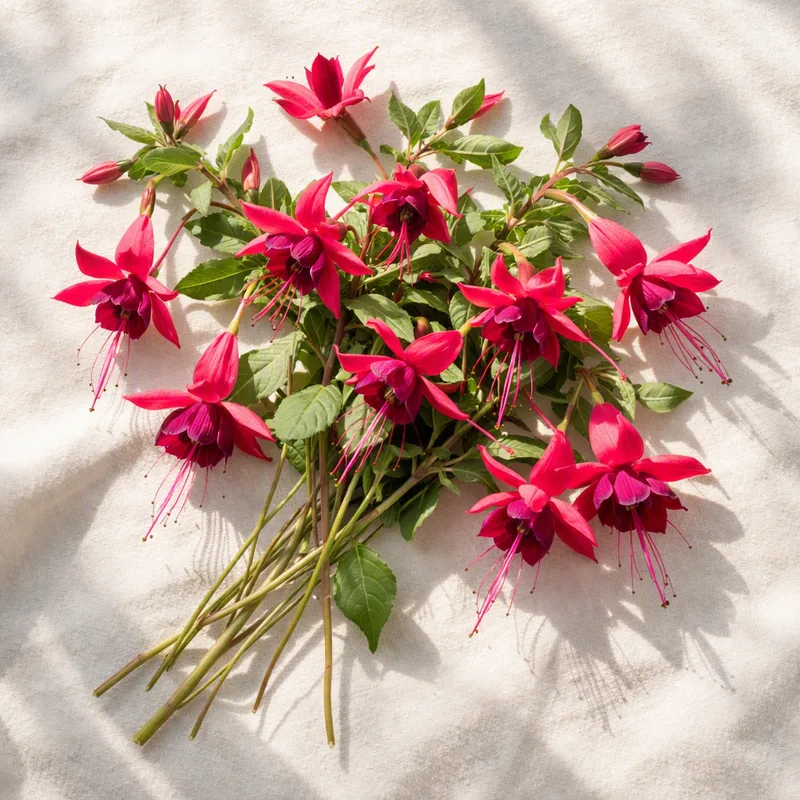
Red sepals, purple skirt
When people say red fuchsia they usually mean a flower with scarlet or crimson sepals and a purple or violet skirt. A few varieties are red throughout. The tube and sepals look like a lantern, and the stamens hang below like a clapper. Fuchsia magellanica, a hardy species from Chile and Argentina, is the ancestor of many of the red-and-purple garden types, and it is a common hedge plant in mild western districts of Britain and Ireland.
Red in the garden
Red fuchsia works well:
- as a tall shrub in a mixed border, especially hardy kinds such as 'Mrs Popple';
- in a hanging basket, in the trailing varieties;
- as a standard, a bush trained on a single stem, which looks formal in a pair of tubs.
Looking after red varieties
Choose a spot with morning sun and afternoon shade. Fuchsias dislike drying out, so water regularly and feed weekly with a tomato-style fertiliser during the growing season. Deadhead faded flowers and berries to keep plants blooming until the first frosts, normally October or November. Hardy plants should be cut back in spring once you can see new buds.
Red fuchsia or fusia?
The correct spelling is fuchsia, after the botanist Leonhart Fuchs. Colour charts list "fuchsia" for the vivid pink and "red fuchsia" for the plant with scarlet sepals, so be careful when shopping.
Safe for cats
Cats are not at risk from fuchsia according to the ASPCA. The berries are edible but not particularly sweet.