A cottage-garden giant
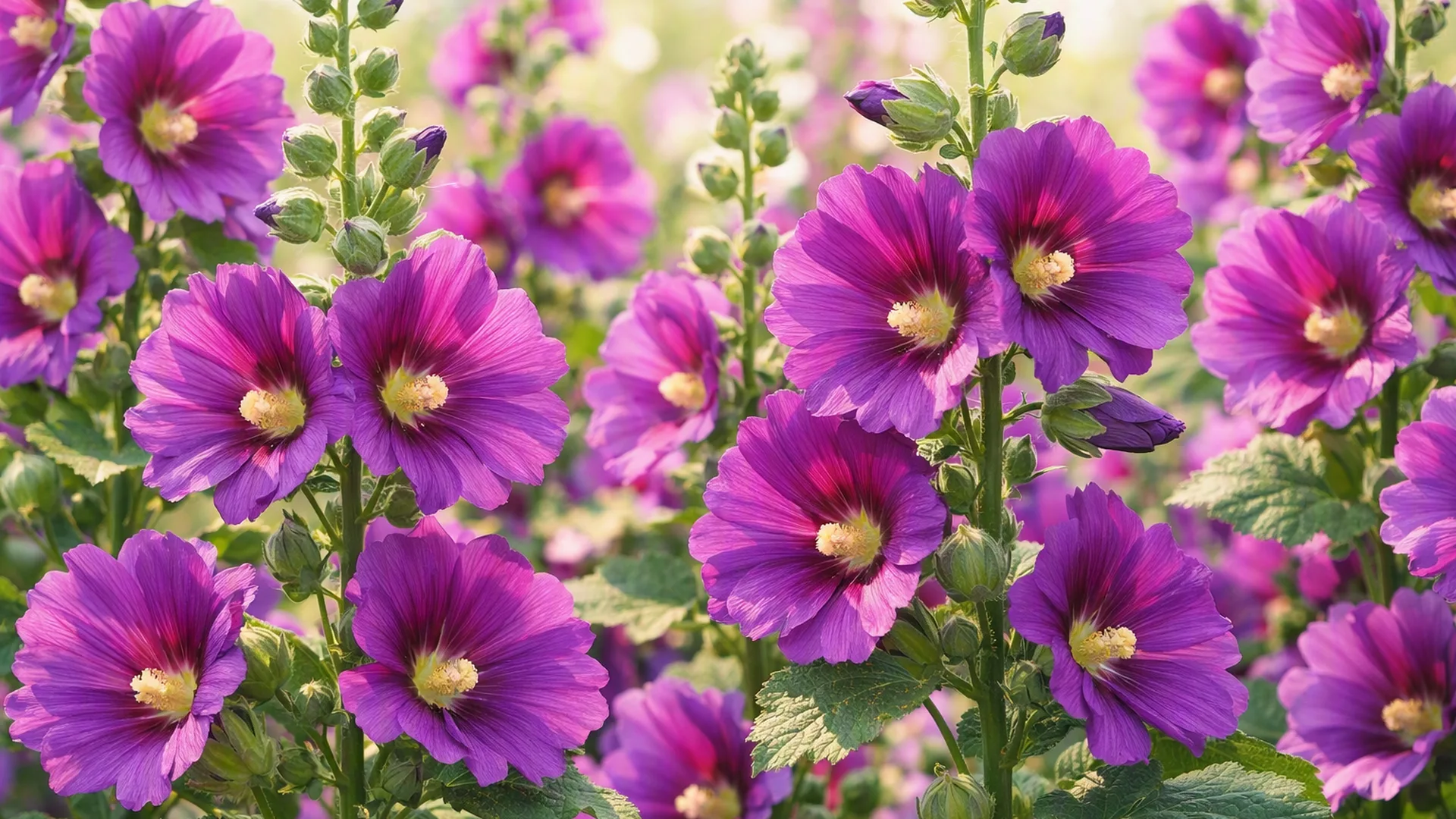
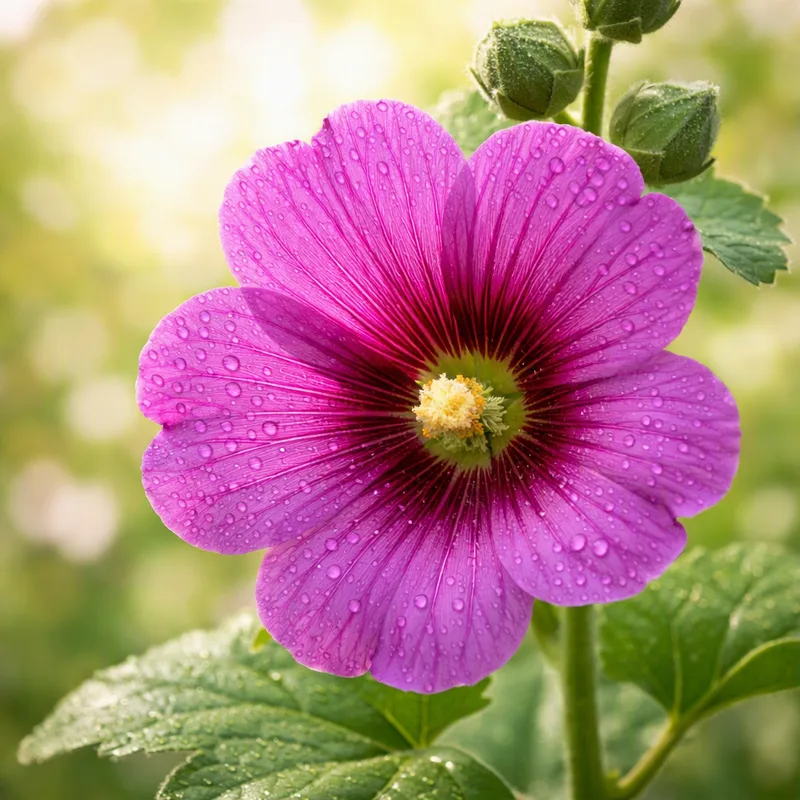
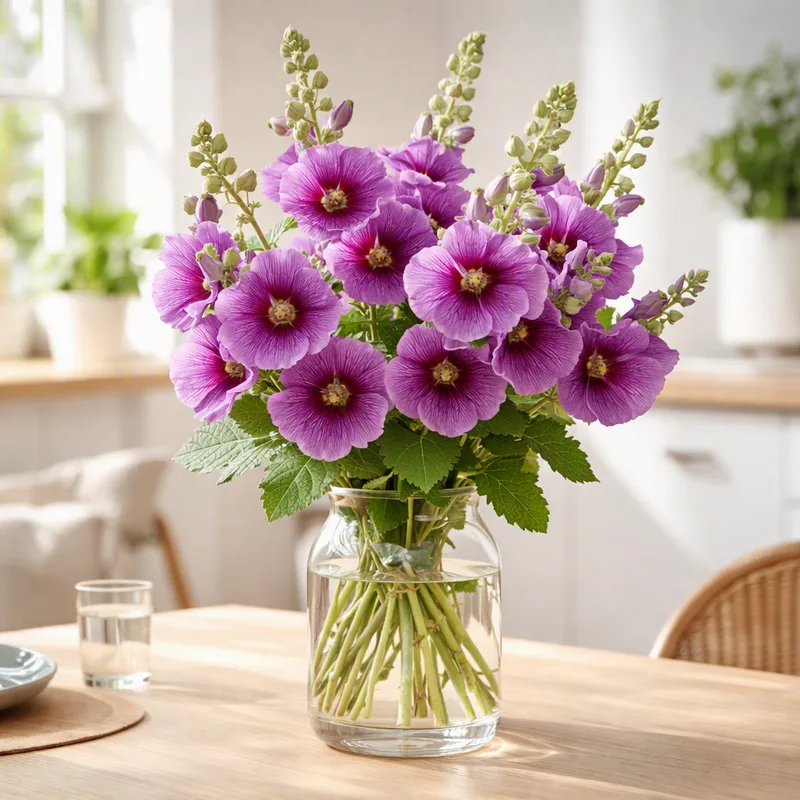
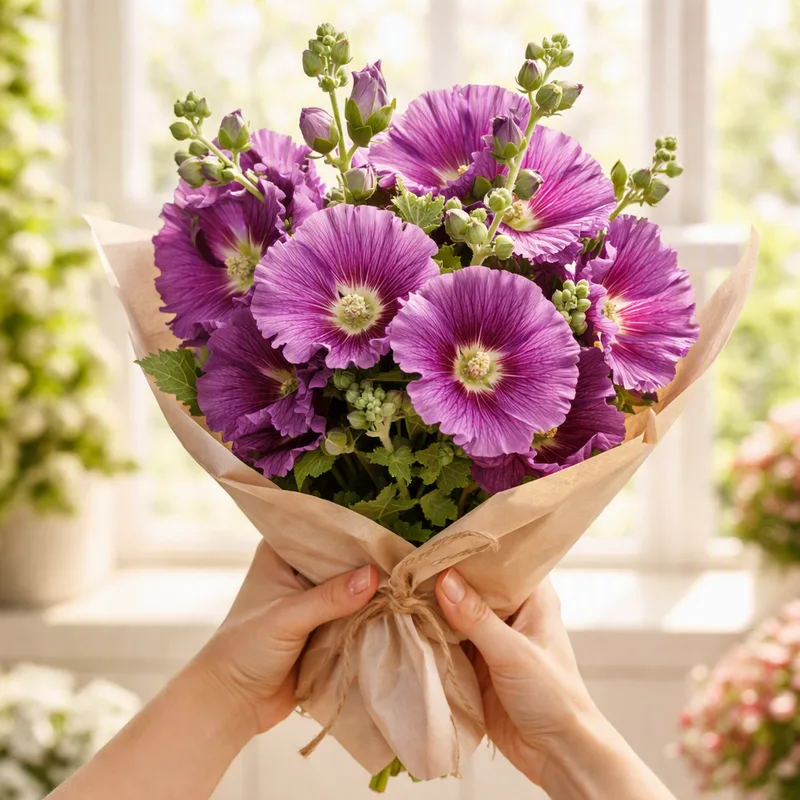
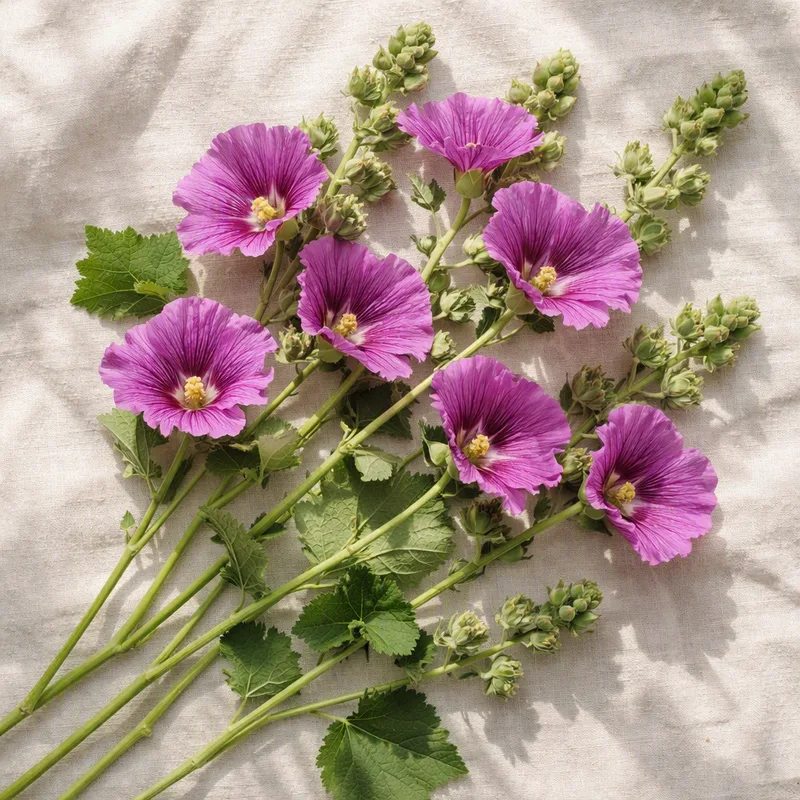
The common hollyhock, Alcea rosea, reached Europe from south-west China during or before the 15th century. The herbalist William Turner called it "holyoke", which is where the English name comes from. Flowers open from the bottom of the spike upwards, so one stem keeps blooming for weeks. Plants reach about 2.4 metres, and the blooms can span 13 cm.
Biennial habits, perennial hopes
The RHS calls hollyhocks fully hardy short-lived perennials that flower in the second year after sowing. In practice they behave like biennials, which is why gardeners let a few seedlings grow on each year and keep the best colours.
- Choose a sunny, sheltered spot with fertile, free-draining soil.
- Space pot-grown plants 60 cm apart.
- Set a cane or stout stake against each stem in windy gardens.
- After flowering, cut the spikes to the ground, or leave them until the seed cases turn brown if you wish to collect seed.
Dealing with rust
Hollyhock rust is the disease that spoils so many plants. Orange spots appear on the leaves, so remove badly affected foliage through the summer and clear every dead leaf at the end of the season. The RHS advises replacing plants after a few years to stop the disease building up.
Pets and wildlife
The ASPCA lists the hollyhock as non-toxic to dogs, cats and horses. Single flowers are best for bees and butterflies, while double forms are less useful to insects.