

A spring carpet
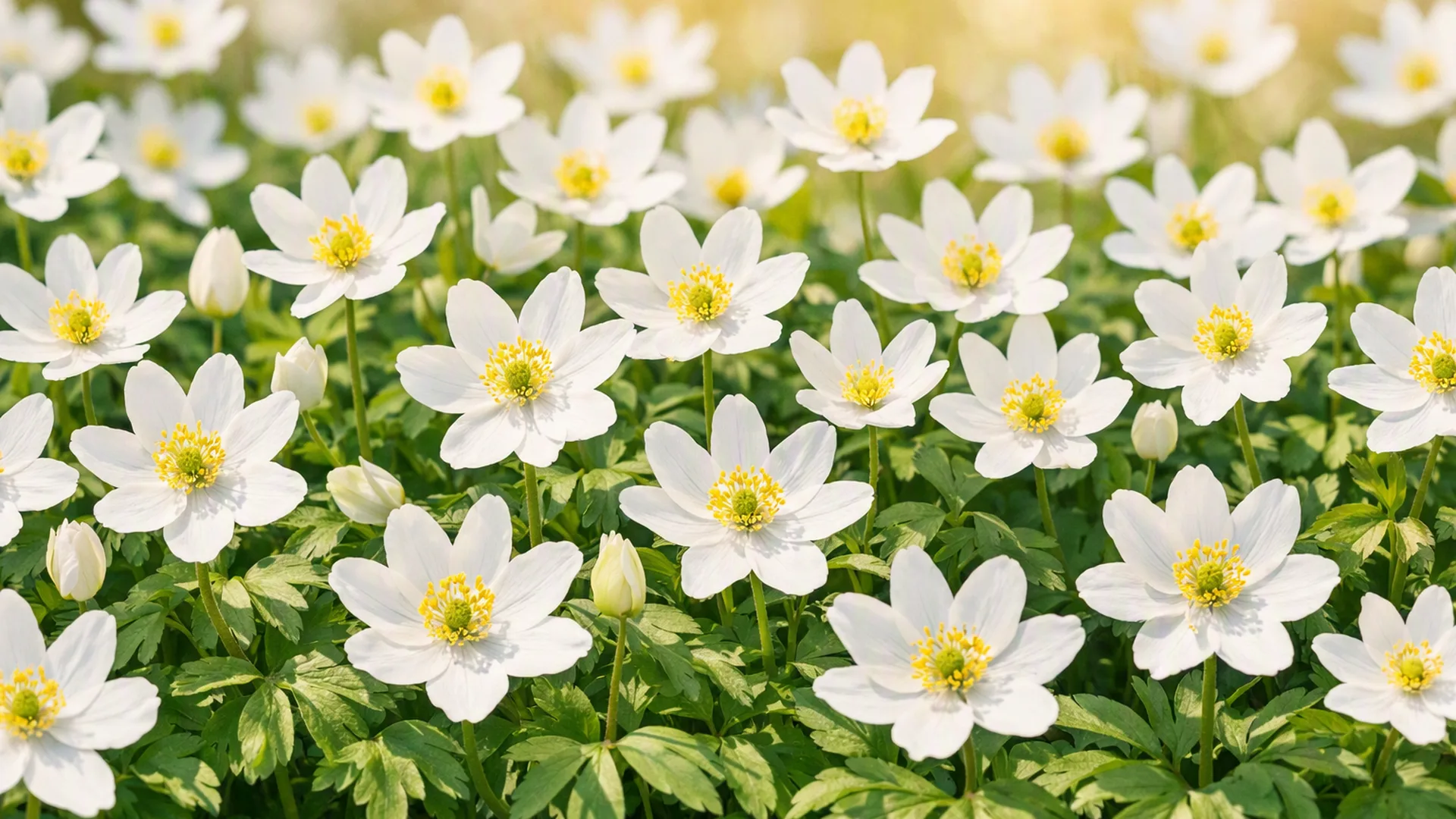
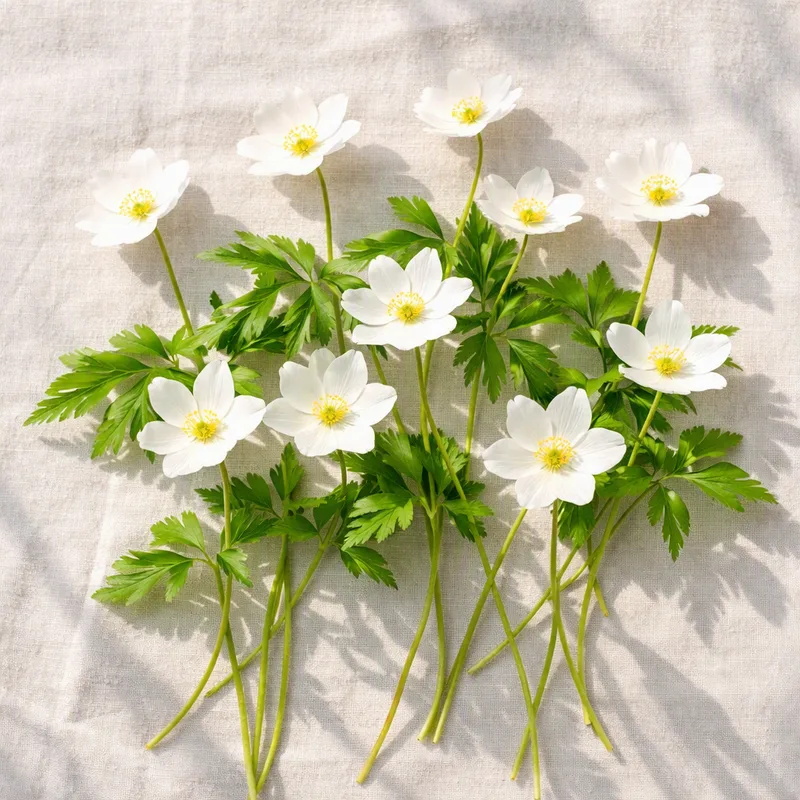
Wood anemone, Anemonoides nemorosa, formerly known as Anemone nemorosa, is a small perennial of the buttercup family that blooms across the British Isles from March to May. It flowers soon after its leaves appear, before the trees above close their canopy. The white blooms are about two centimetres across and often tinted darker on the backs of the petals. By midsummer the plant has died back below ground and rests until next spring.
Why it is called windflower
The old name windflower goes back to William Turner, who in his 1551 New Herball linked the Latin word anemone with wind. The slender stems do tremble in a breeze. Do not confuse it with wood sorrel, which has clover-like leaves and smaller flowers.
A sign of old woodland
Wood anemone spreads very slowly, which is why large drifts are sometimes used as an indicator of ancient woodland. This is a guide, not a rule, because plants can also appear in newer woods and parks after human introduction.
In your garden
- Choose partial shade under deciduous trees or shrubs
- Use soil rich in leaf mould that stays moist in spring
- Plant rhizomes in autumn, a few centimetres deep
- Leave leaf litter to rot down in place
Buy nursery-grown stock, and leave woodland plants where they grow.
Poisonous sap
The plant belongs to the buttercup family and contains irritant substances, so wear gloves when handling. If a child or a pet has eaten any, call NHS 111 or a vet.