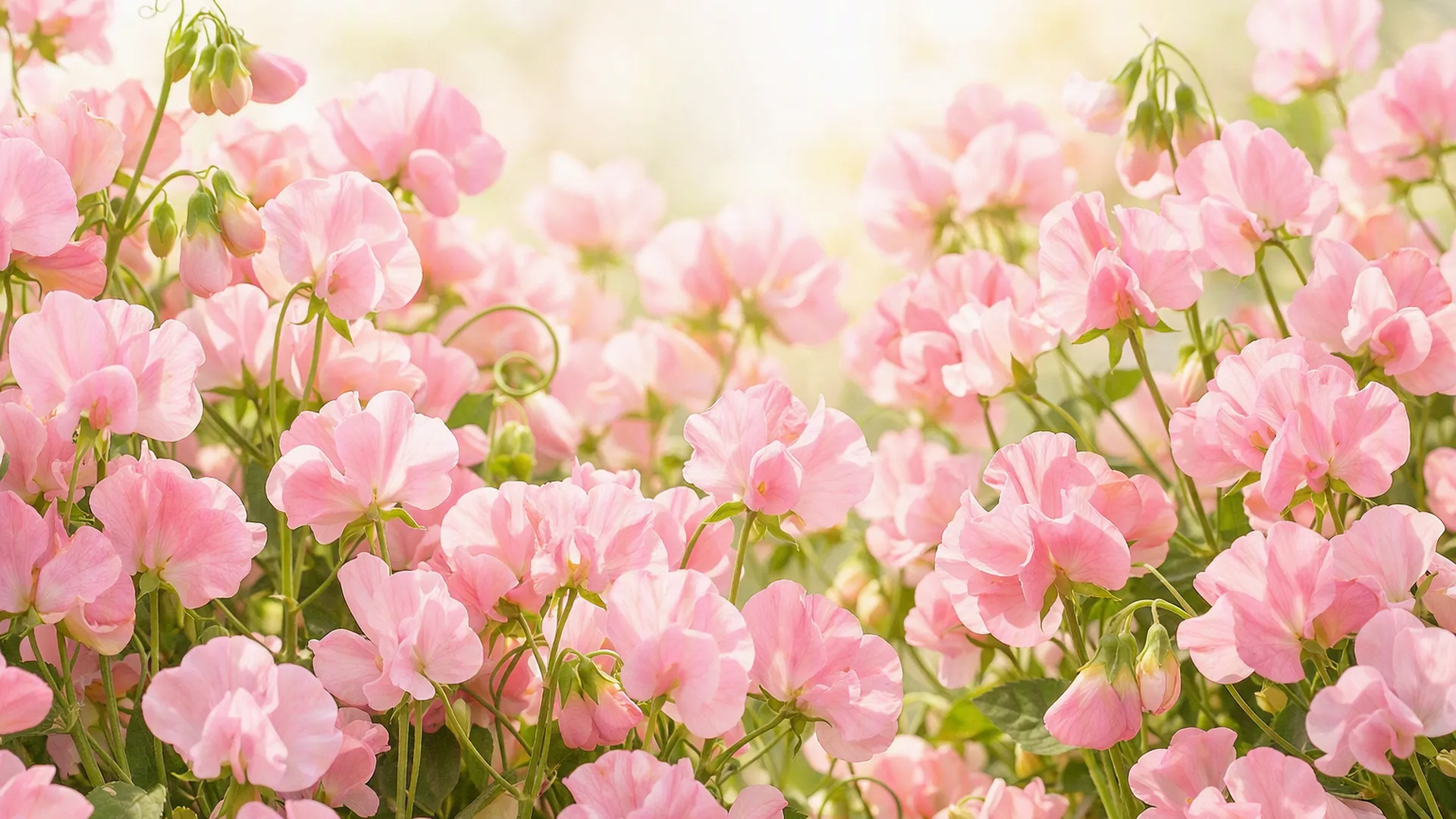
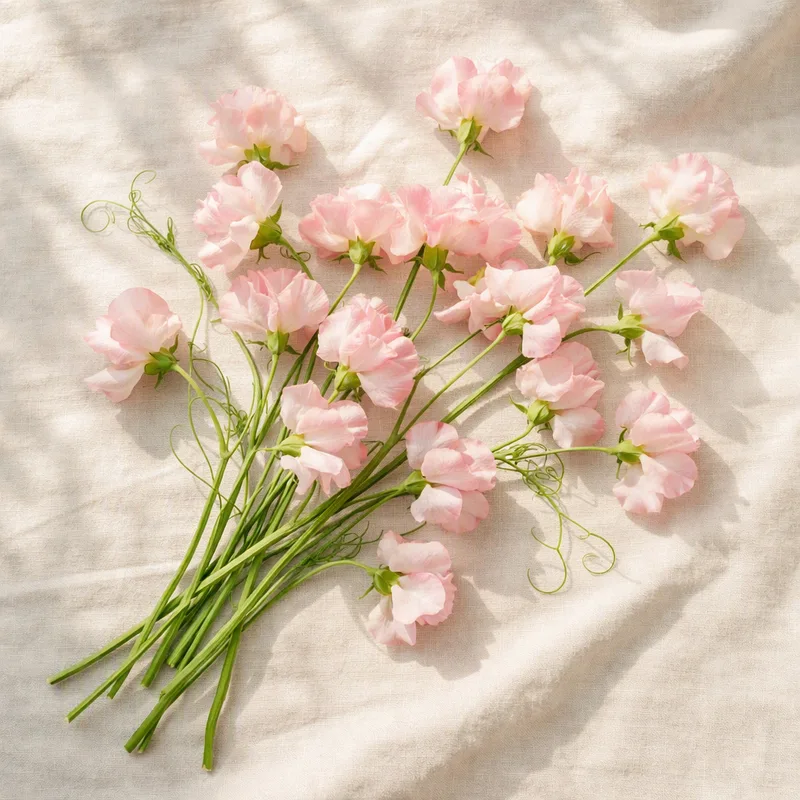
Pale pinks and deep roses
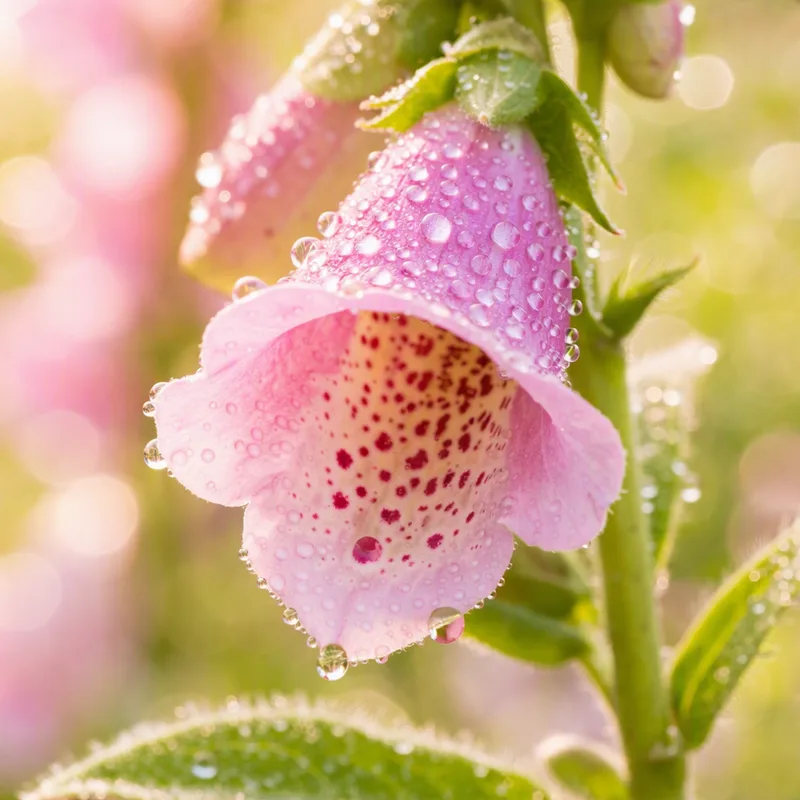
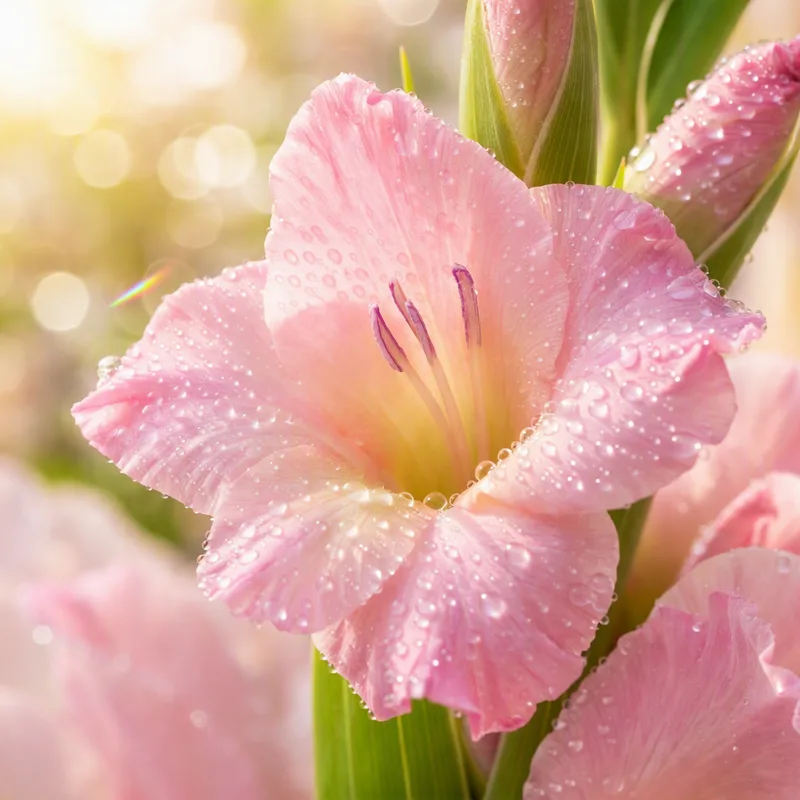
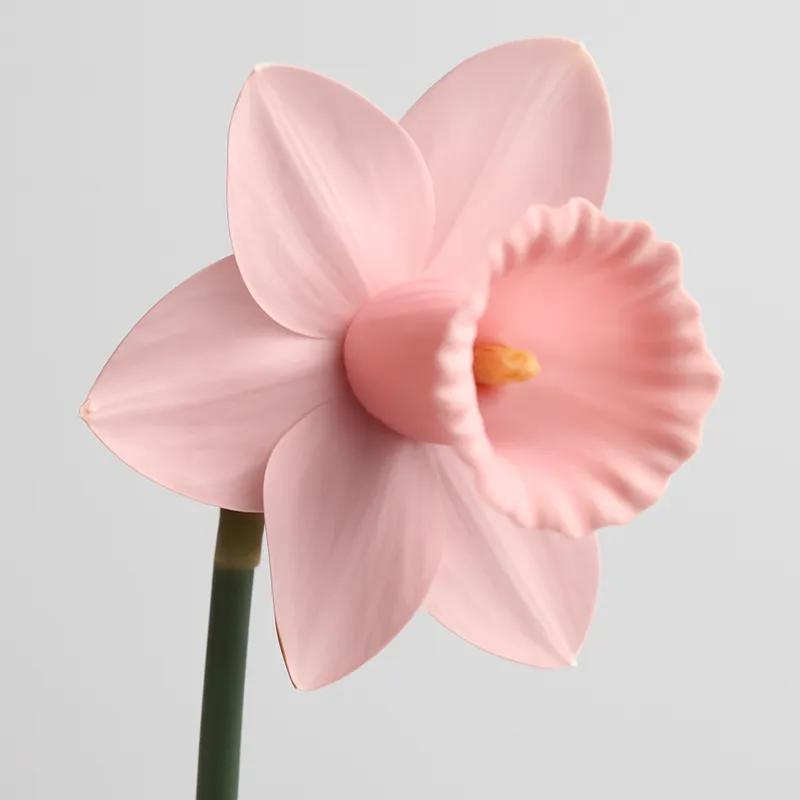
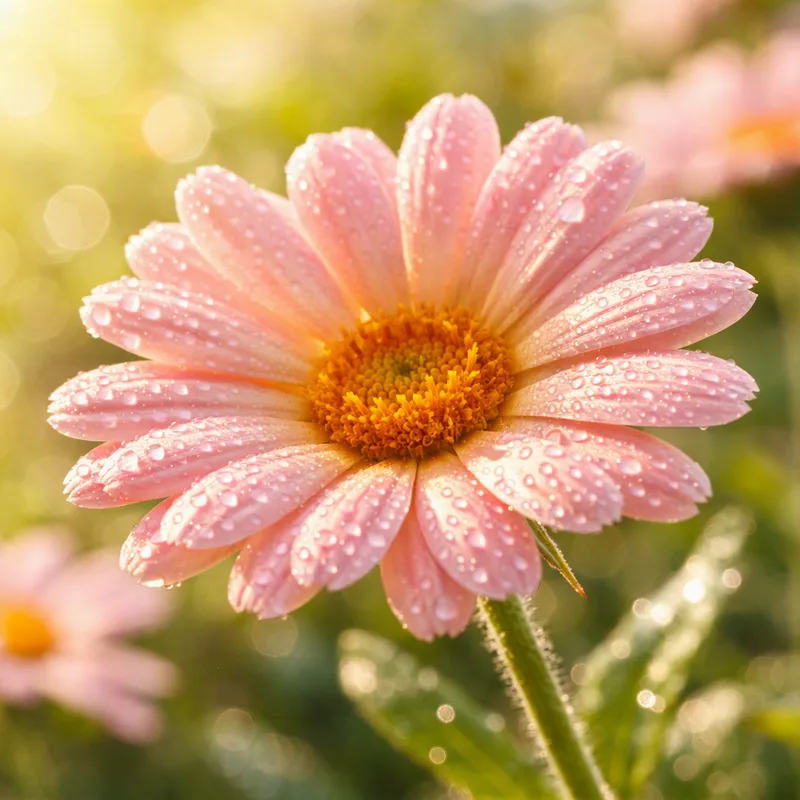
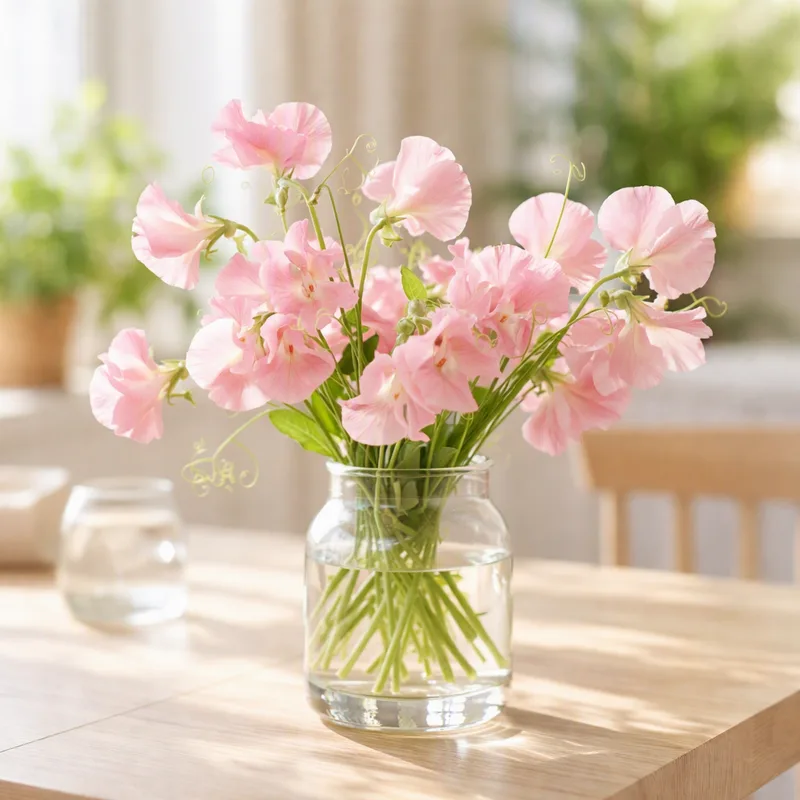
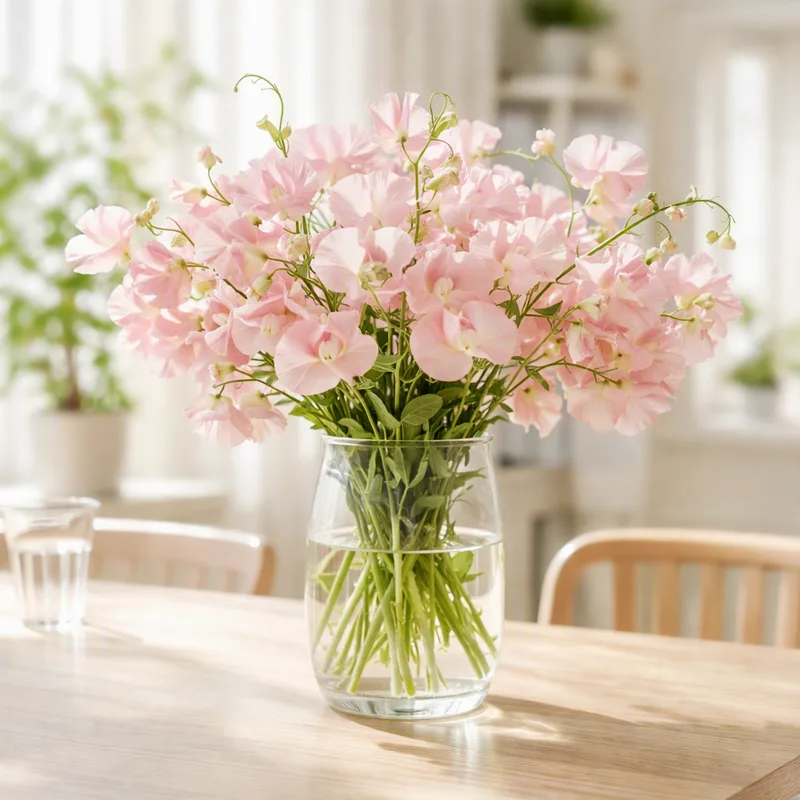
Pink sweet peas cover a broad palette: palest shell and baby pink, salmon, cerise and some bicolours with white. One of the oldest forms is a mixed pink and white type that was already in cultivation in the nineteenth century, the 'Painted Lady' look. 'Janet Scott' is a clear pink name that crops up in catalogues of old varieties. Searches for pale pink sweet peas show how popular the softer end of the range is.
What exactly is a pea flower?
People searching for the pea flower or a definition of sweet pea usually want the basics. Sweet pea is Lathyrus odoratus, an annual climbing plant in the pea family, Fabaceae, native to Sicily and southern Italy. The flower has the typical pea shape, with a large upright standard petal, two side wings and a keel at the base. Despite the name, it is a purely ornamental plant and the pods are not edible.
Grow your own
- Sow in autumn or from February to April, soaking seed overnight if you wish.
- Choose a sunny site with deep, fertile soil and good support such as a wigwam.
- Pinch out the growing point for bushier plants.
- Cut flowers every few days from early summer. The more you pick, the more you get.
For events
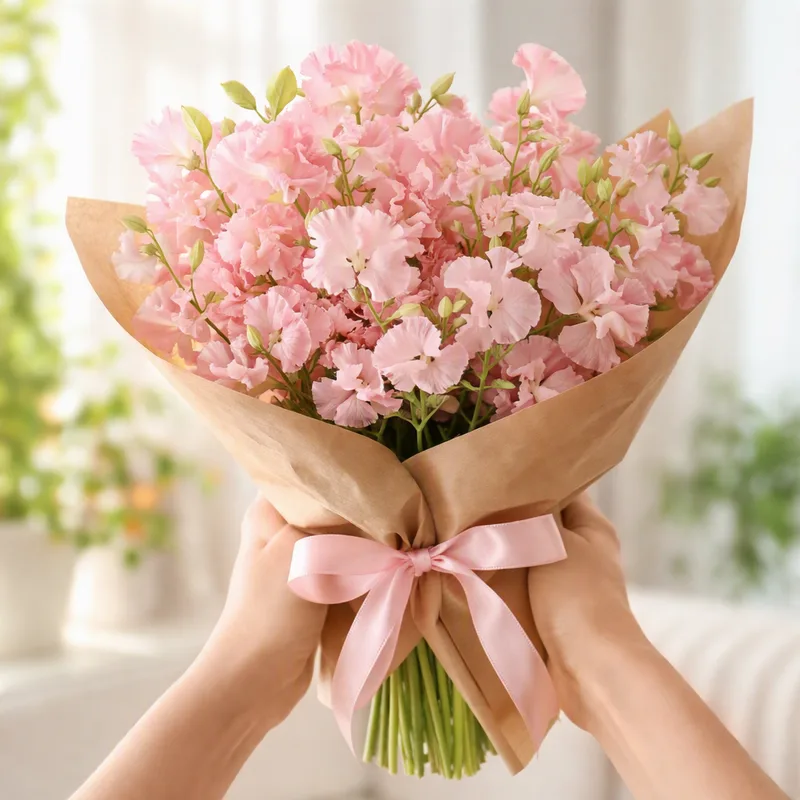
Pink sweet peas are a traditional choice for Mothering Sunday posies and small summer bouquets, though they only bloom outdoors from June in most places. Early sowings under cover can give flowers a little sooner.
Toxicity
Eating sweet pea seeds and pods may cause lathyrism, so keep them away from children and animals.