

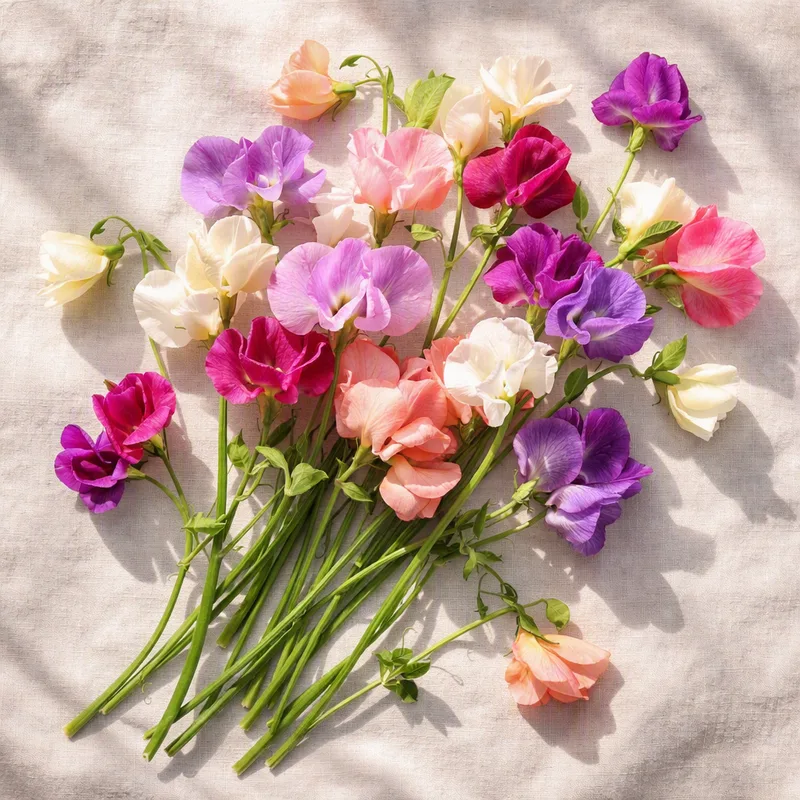
From Sicily to the allotment
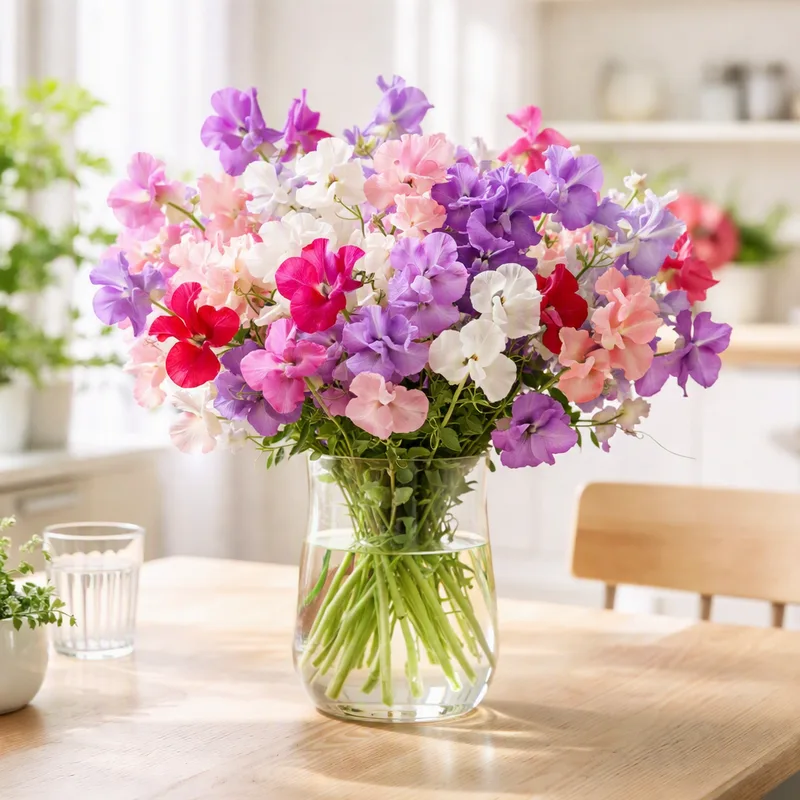
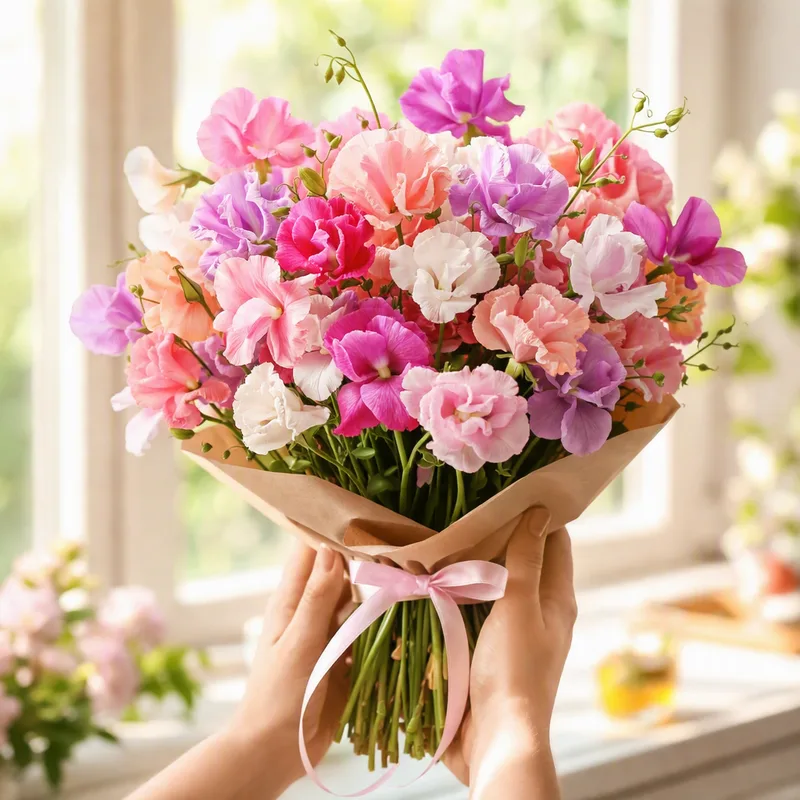
Lathyrus odoratus is native to Sicily, southern Italy and the Aegean islands. A Franciscan monk, Francesco Cupani, wrote about it in the 1690s and sent seed to botanists in England and the Netherlands. Early forms were small and purple, but nineteenth-century breeding, including the work of the Scottish nurseryman Henry Eckford, turned it into a large-flowered, richly scented plant in nearly every colour except yellow. This page covers the mixed, traditional kind rather than a single shade.
Sowing and support
Sweet peas are hardy annual climbers that reach one to two metres when given something to climb.
- Sow in autumn in a cold frame or unheated porch for early flowers, or in late winter and early spring under cover.
- Plant out into rich, moisture-retentive soil in sun, with a wigwam of canes, netting or twiggy hazel sticks.
- Pinch out the growing tip when seedlings have a few pairs of leaves to get bushier plants.
- Tie in the stems as they climb, and water well in dry spells.
Cut and come again
The flowers are at their best from June to August. If you leave spent blooms on the plant, it will make seed pods and stop flowering. Picking every few days is the secret, and a small bunch in a jug lasts around three to five days indoors. Sweet pea displays are a feature of many village flower shows.
Look-alikes and poisons
The everlasting pea, Lathyrus latifolius, is a perennial and often has little scent. It is the species the ASPCA lists as toxic to horses, not the annual sweet pea. The seeds of Lathyrus odoratus are poisonous in quantity and can cause lathyrism, so never eat the pods and keep seeds away from children and pets.