The name and the meaning
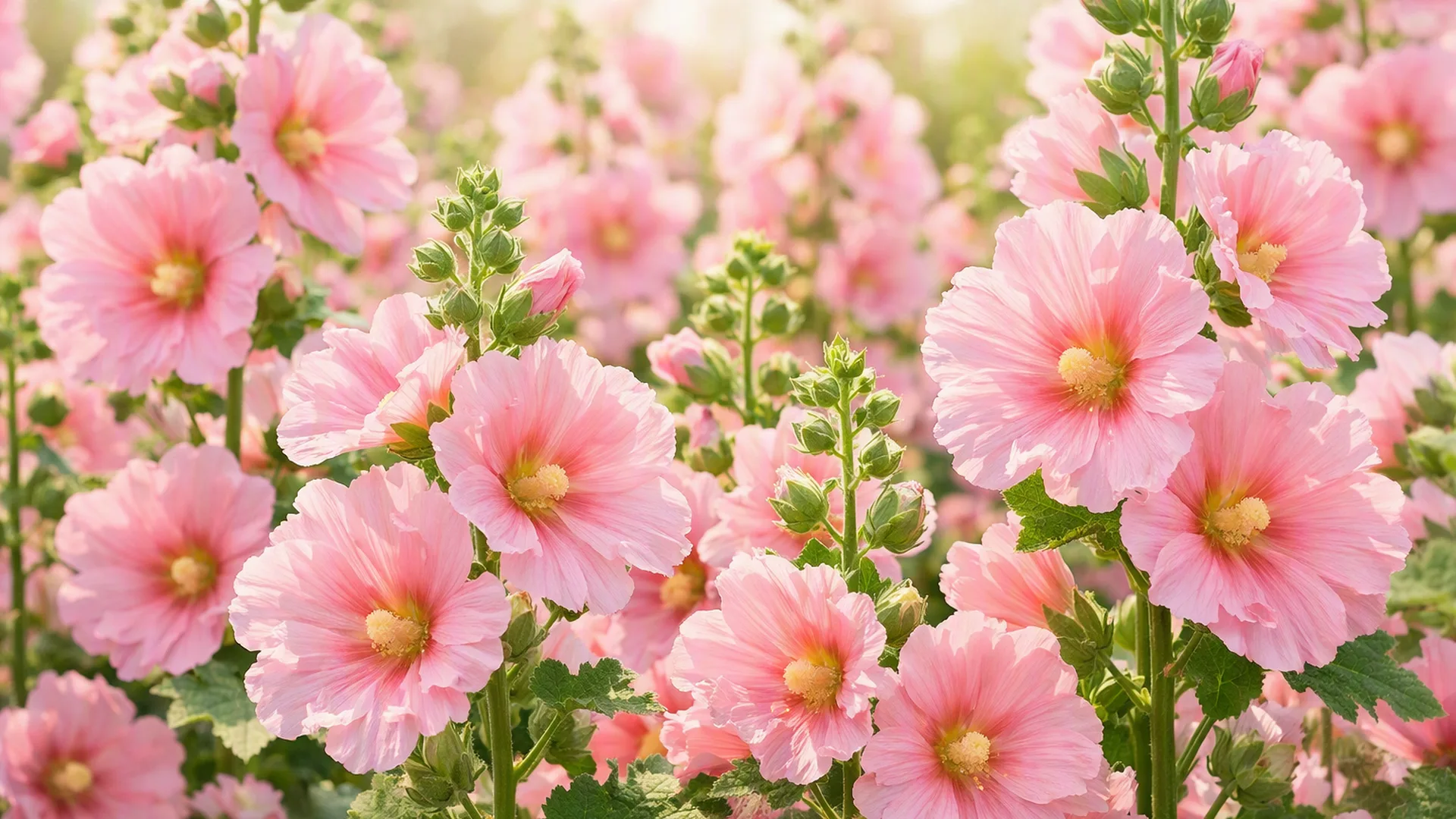
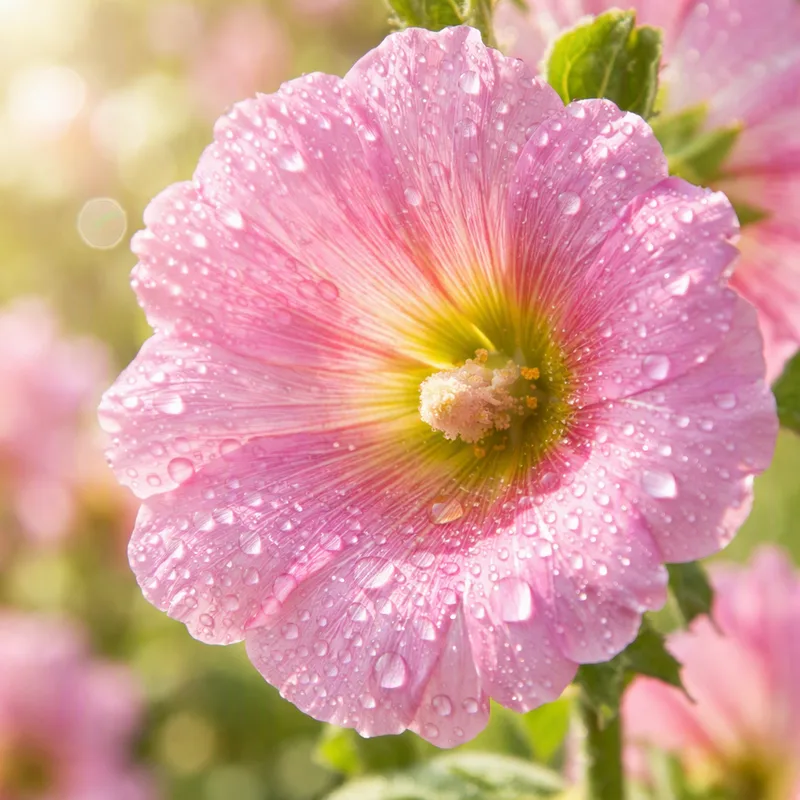
People often search for "holly hock" as two words, but the plant has nothing to do with holly. William Turner, a 16th-century herbalist, wrote it as "holyoke", and the spelling settled into hollyhock. As for meaning, there is no single agreed message; pink hollyhocks are mostly read as a symbol of the traditional cottage garden.
Where to plant
Pink hollyhocks thrive in fertile, well-drained soil in full sun, which the RHS says produces the tallest flower spikes. Position them at the back of a border or along a wall, but out of the strongest winds.
- Pot-grown plants can go in during spring or autumn.
- Space them 60 cm apart.
- Water young plants regularly until they establish.
- Mulch with 10 cm of well-rotted compost after planting.
Buying or growing
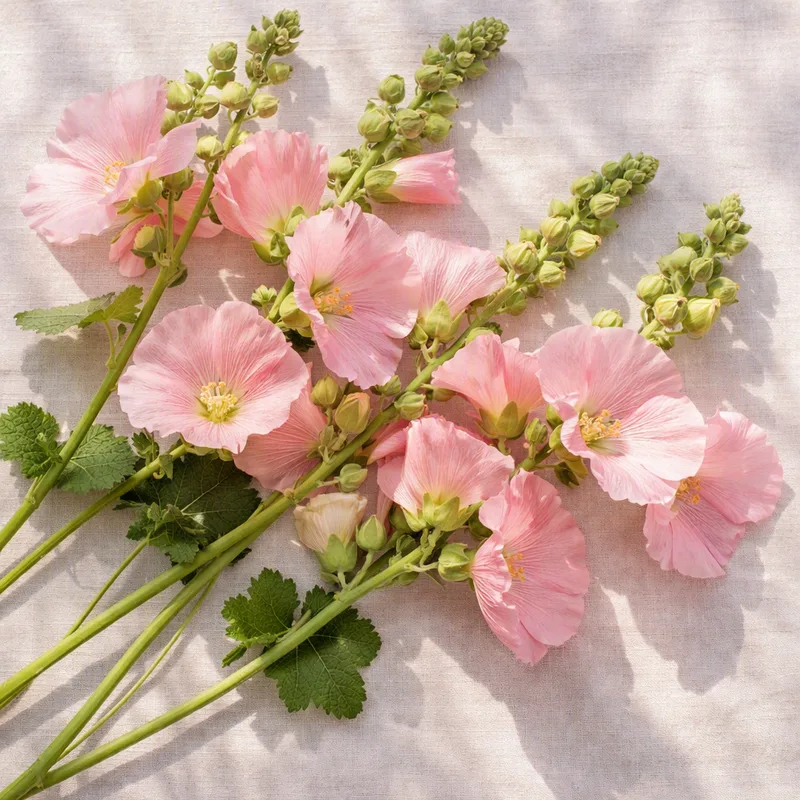
Seed is widely sold throughout the year, with singles and doubles in many pinks. Plug plants and young plants appear in spring, but choice may be limited. Seed sown in autumn can overwinter in a cold frame or cold greenhouse, flowering the following year.
Looking after them
Cut the spent flower spikes to the ground. Leave a few to ripen seed if you want free plants, but remember the seedlings may not match the parent. Remove rusted foliage promptly and pick up fallen leaves in autumn.
Wildlife and pets
Single pink flowers give bees and butterflies easy access to pollen. The ASPCA lists hollyhock as non-toxic to dogs, cats and horses.