

Pink heather in gardens and on the moor
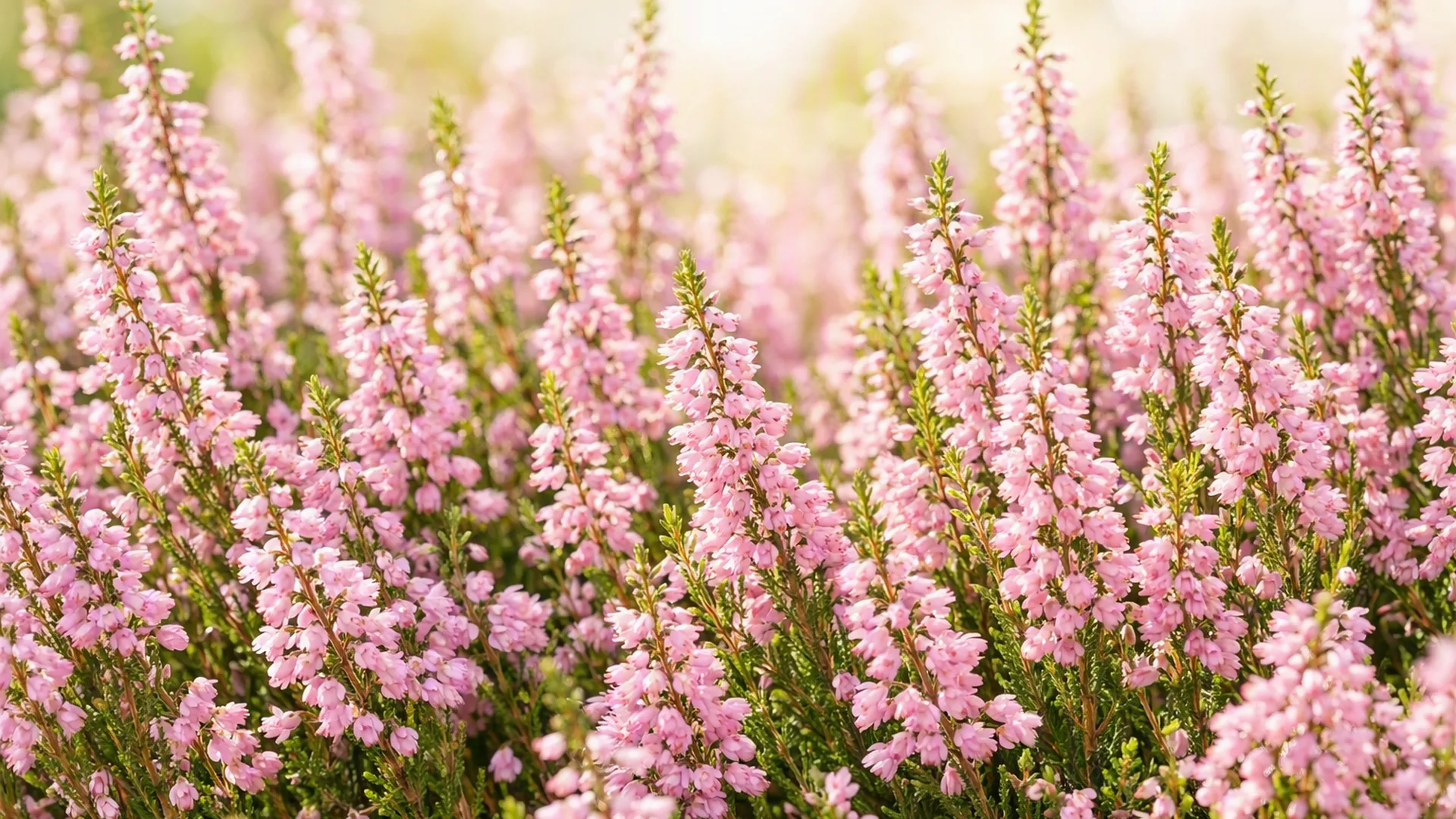
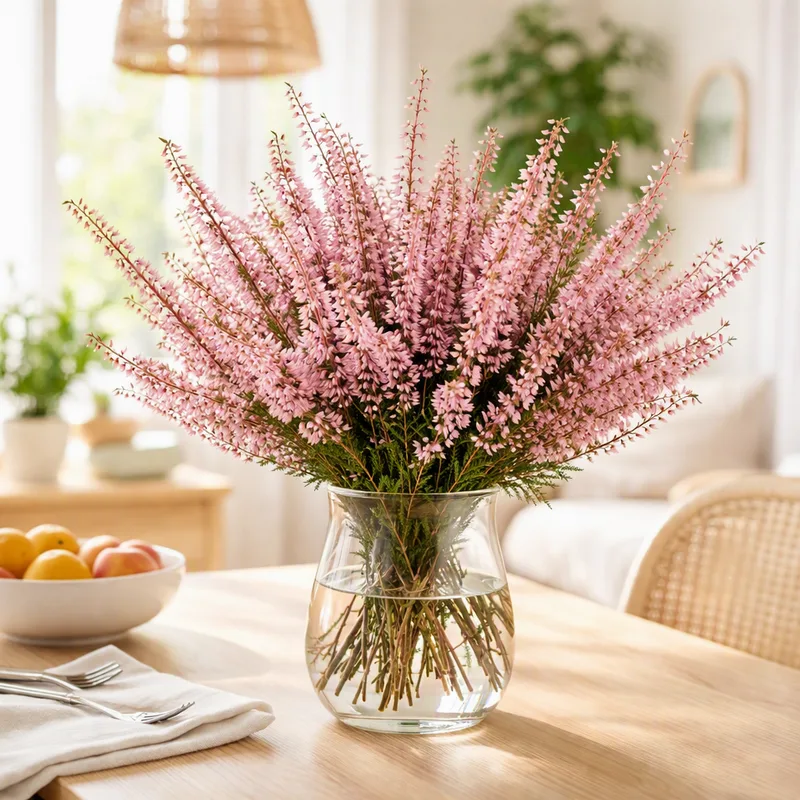
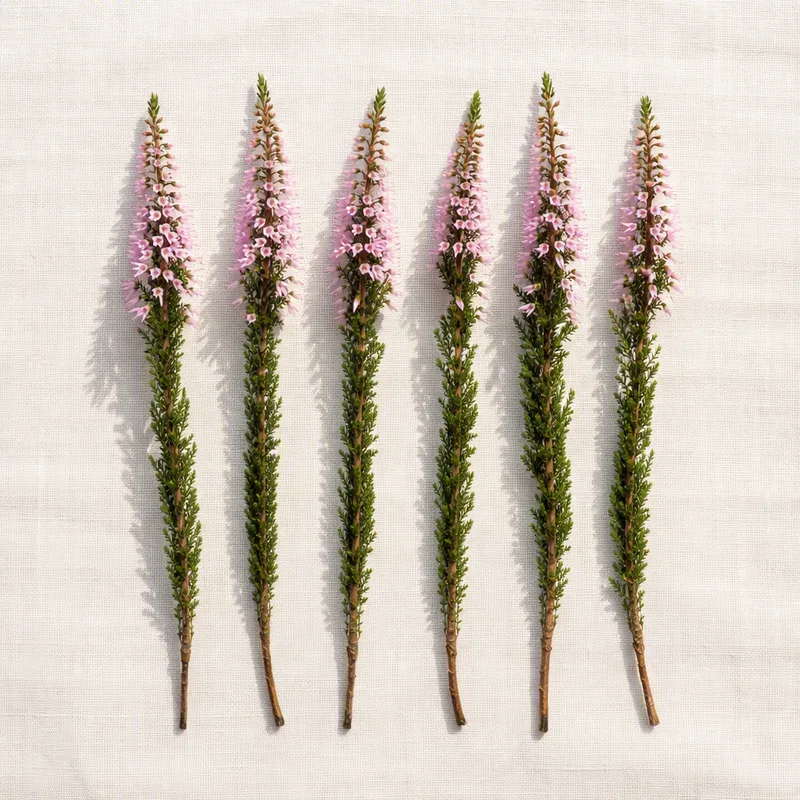
The wild heather you see on a Pennine or Highland hillside is a pinkish-purple. In gardens, pink forms range from pale blush to a deep rose. People who search for "pink heather flower" often mean the winter-flowering heath, which blooms from December and is pink to magenta.
Pink varieties
- Calluna vulgaris 'H.E. Beale' has long spikes of double pink flowers that last into October.
- 'Darkness' is deep crimson-pink with a compact shape.
- Erica carnea 'Springwood Pink' is a spreading winter-flowering heath in rose-pink.
- Erica cinerea, bell heather, has purple-pink bells from July, and is a native plant of dry heathland.
Seasonal heather
You can plan a year-round heather bed. Winter heaths flower from December to March, Calluna from July to October, and bell heather in between. A mix keeps bees fed over a long period, and the foliage colour of many types adds interest in the off-season.
Planting tips
Plant in autumn or spring in a sunny, open site. Add ericaceous compost to the planting hole in neutral soil, and mulch with pine bark. For Calluna, avoid chalky soil. Trim after flowering and don't cut into bare wood. Space plants about 30 to 45 cm apart so they knit together into a carpet. Heather's mildly sweet nectar draws bumblebees, and the honey made from heather is a speciality of upland Britain.
Is pink heather safe for pets?
Heather (Calluna vulgaris) is not named on the ASPCA lists of toxic plants for cats and dogs. If you are worried, speak to your vet or the Animal PoisonLine.