Soft pink for early summer
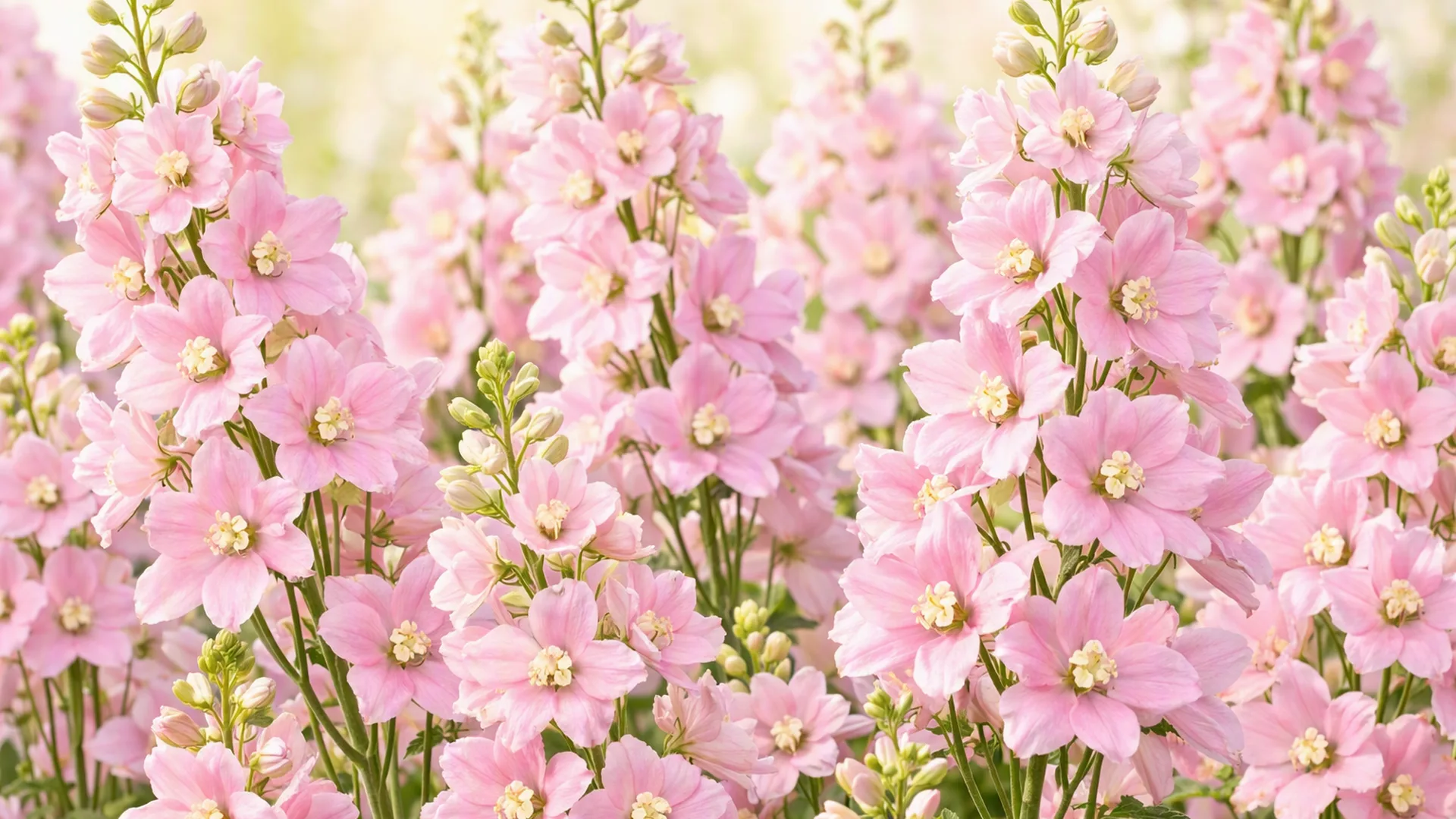
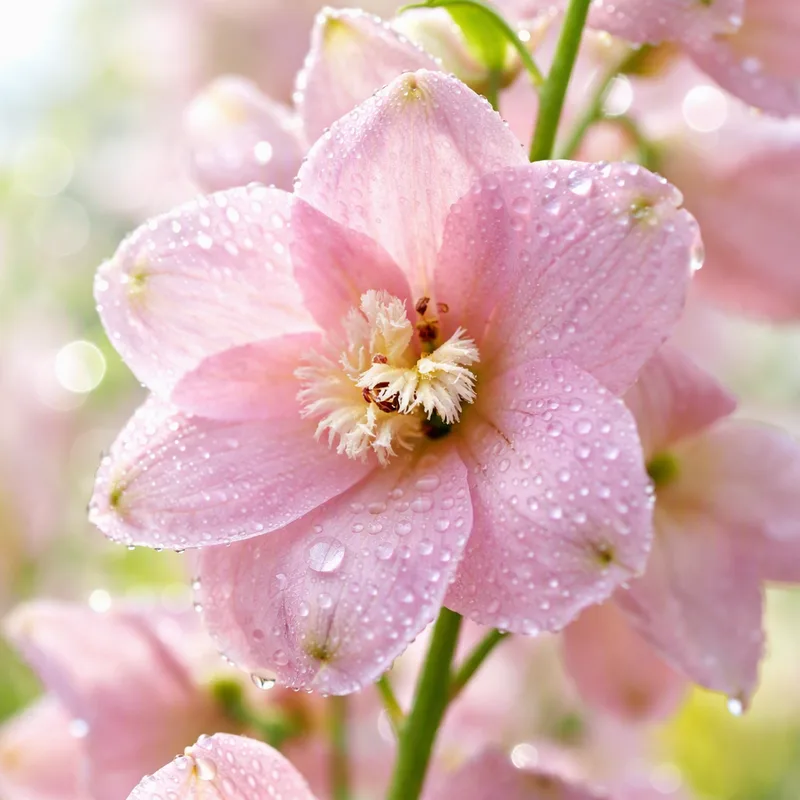
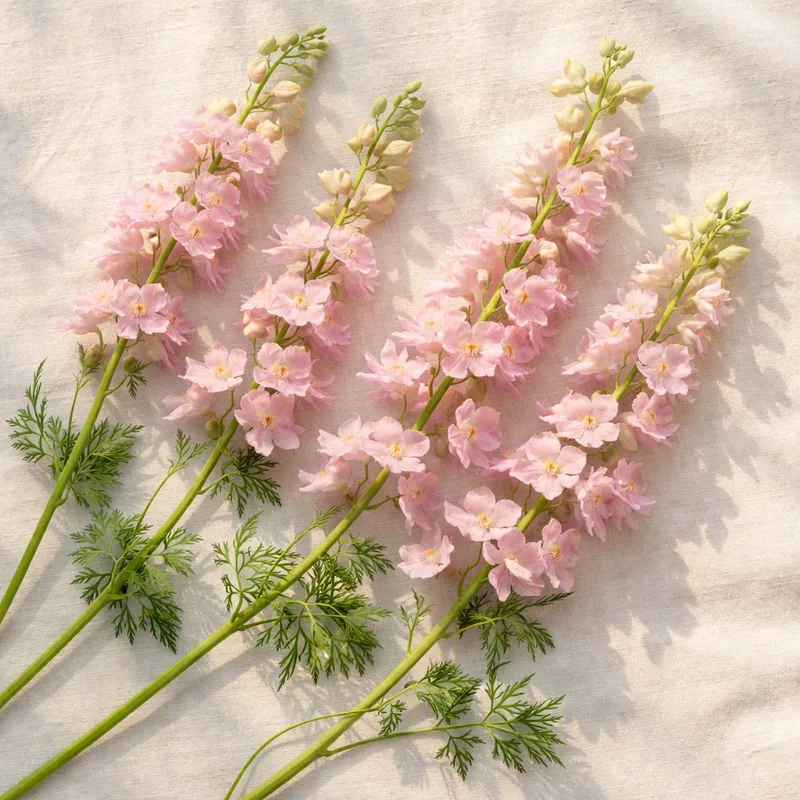
Pink delphiniums are among the most sought-after colours in a cottage border, partly because pink gives a gentler picture than the vivid blues. The Pacific Hybrid 'Astolat' has lilac-pink flowers, and 'Guinevere' is a pale pink-lavender, so you can match soft colour schemes with roses, lupins and foxgloves.
Settling them in
- Plant in full sun in rich, well-drained soil dug over with compost.
- Allow space for good airflow, which helps prevent mildew in a damp summer.
- Put supports in early and tie the stems as they grow.
- Mulch and feed in spring, and protect young shoots from slugs.
The tall Pacific Hybrids can reach 1.5 metres or more, while shorter Belladonna types such as pale pink selections are easier in windy places. The RHS describes delphiniums as hardy, but late frosts can damage new spring growth in colder parts of Britain, such as the Pennines or Scotland.
Backing them with a dark yew hedge or wall helps pale pink spikes stand out, and growing them alongside roses is a classic British combination that flowers at the same time in June.
Cutting and arranging
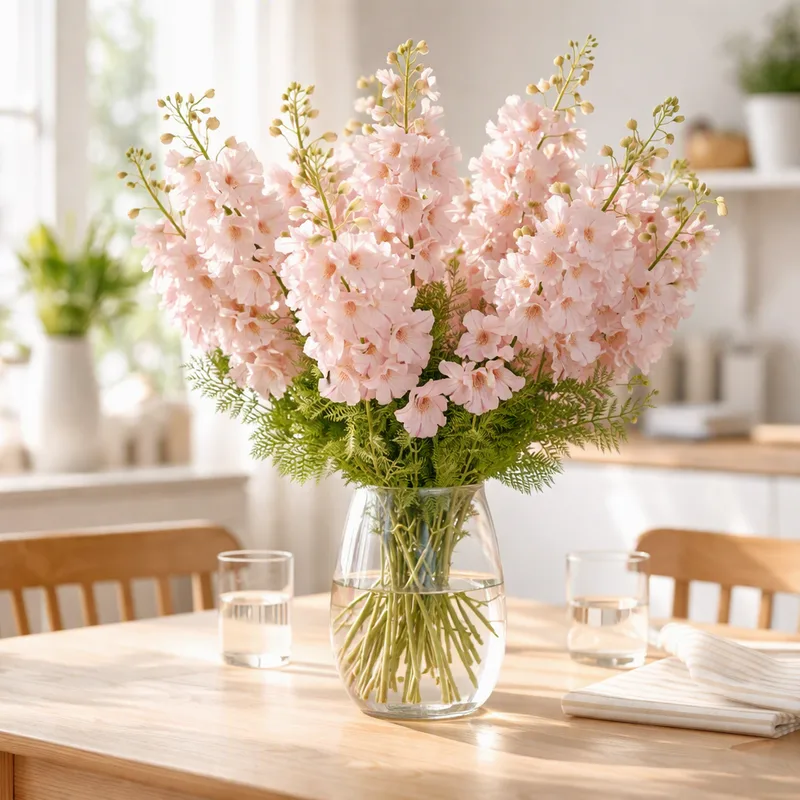
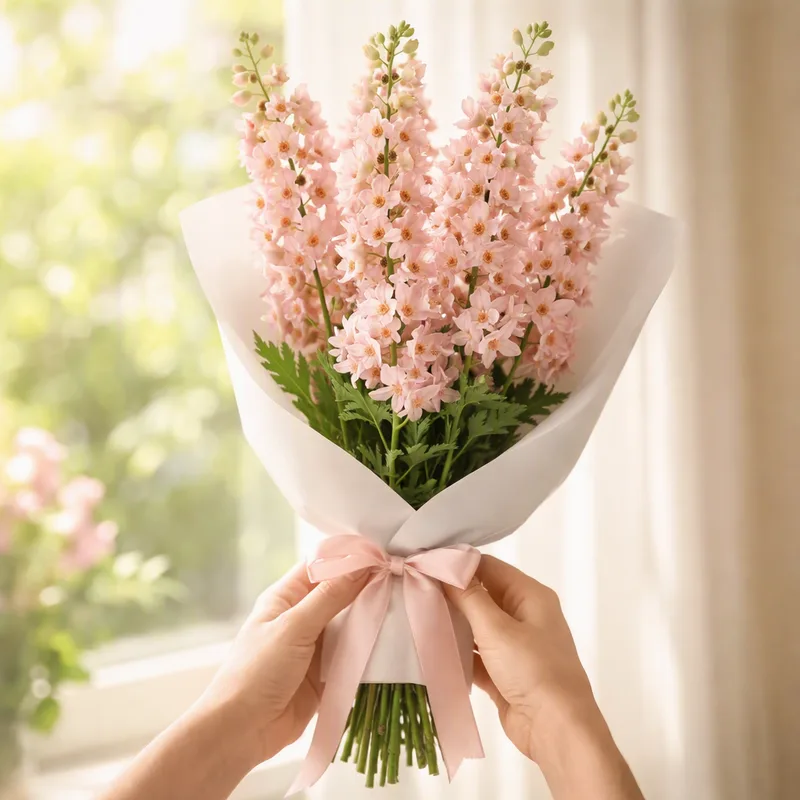
Pink delphinium works as a tall accent in a summer arrangement. Stand the stems in cool water straight after cutting and keep the display away from pets.
Safety
All parts of delphiniums are poisonous. Dogs, cats and horses can all be poisoned, says the ASPCA, and people should avoid swallowing any part of the plant. Wash your hands after handling it. In an emergency phone NHS 111 or, for an animal, your vet or the Animal PoisonLine.