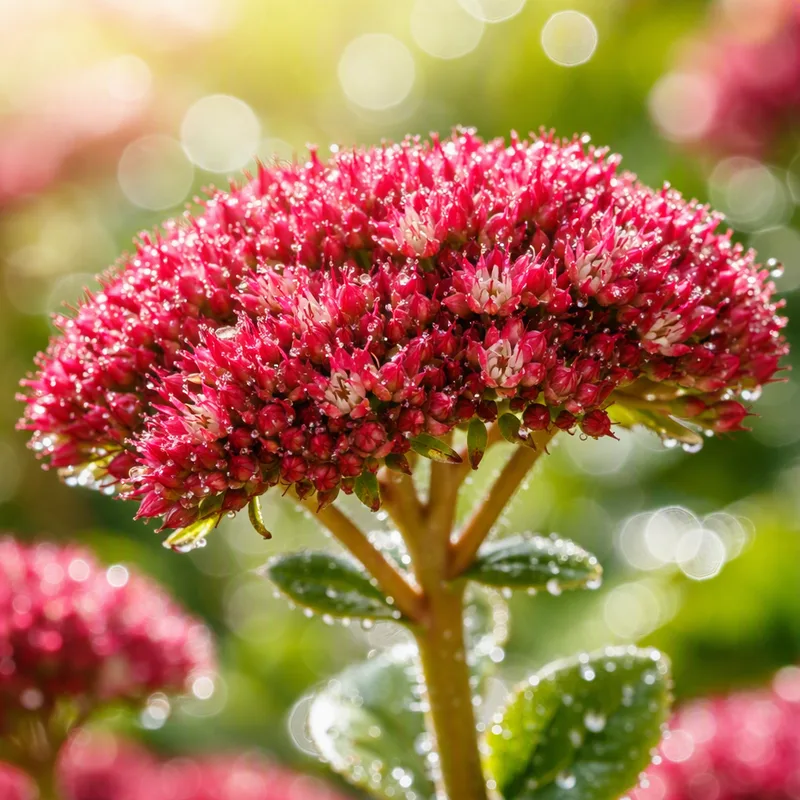
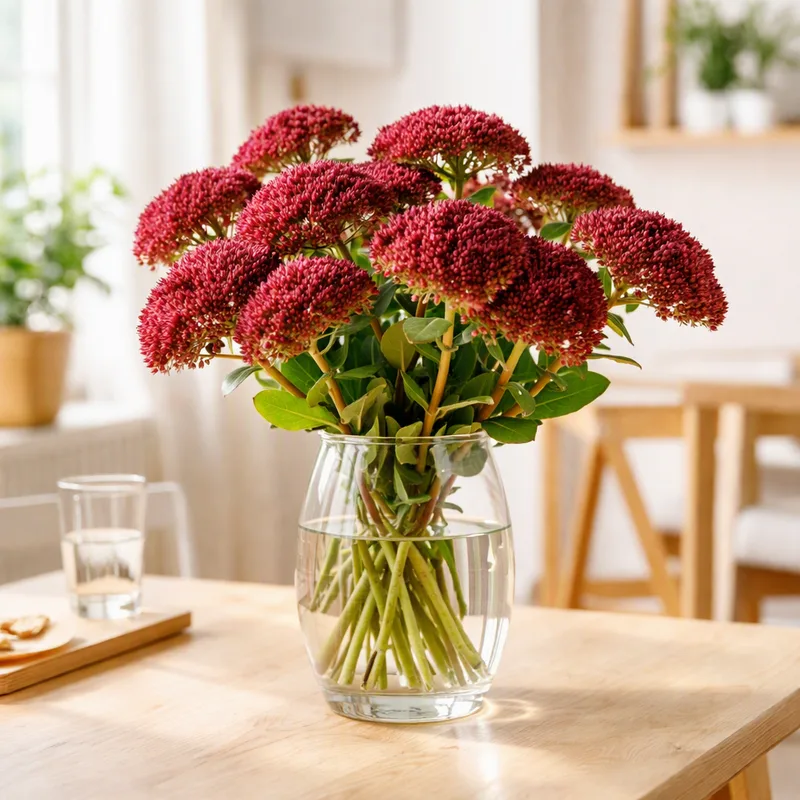


The colour changes through autumn
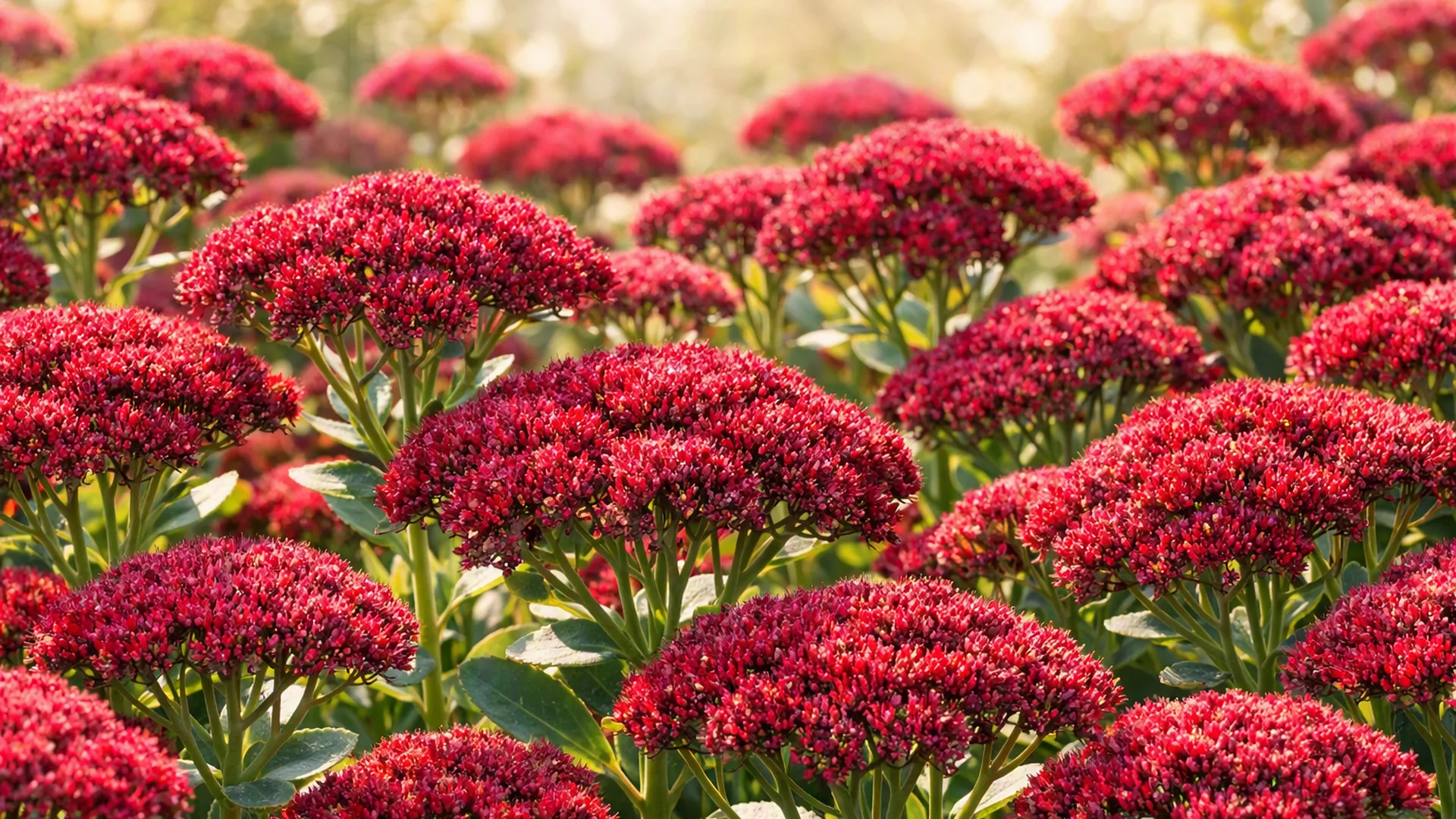
Stonecrop heads do not stay one colour. They begin as green buds, open to pink and then darken to copper, rust or brick red as autumn moves on. The effect can be best in October, when many borders have lost their colour. Dark-leaved selections such as 'Purple Emperor' carry the red tone into the foliage as well.
Which to choose
- 'Herbstfreude' (Autumn Joy) fades from pink to coppery red and is a popular form.
- 'Matrona' has grey-purple stems and rosy flowers.
- Dark-leaved hybrids such as 'Purple Emperor' offer plum foliage with pinkish-red flowers.
If you want to see how the colour develops, look at the plants at garden centres in late September, when they are in full colour, rather than in spring. Buying then also lets you place them with tall grasses, which look best at the same time.
Putting it to use
The russet seedheads pair well with the golden tones of rudbeckia and the soft plumes of miscanthus. Leave them standing through winter, since they provide structure in frost and shelter for insects.
Care
Full sun and sharp drainage give the best colour. Rich soil produces lush, floppy plants with weaker colour. Divide every three to four years, and watch for slugs on new spring growth.
Gentle on skin, uncertain for pets
Stonecrop is not known as a dangerous garden plant. No ASPCA record exists for this exact stonecrop, although burro's tail, a relative, is shown as safe for cats and dogs. Stop pets eating large amounts. As with any plant, wash hands after cutting if your skin is sensitive.