Red comes in two forms
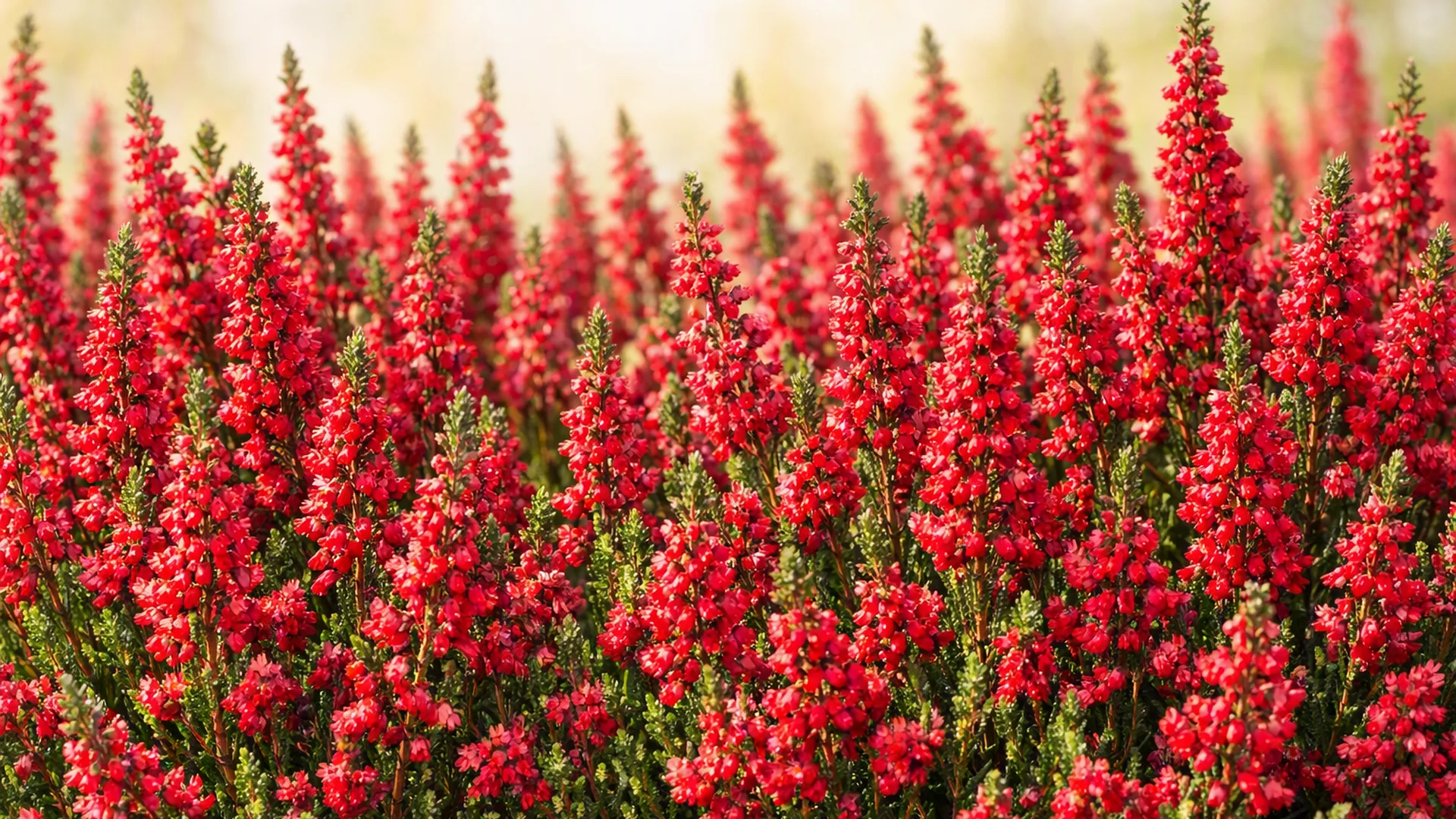
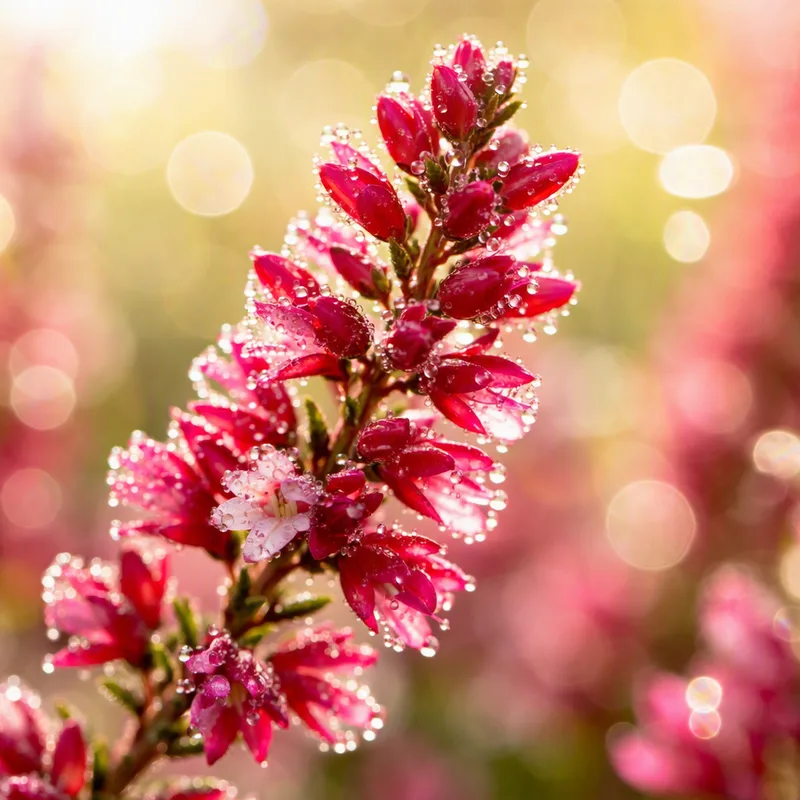
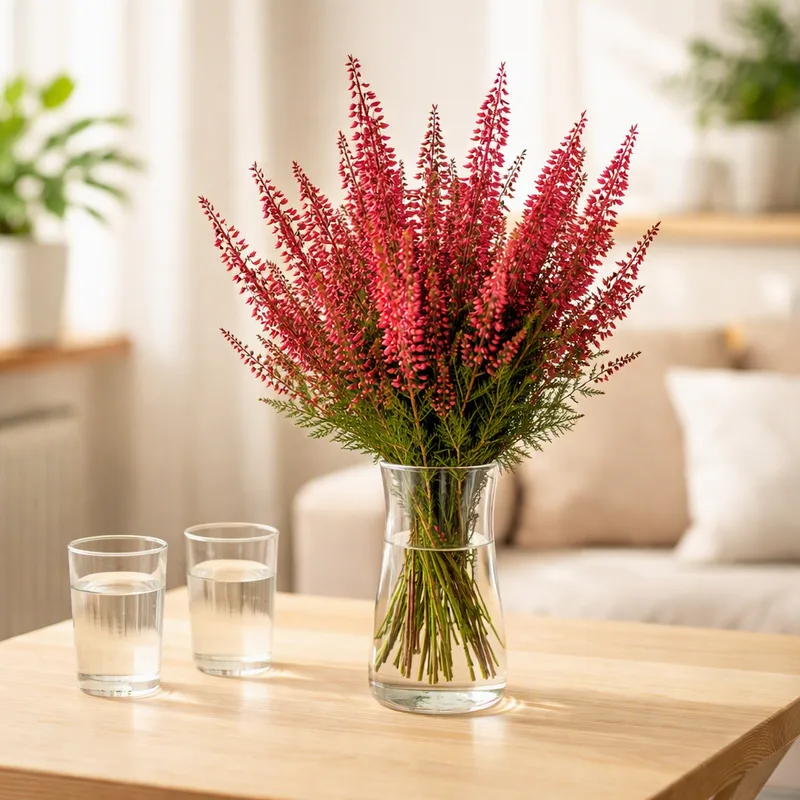
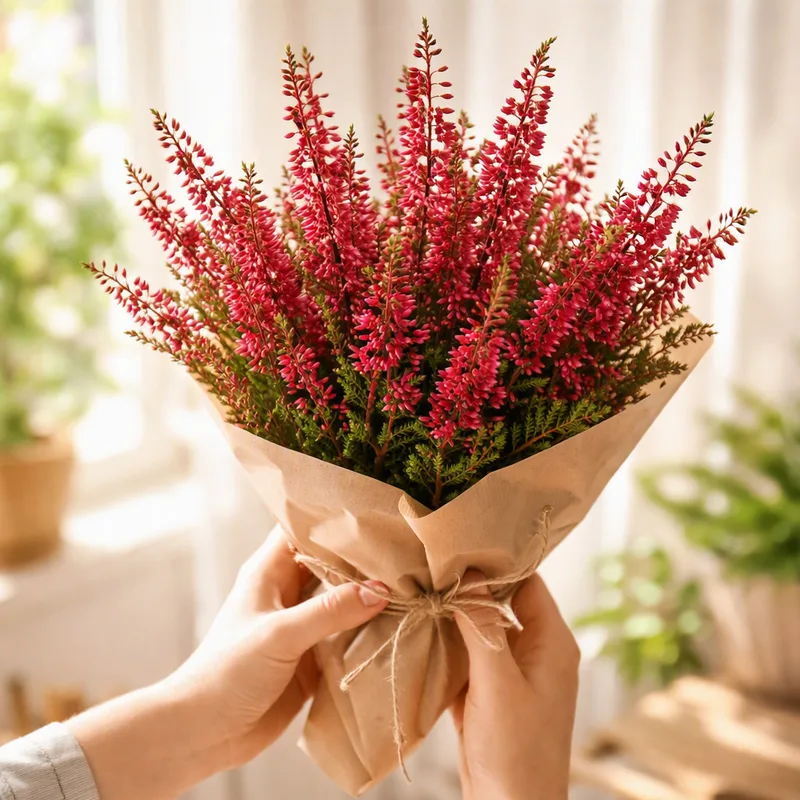
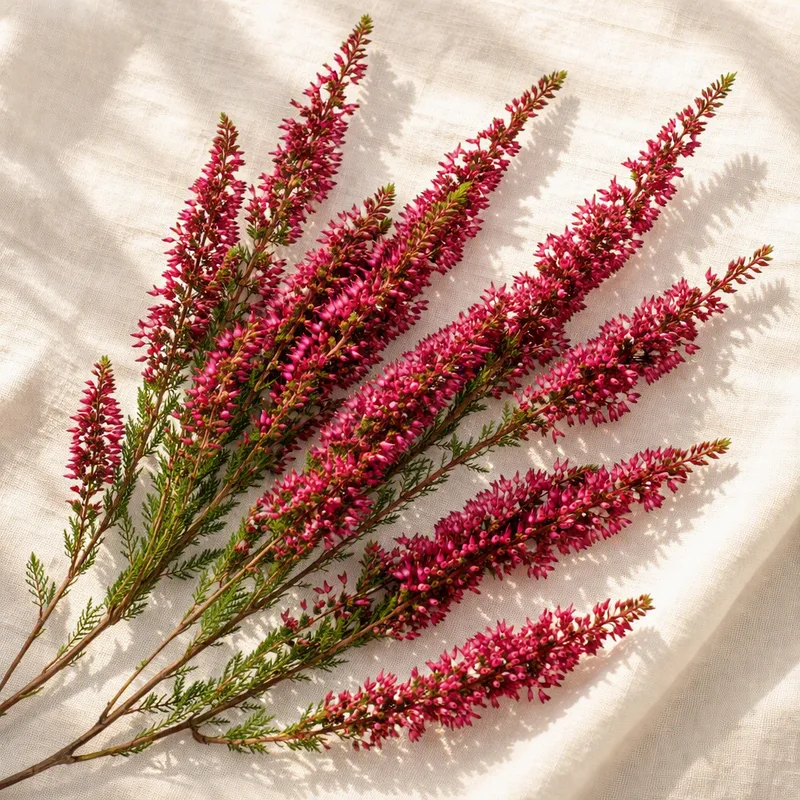
Heather is rarely red in the sense of a poppy. What gardeners call red heather is usually either a crimson-magenta flower or foliage that turns orange and red in cold weather. Both are striking, and a few varieties give you both at once.
Varieties to look for
- Calluna vulgaris 'Darkness' has crimson-magenta flowers and a low, tidy habit.
- 'Sir John Charrington' has golden-orange foliage that flushes red in winter, with crimson flowers.
- 'Robert Chapman' has foliage that changes through gold to orange-red, with purple spikes.
- 'Spring Torch' has cream and red new growth in spring.
Foliage heathers earn their keep even when not in flower, since they give colour from October to March.
Using fiery heathers
Plant red foliage heathers in groups of three or five of the same variety for the strongest effect. They look fine with winter-flowering pansies, dwarf conifers and the red stems of dogwood. In an autumn container they give a quick display, though a pot needs holes and ericaceous compost.
Look after them
Heathers prefer an open sunny site and acidic, free-draining soil. They dislike heavy clay that sits wet through winter. Clip lightly after flowering in spring, because foliage varieties colour best when kept compact. On chalk, grow red-leaved plants in containers and keep them watered.
Heather as a habitat, and pets
Scottish and northern moorlands are covered in heather, and its late flowers give nectar when most other plants are over. In a garden, a heather bed supports bees in August and September if you choose normally-flowering types rather than bud-flowering ones.
Calluna is not listed on the ASPCA's toxic plant lists for cats and dogs, but if your pet is unwell after eating plants, call your vet.