
A prairie plant in British borders
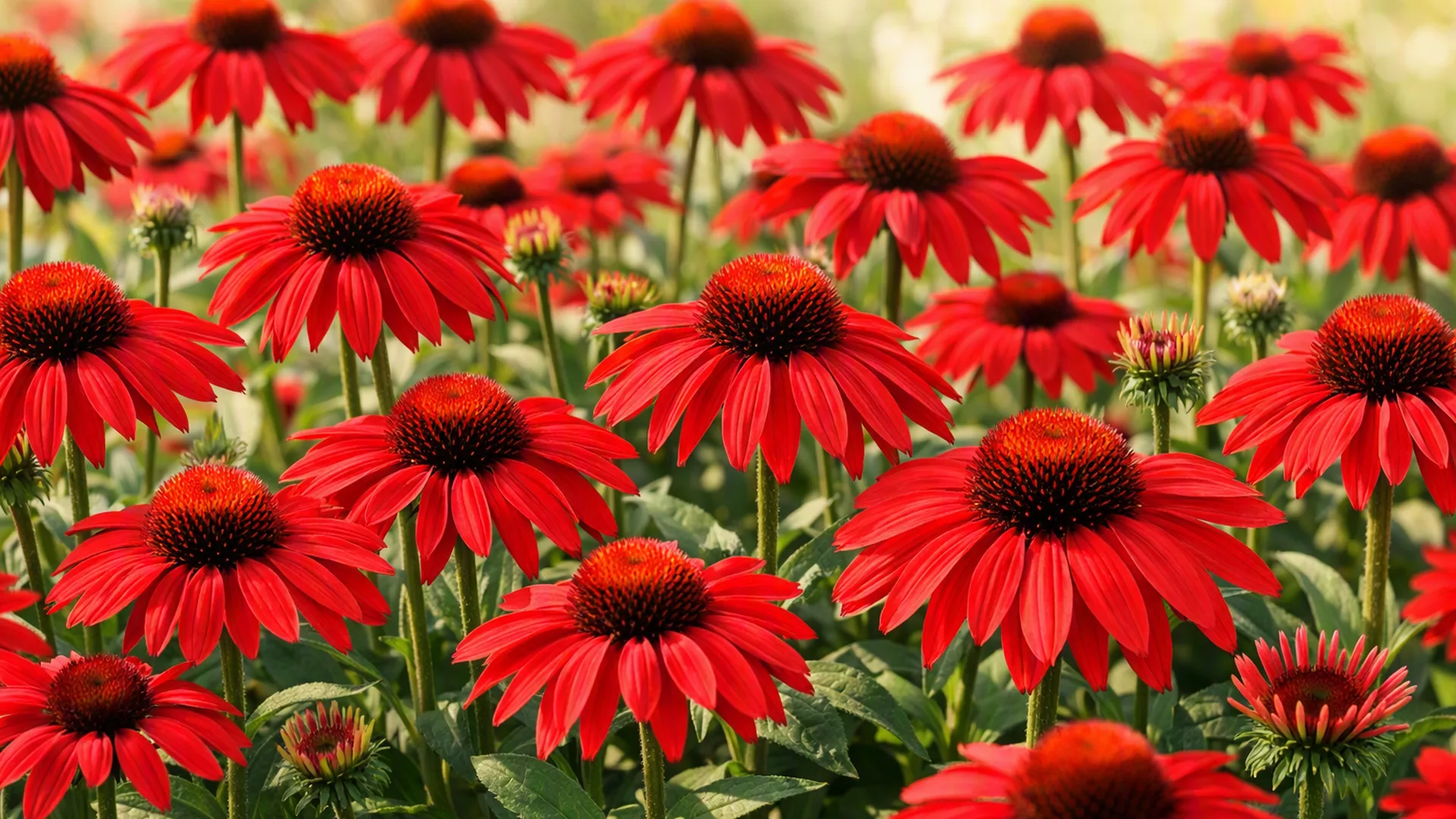
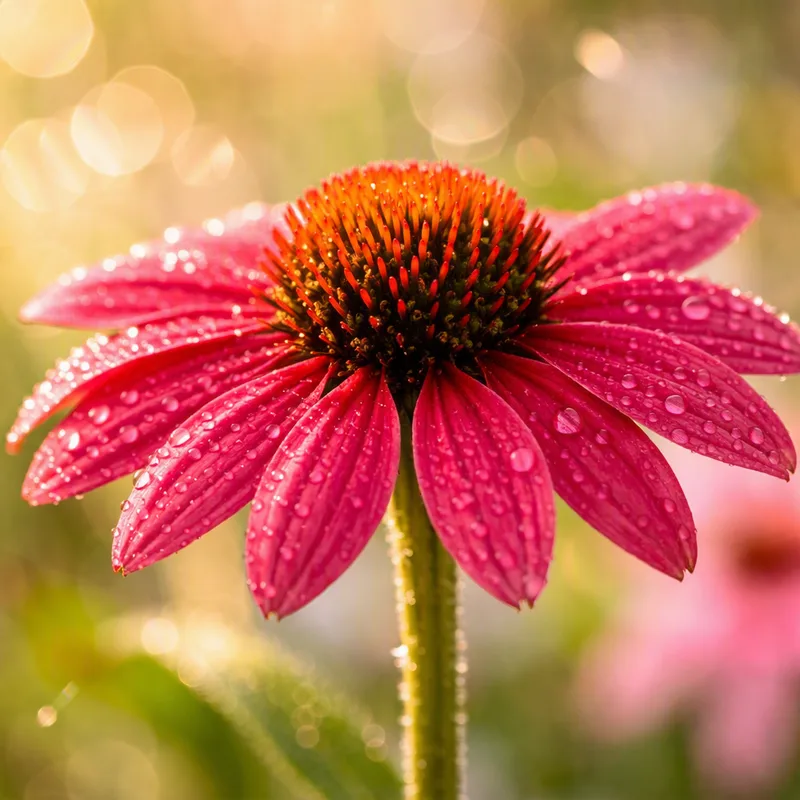
Echinacea purpurea comes from the eastern and central United States, where it grows in dry open woods and prairies. It is a herbaceous perennial up to about 120 cm tall, with cone-shaped flower heads that give the plant its name; Echinacea derives from the Greek word for hedgehog. In the wild the petals are usually purple, so a red coneflower is a garden selection rather than a natural colour.
What "red" really means
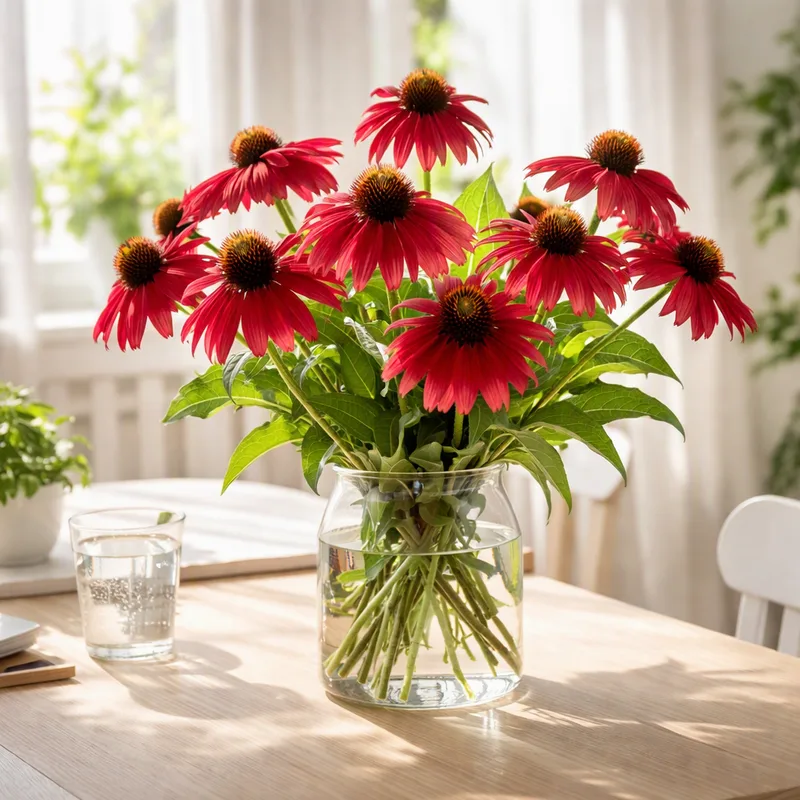
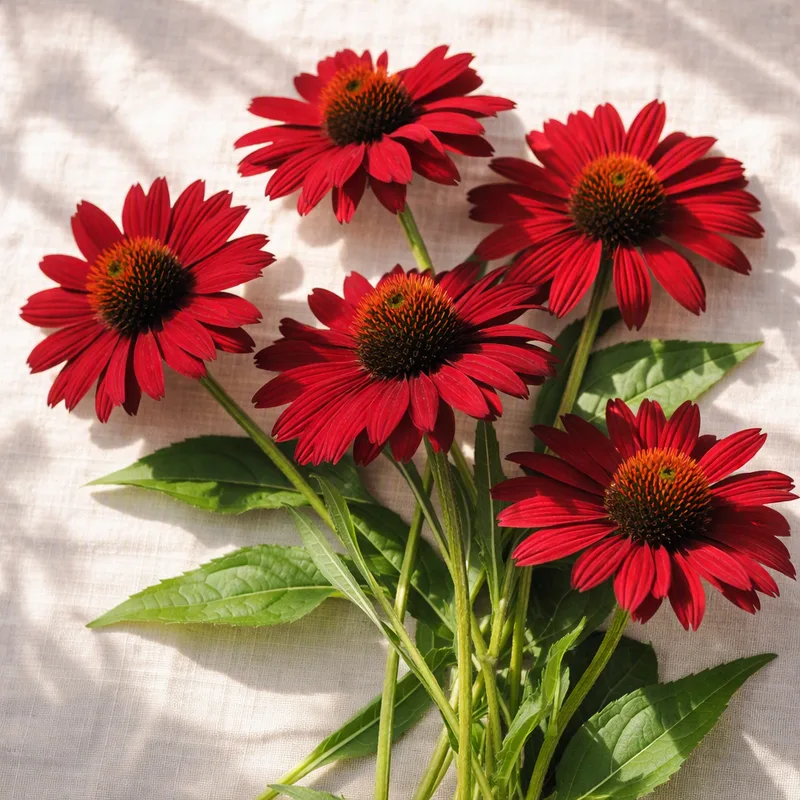
Breeders have given us deep rose-reds and warm orange-reds. Sellers describe these as red, but the colour often leans towards copper or coral, and it can shift with the weather and with age. If you need a specific shade, buy in flower from a nursery.
Growing in the UK
The plant likes full sun and copes with dry or moist soil once established.
- Water new plants in their first summer.
- Avoid heavy, waterlogged clay in winter, which is the commonest cause of loss, especially for the newer orange and red hybrids.
- Leave seedheads on through winter; birds feed on them.
- Divide clumps in spring or autumn.
Flowers come from July to September, and bees and butterflies visit them. 'Ruby Giant' and 'Elbrook' hold the RHS Award of Garden Merit.
In a vase and around pets
Cut flowers last about a week to ten days. The plant is not listed as toxic to dogs or cats by the ASPCA, but do not give echinacea supplements to animals without checking with your vet.