Spot the difference
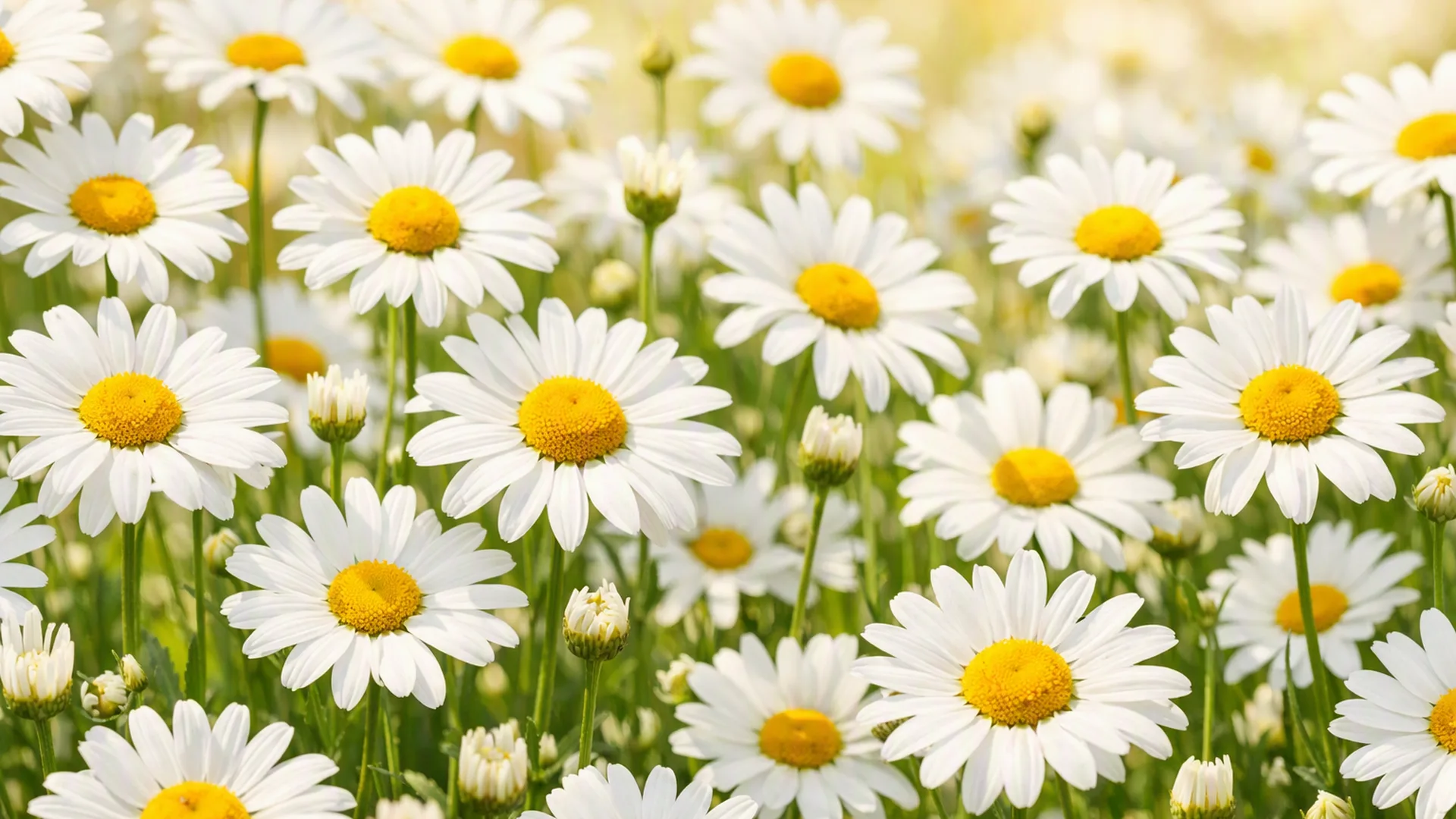
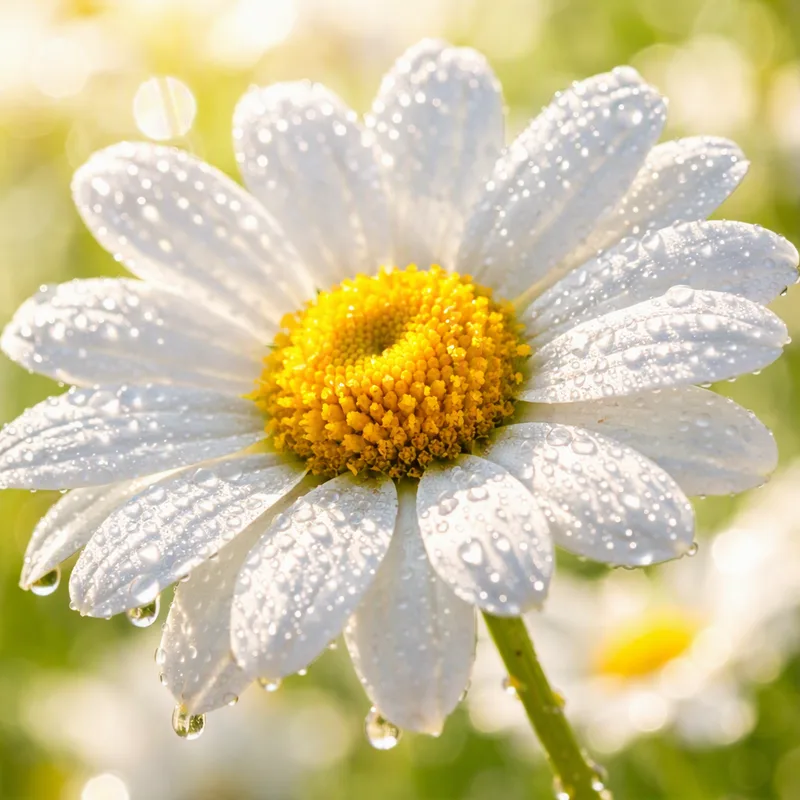
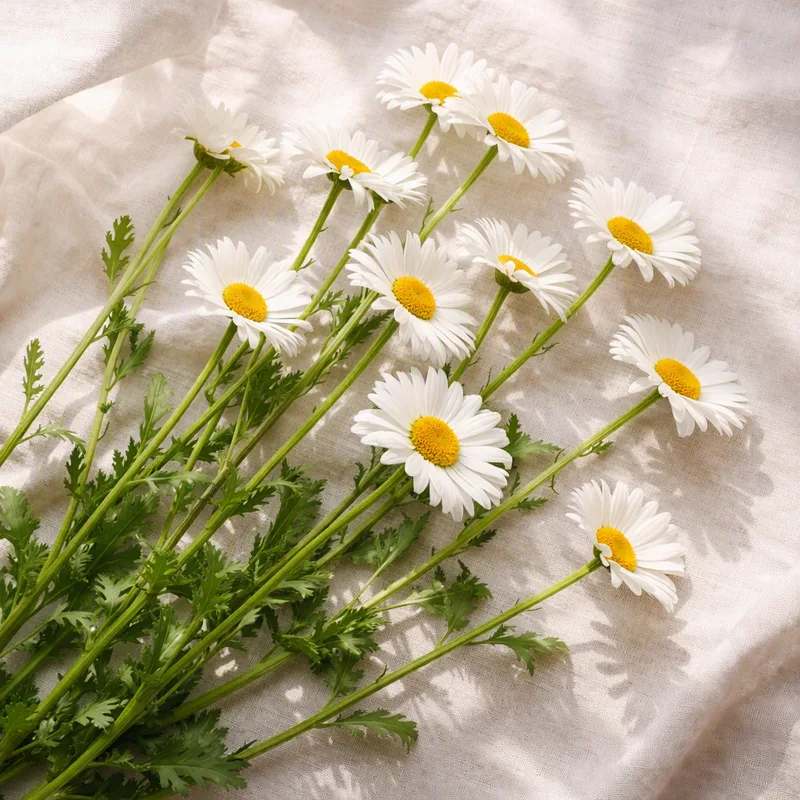
Leucanthemum vulgare has white petals around a yellow disc, with no other colour forms in the wild. Several lookalikes cause confusion:
- Scentless mayweed has much finer, feathery leaves and smaller flowers.
- Feverfew has smaller heads and lime-green, divided leaves with a strong smell.
- The shasta daisy (Leucanthemum x superbum) is a garden plant with larger flowers.
- The lawn daisy, Bellis perennis, is tiny and stays near ground level.
The ox-eye's lower leaves are spoon-shaped and toothed, while upper leaves are narrower and clasp the stem.
Where it likes to live
It prefers sun and soils that are not rich. It is often the star of a spring-to-summer meadow, with knapweed and bird's-foot trefoil. Gardeners can include it in a wild-flower patch, but it can self-seed freely, so cut spent flowers if you do not want it spreading.
For a first meadow patch, strip the turf in autumn, rake the soil to a rough finish and scatter seed mixed with sand so you can see where you have sown. Do not add fertiliser, because low fertility favours wild flowers over grass.
As a cut flower
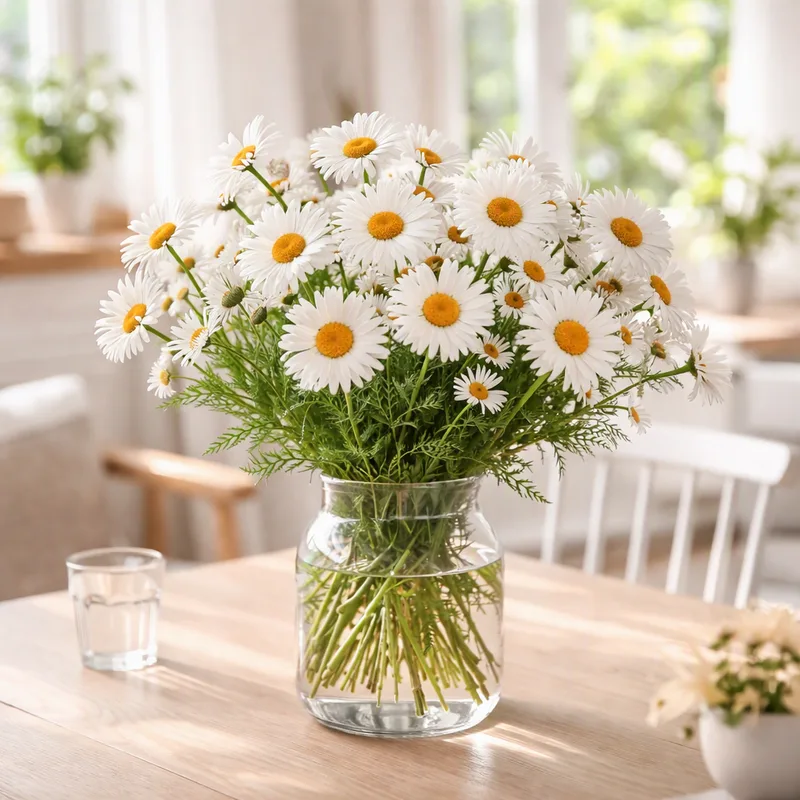
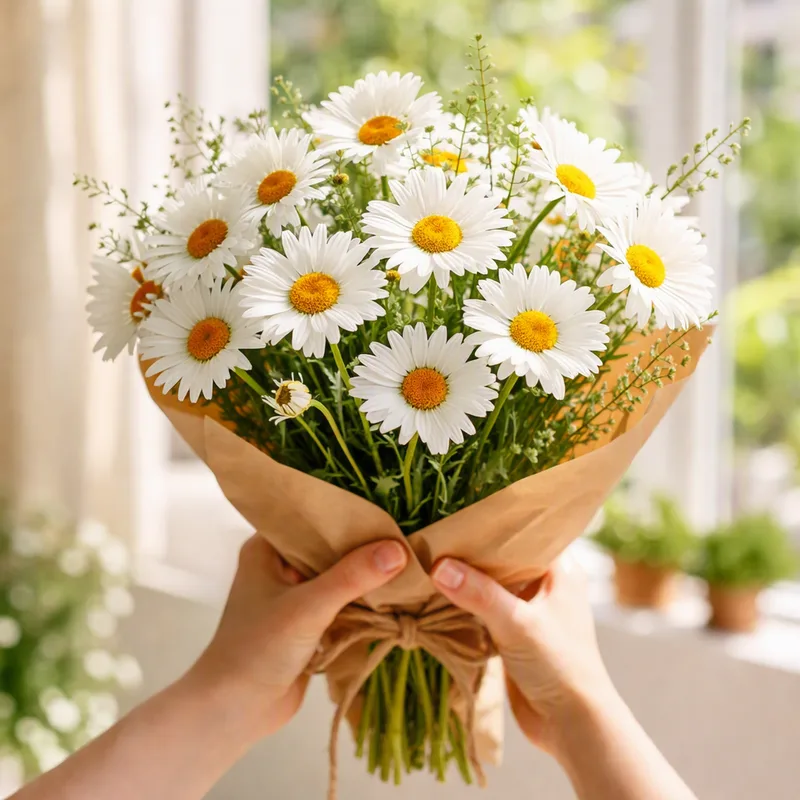
Pick stems in the cool morning, keep them in deep water and remove leaves below the waterline. Ox-eye daisies last 7 to 10 days and suit simple jugs, wedding jars and informal bouquets. White daisies traditionally stand for simplicity and innocence.
Keeping animals clear
Under the heading daisy, which includes chrysanthemum species, the ASPCA warns of toxicity to dogs and cats. Keep bouquets out of reach of animals.