
Ox-eye Daisy – Britain's Summer Meadow Flower
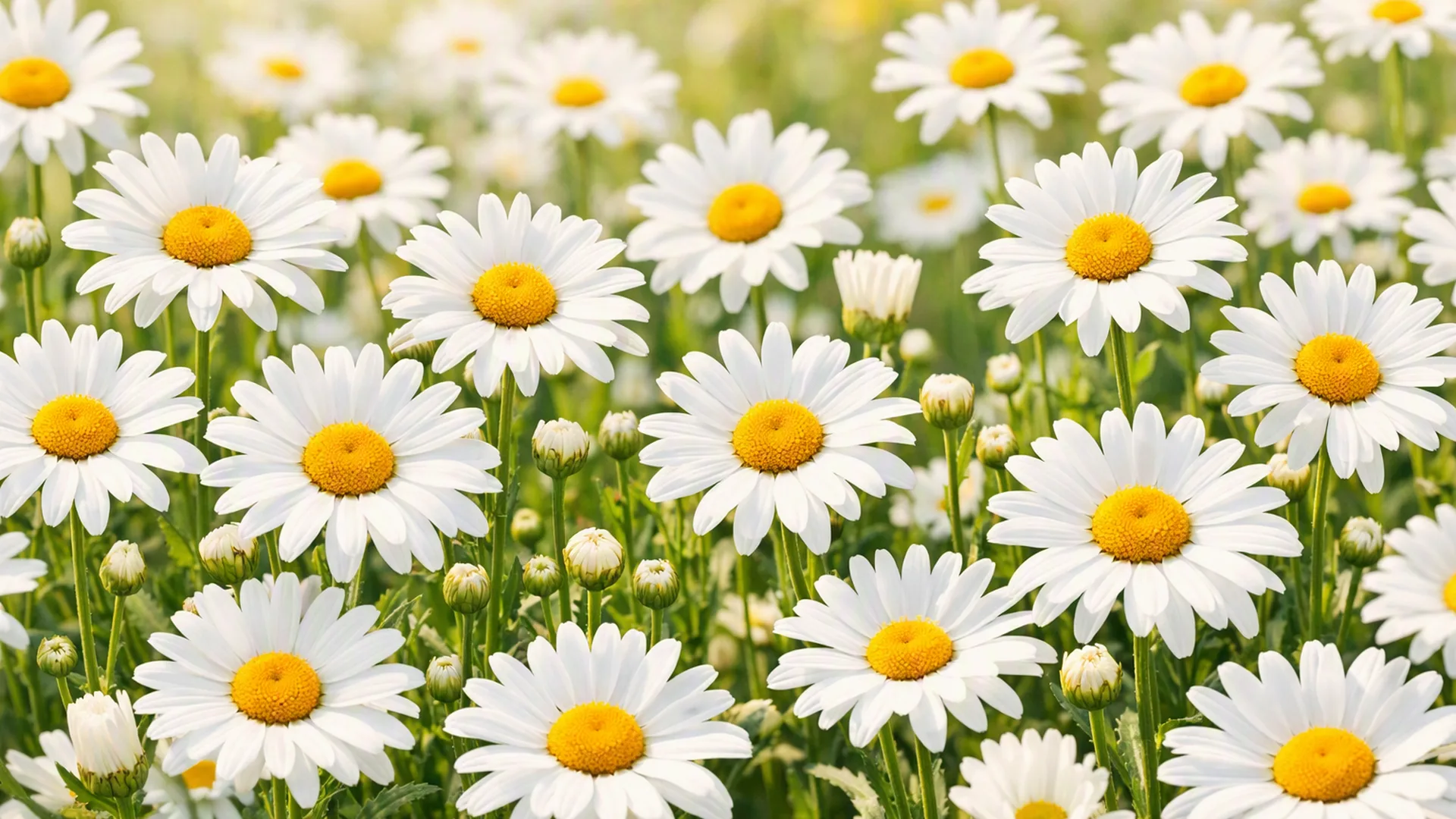
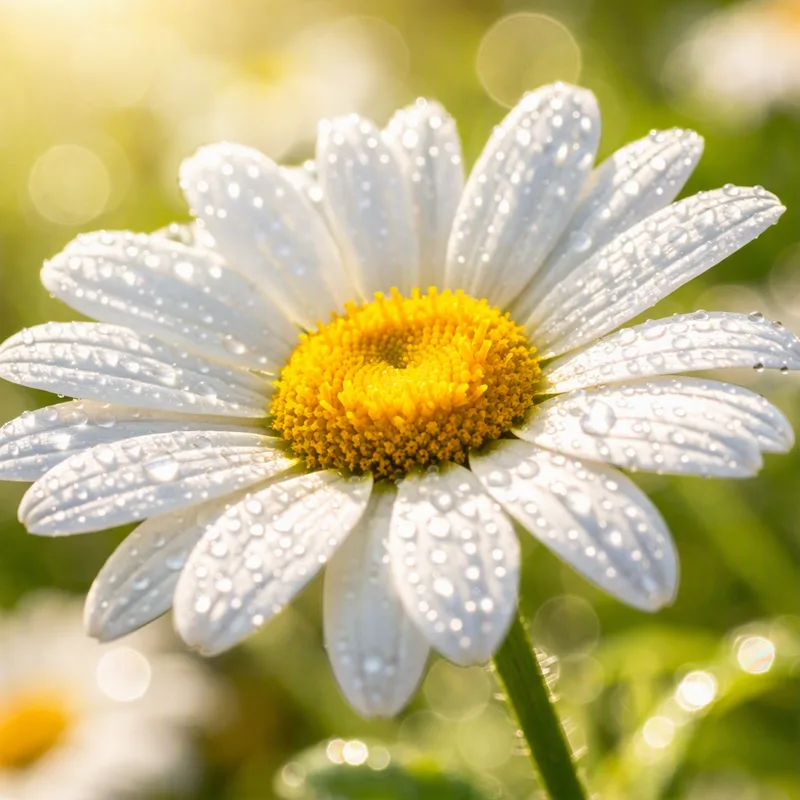
The ox-eye daisy (Leucanthemum vulgare) is a perennial in the daisy family that grows wild throughout Britain and Ireland. It is easy to recognise: each flower head is three to five centimetres across, with white ray petals around a bright yellow centre. Stems usually reach 30–70 centimetres, and it flowers from late May to August. The classic ox-eye daisy is exactly this familiar white-and-yellow flower, also known as the moon daisy or dog daisy.
Growing Ox-eye Daisies
Ox-eye daisies like a sunny spot in dry to moderately moist, well-drained soil, and they do best in poorer ground where grasses are less competitive. They are a staple of wildflower meadows, cottage-garden borders and pollinator-friendly gardens. The plant is fully hardy and needs no winter protection. Deadheading prolongs flowering and stops it self-seeding too freely.
Ox-eye Daisies in the Vase
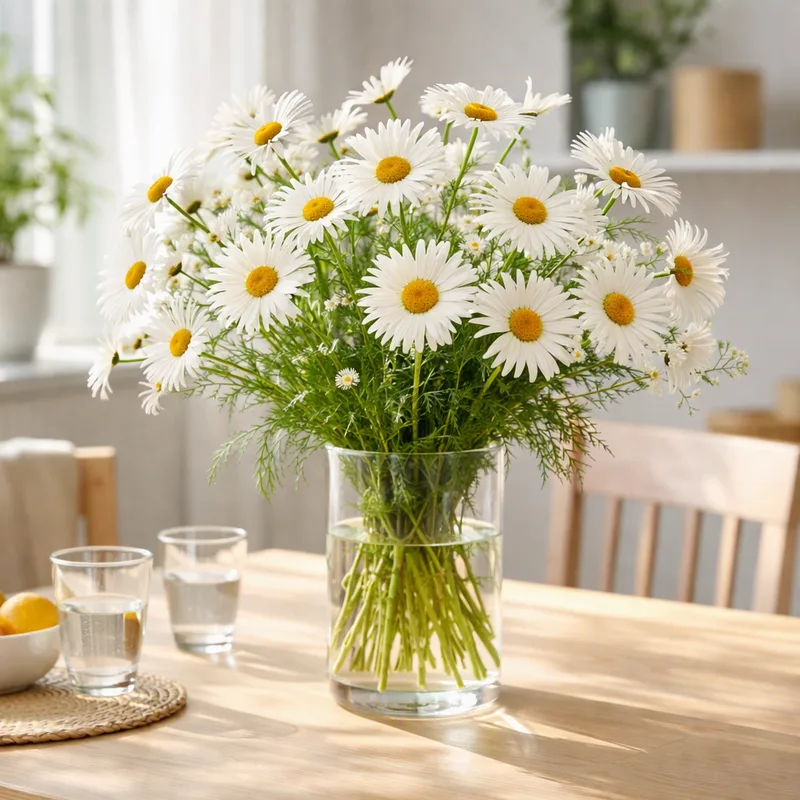
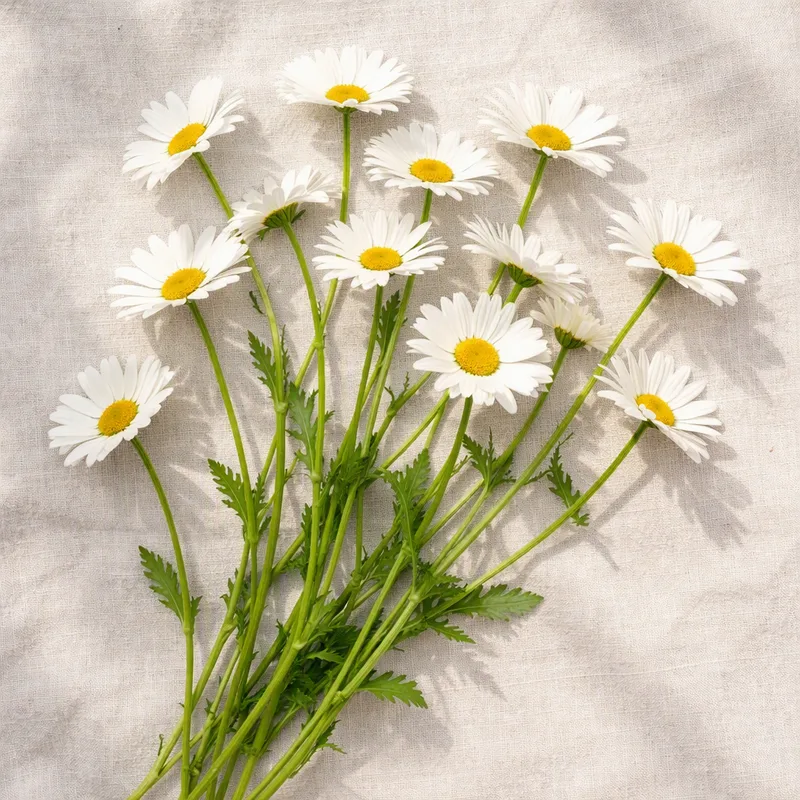
Cut the stems in the morning when the flowers have just opened and put them straight into cool water. Change the water every couple of days and re-trim the stems, and they will last around 7–10 days. They combine beautifully with cornflowers, grasses and other wildflowers for a relaxed, just-picked look.
Good to Know if You Have Pets
The ox-eye daisy is toxic to cats and dogs. Chewing it can cause drooling, vomiting and skin irritation, so keep the bouquet out of reach of pets.