What makes a poinsettia white
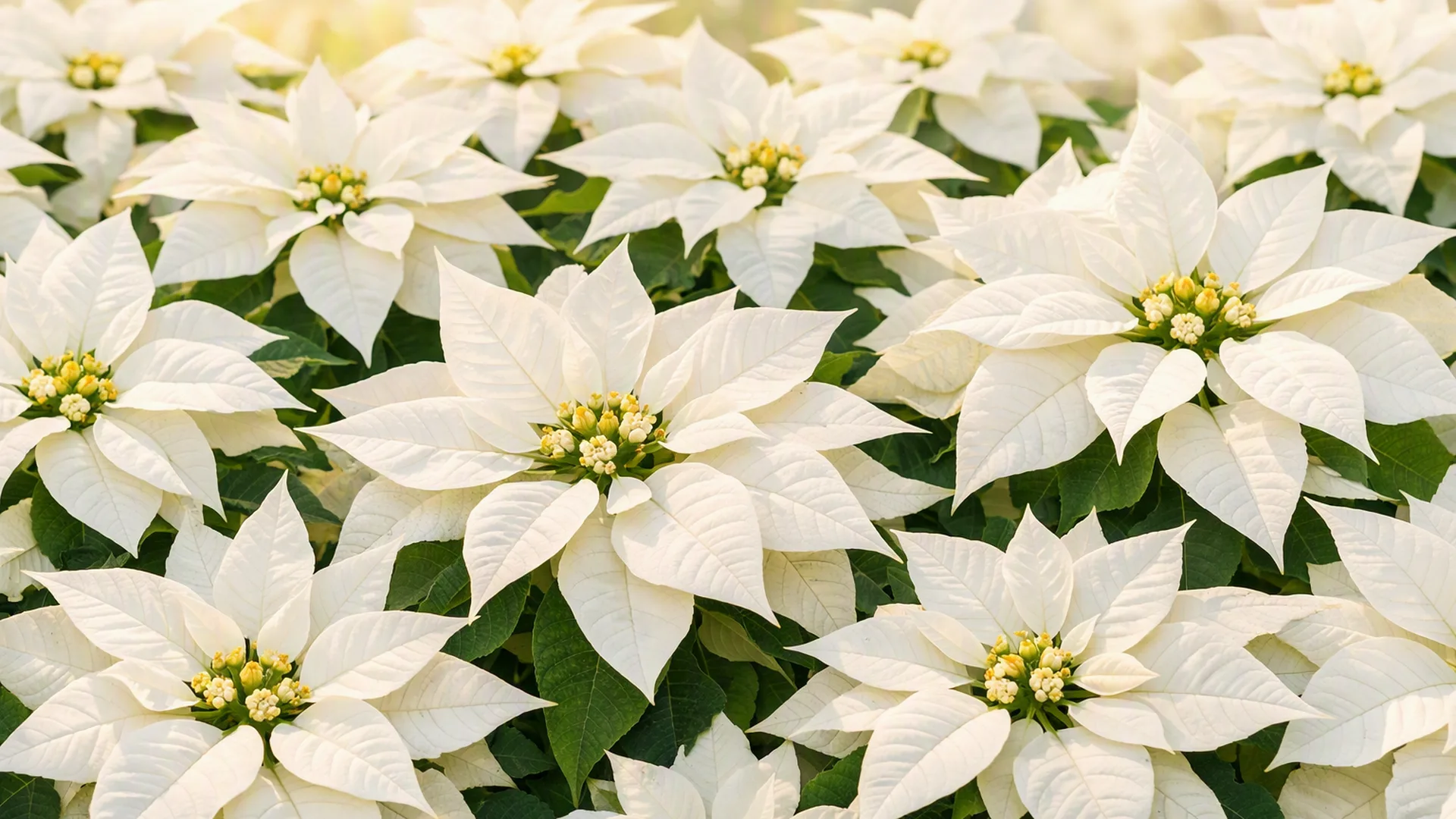
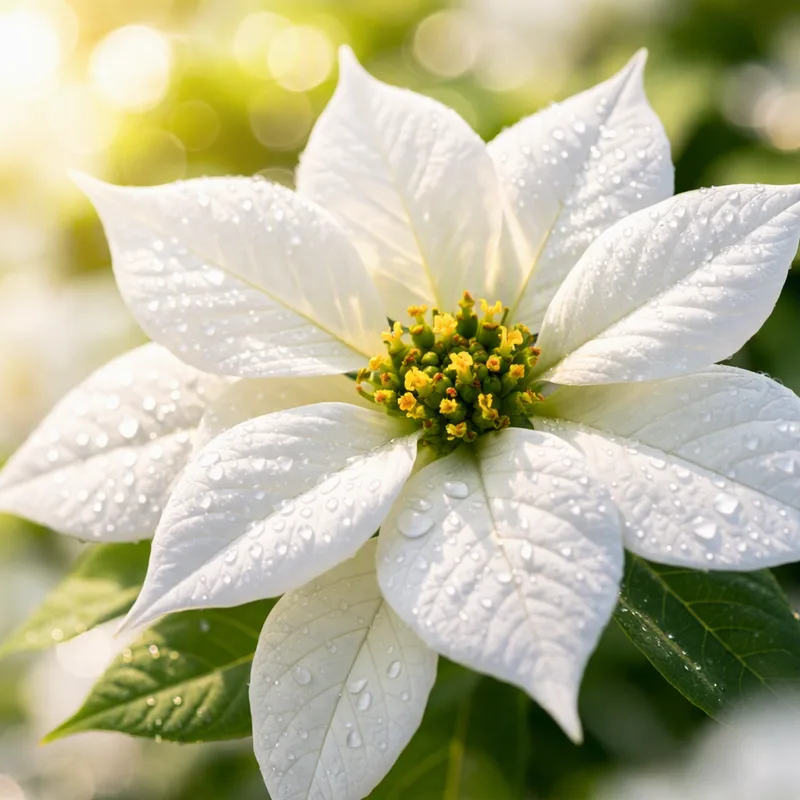
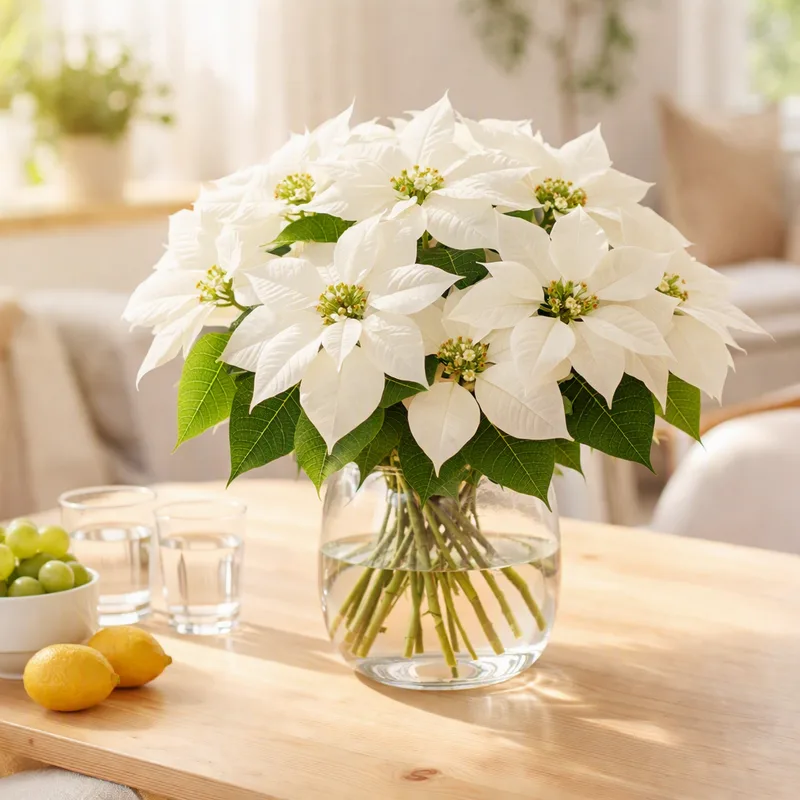
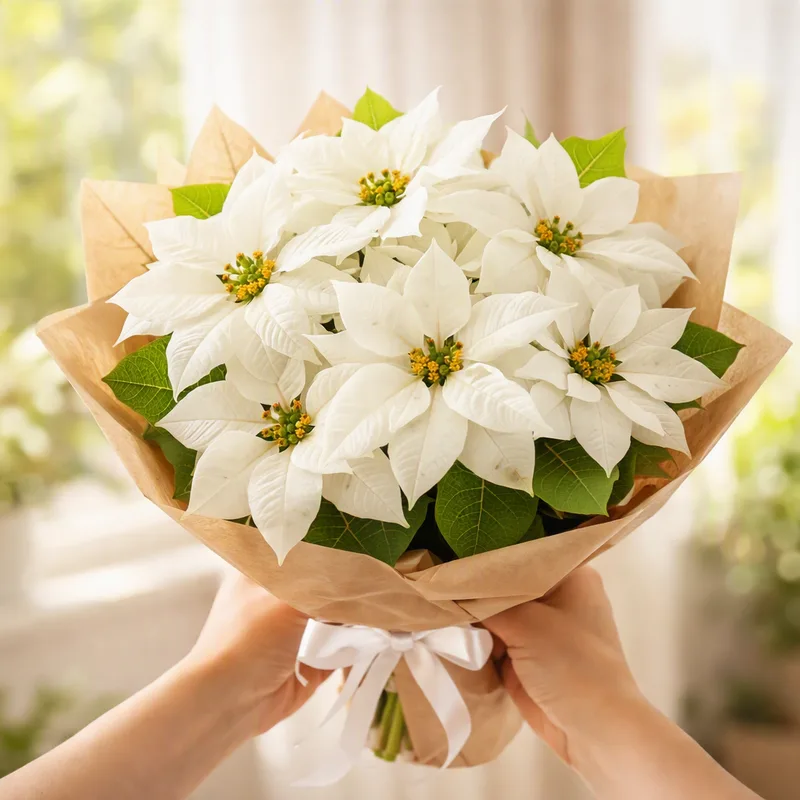
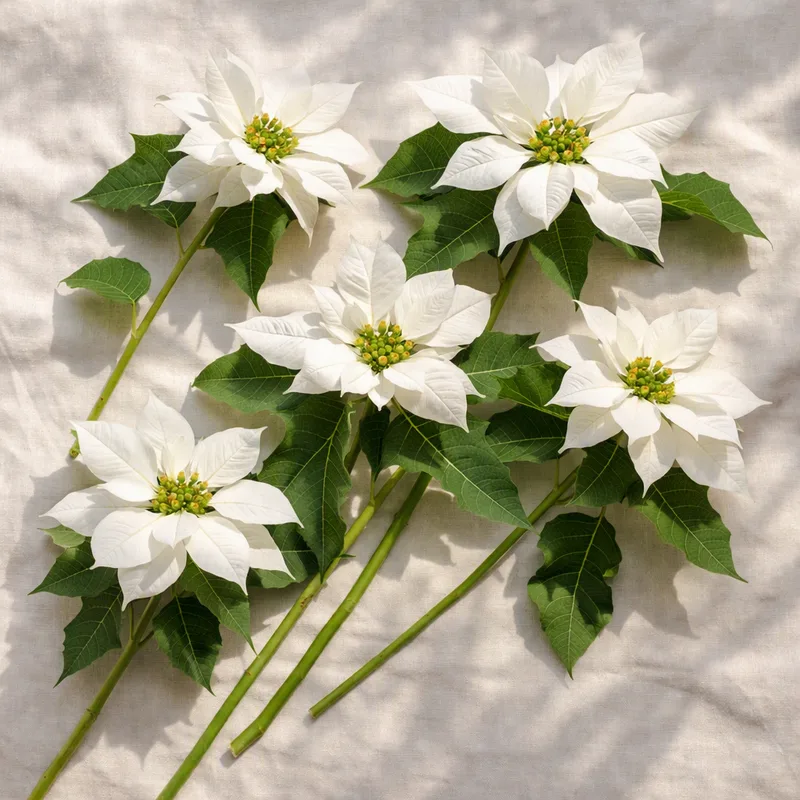
The pale parts of a white poinsettia are bracts, not petals. Breeders have selected cultivars with white, cream and pale green bracts alongside the red ones, and the effect is closer to snow than to a traditional Christmas red. White suits modern interiors and combines well with silver, glass and evergreen foliage.
Keeping the colour clean
Pale bracts mark easily, so a few habits go a long way.
- Do not let leaves touch a cold windowpane overnight.
- Avoid moving the plant between hot and cold rooms.
- Brush off dust with a soft, dry brush instead of wiping with a wet cloth.
- Water at the base once the top of the compost has dried, and never leave it standing in a pool.
If you want to keep the plant into spring, trim it back and keep it in a bright place. Getting it to turn white again by the next winter needs long, dark nights for several weeks in autumn, with the plant covered or moved to a dark room each evening.
The poison story
Poinsettias have long been called deadly, but the claim traces back to a 1919 urban legend about a child who was said to have died after eating a leaf, and that story was never proven. Feeding trials on rats found no poisonous dose even at enormous quantities. Still, the sap irritates. The ASPCA lists the plant as toxic to dogs, cats and horses, and says that effects are usually mild: a sore mouth and sometimes vomiting. If the sap gets on your skin, wash it off; call NHS 111 if a person feels unwell.