
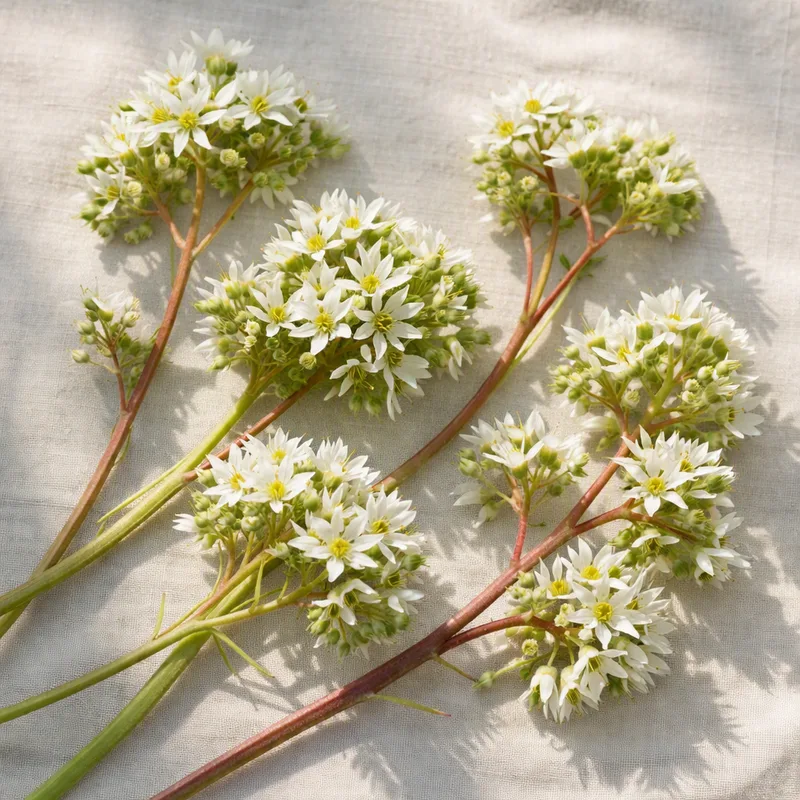
A white houseleek is a matter of texture
Houseleeks flower in pinks, purples and yellow-greens, never in a clear white. What gardeners mean by a white houseleek is a plant with a silvery or frosted look, thanks to fine hairs or a waxy bloom on the leaves. They give a pale, cool effect that works well among grey stones and gravel.
Pale rosettes
- The cobweb houseleek (Sempervivum arachnoideum) has green rosettes covered in fine white threads that join the leaf tips, as if spiders had been at work.
- Sempervivum ciliosum, the hairy houseleek, has soft silvery hairs on the leaves and yellow-green flowers.
- Sempervivum calcareum has grey-blue leaves with dark tips.
Pale hybrids appear in specialist nurseries, but names vary, so look for plants whose labels describe them as silver or grey.
Planting ideas
Silvery houseleeks look good in a shallow stone trough with a few small alpines such as thrift and saxifrage. In a dry stone wall, push small offsets into the gaps with a little gritty compost. In a pot, mix three or four rosettes in a shallow dish, and top-dress with white stone chips.
Care
Full sun is best. Cobweb types dislike winter rain on the rosette, so a glass sheet or overhanging eave helps in wet areas of Britain. Use free-draining gritty compost and water very little. Remove dead rosettes after flowering. Houseleeks are fully hardy, and in a dry spell they simply shrivel and recover.
Pets
Houseleeks are not meant to be eaten, and the sap can upset the stomach. Call your vet if a pet has chewed a plant.