


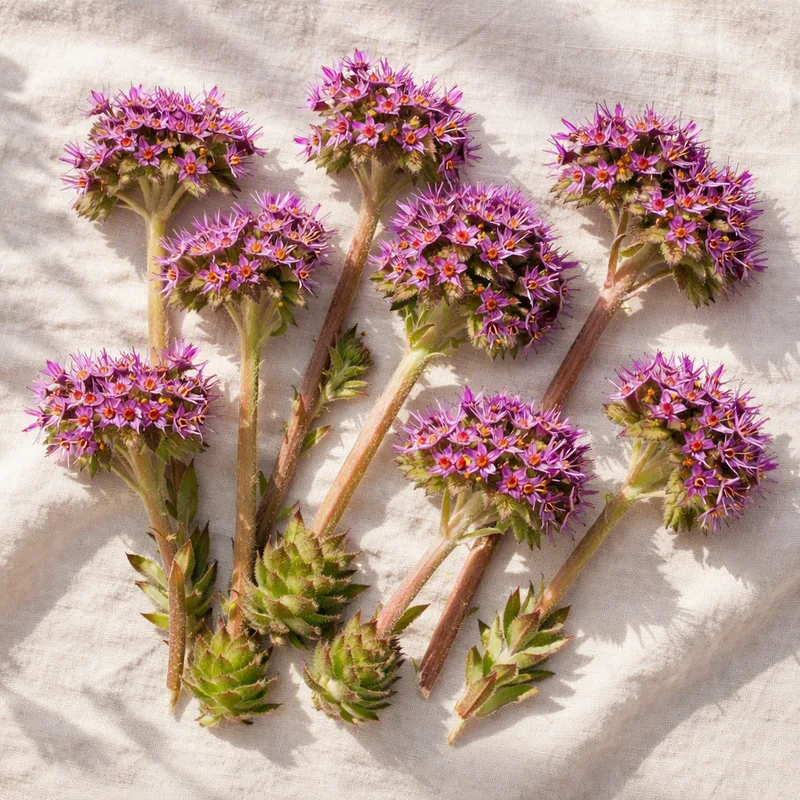
Rosettes that never quit
Houseleeks (Sempervivum) are succulents with tight rosettes of fleshy leaves. The Latin name means "always living", a nod to how readily they spread. The best known is Sempervivum tectorum, the common houseleek, which has been planted on roofs and walls in Britain for centuries. Hundreds of named hybrids vary from green and silvery to red and nearly black.
Old roof beliefs
For generations it was said that a houseleek on the roof protected a building from lightning and fire. The plant's other old names, such as "Jupiter's beard", point to the same belief, and the sap was used in folk medicine on warts and burns. Those uses are traditions and not tested treatments, and the sap is best kept off sensitive skin.
How they flower
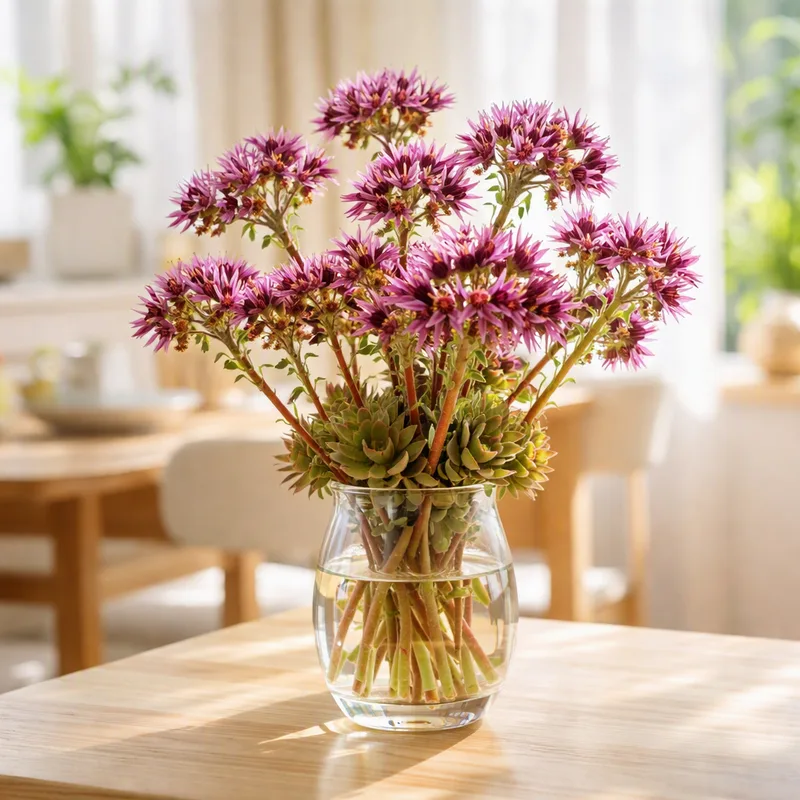
A rosette takes several years to mature, then sends up a stout stem of starry pink to purple flowers in July or August, and dies. The plant lives on through the small offsets, sometimes called chicks, that have formed around it. Remove the spent rosette and let the offsets spread.
Growing houseleeks
- Plant in full sun in gritty, very well-drained compost, with extra grit at the surface.
- Pots, troughs, old sinks, stone walls and shallow green roofs are all ideal.
- Water lightly in the first summer, then leave alone.
- Wet winters rot rosettes more than frost does, so shelter pots from constant rain in the wet west.
- Pull offsets away and replant them, and they root within weeks.
Pets and people
Houseleeks are not meant for eating. The sap can irritate the mouth and stomach, so keep pets from chewing them, and speak to your vet if a pet has eaten a lot. Wash hands after handling plants if your skin is sensitive.