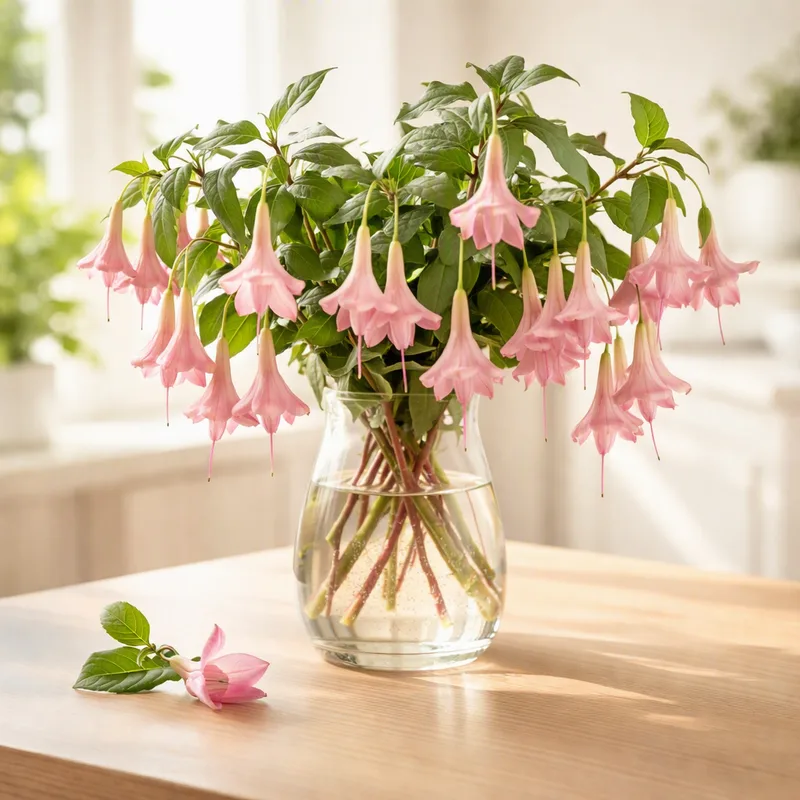
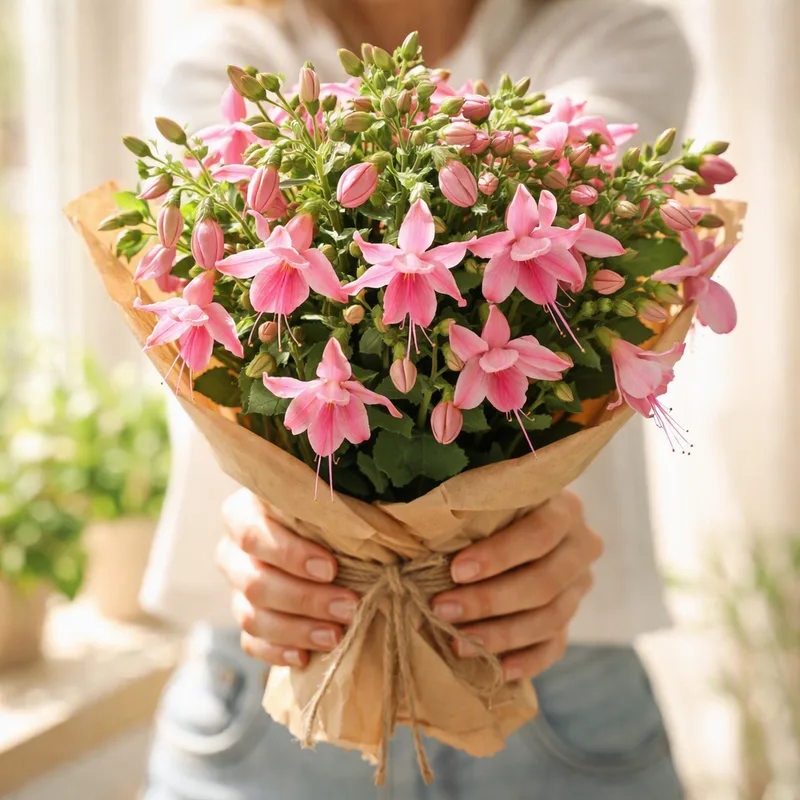
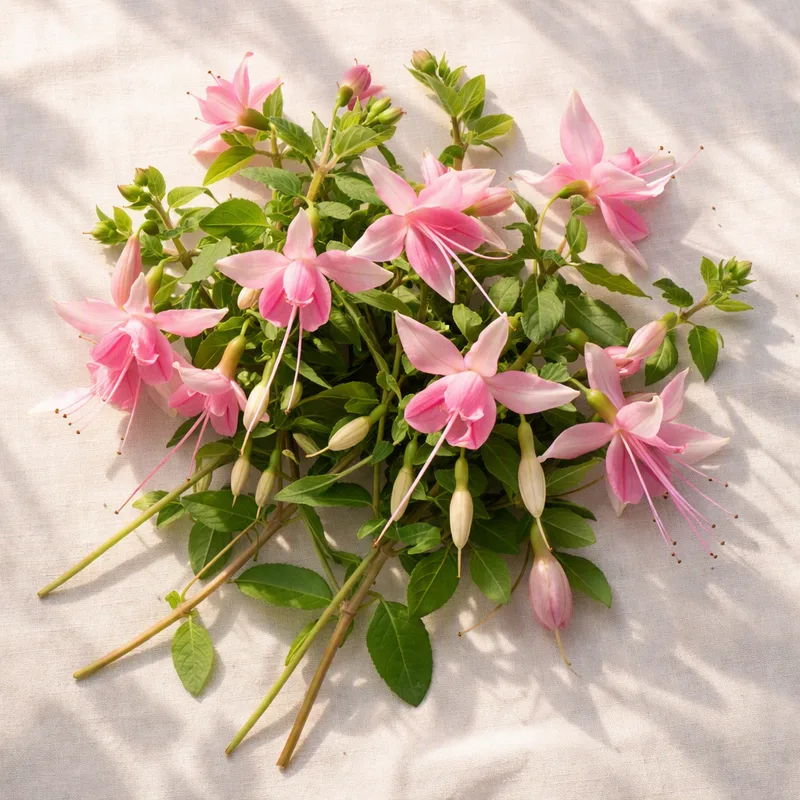
Dangling flowers from the Americas
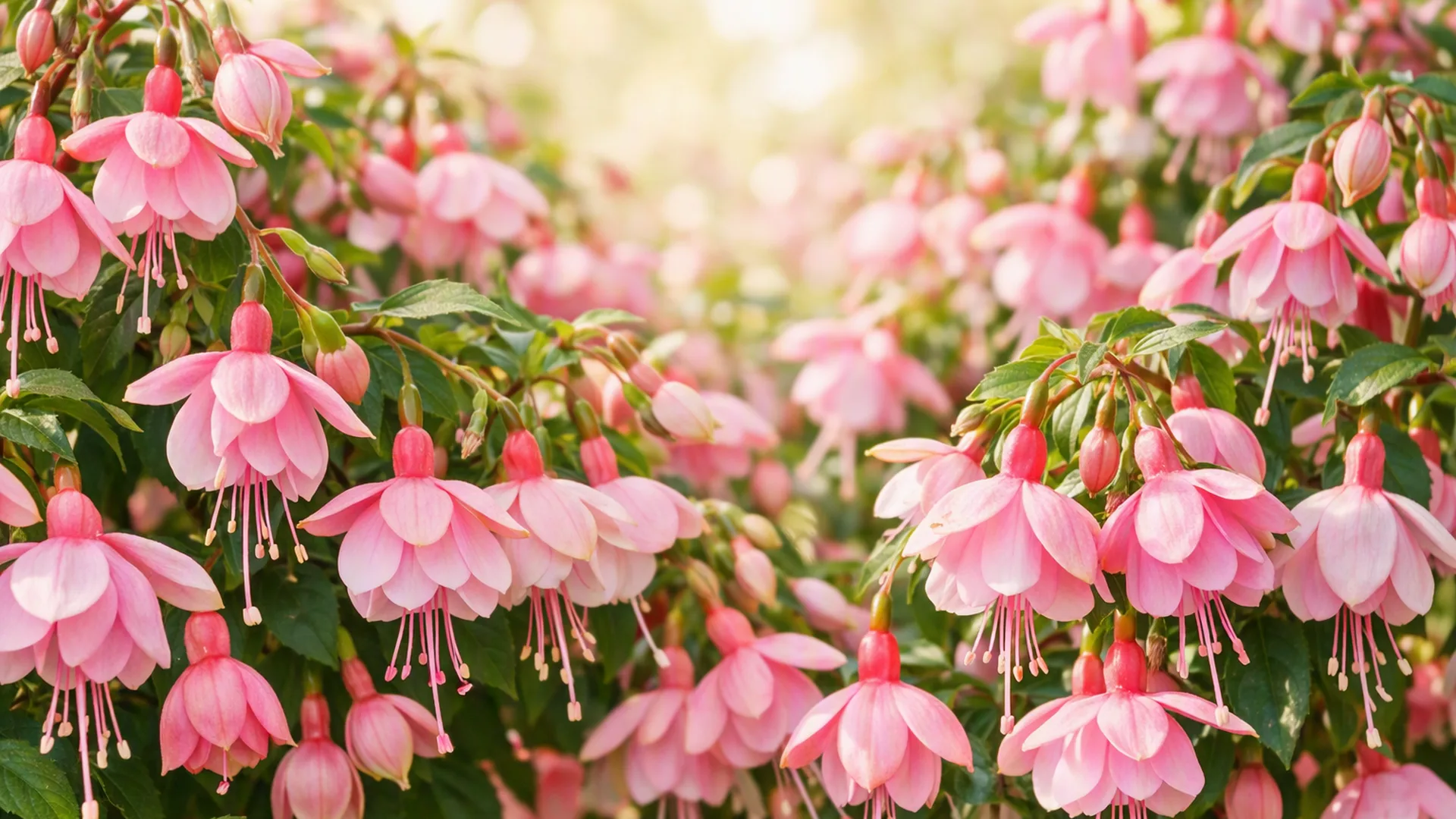
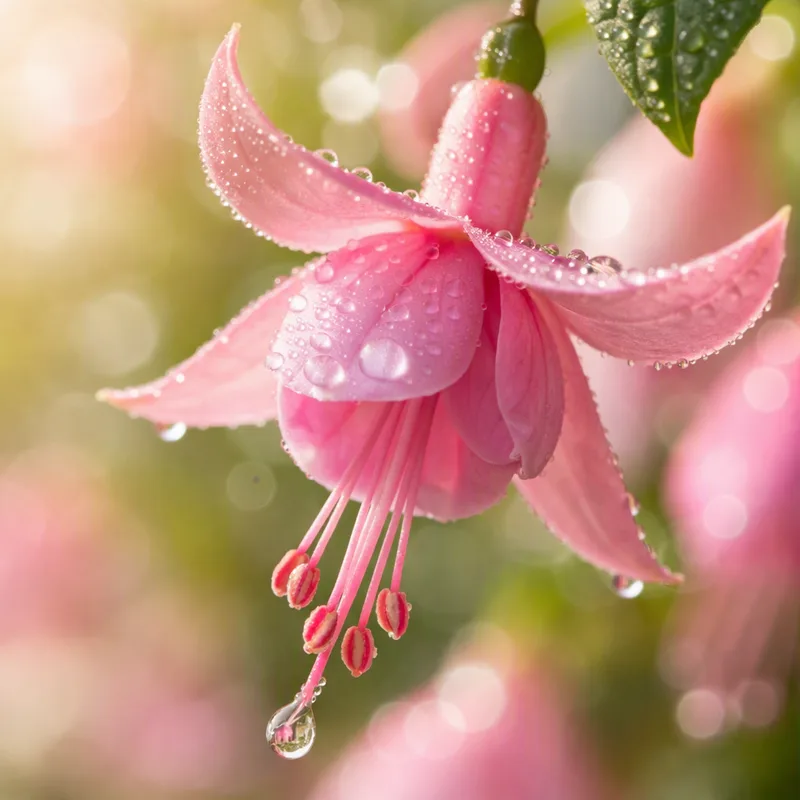
Fuchsia is a genus of roughly a hundred species, mostly from South and Central America, with a few in New Zealand and Tahiti. The French botanist Charles Plumier named it in the 1690s after the German physician Leonhart Fuchs. Each flower has a tube, four sepals and a skirt of petals, and in the Americas hummingbirds pollinate them. Most garden fuchsias are hybrids and the commonest combination is red sepals with purple petals.
Hardy or tender?
This is the question every UK gardener asks. Hardy fuchsias, including selections of Fuchsia magellanica and varieties such as 'Mrs Popple', survive outdoors in much of Britain. Cut back the old stems in spring when new growth appears, not in autumn, because the old wood protects the crown. Tender fuchsias, sold for baskets, need a frost-free place from autumn to late spring.
Where they thrive
Fuchsias like moisture and cool, dappled light. The mild, damp west of Britain suits them best, and in parts of Cornwall, Devon and western Ireland tall hedges of Fuchsia magellanica are a familiar sight. In the drier south-east they need more watering and some shade from midday sun.
Colour and spelling
The colour fuchsia, a vivid purplish pink, is named after the flower. The word is often misspelt "fuschia", but the botanist's name is Fuchs, so the plant is spelt fuchsia.
Berries and pets
After flowering you may see small dark berries, which are edible, though mild in flavour. For cat owners, the ASPCA's list shows fuchsia as non-toxic.