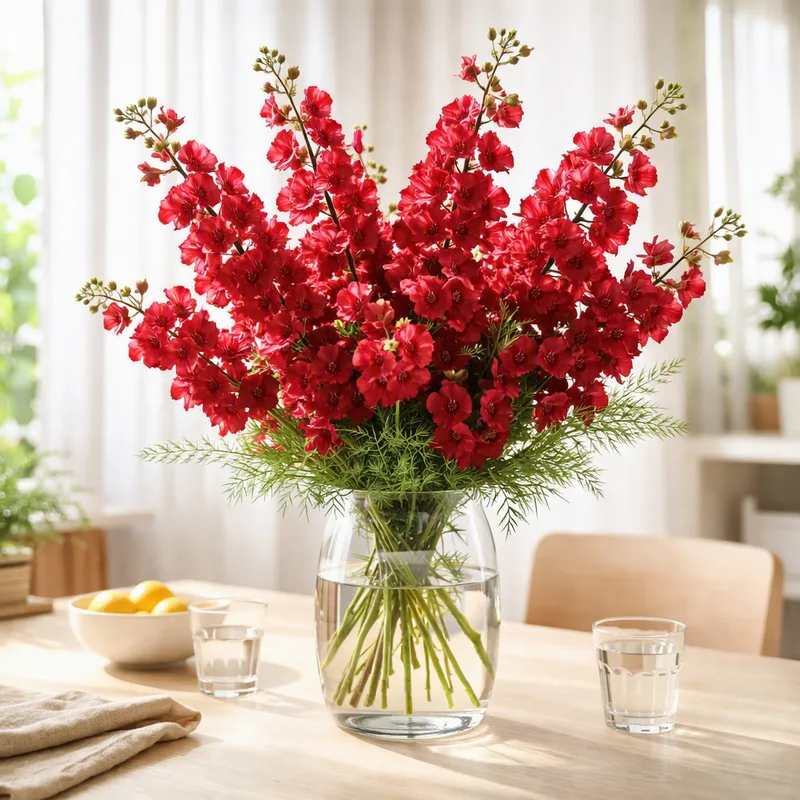

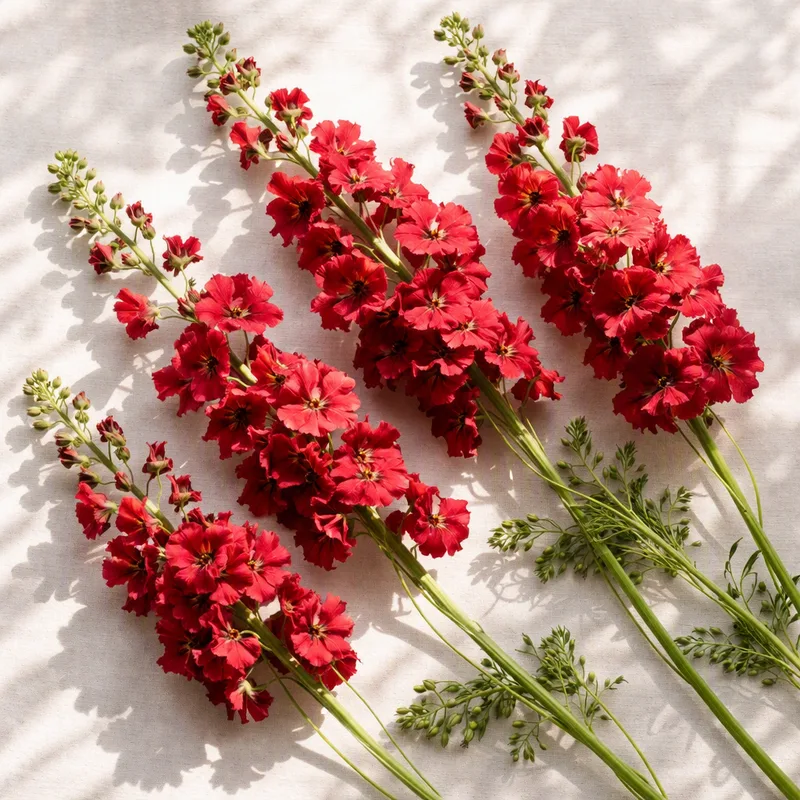
A search for scarlet
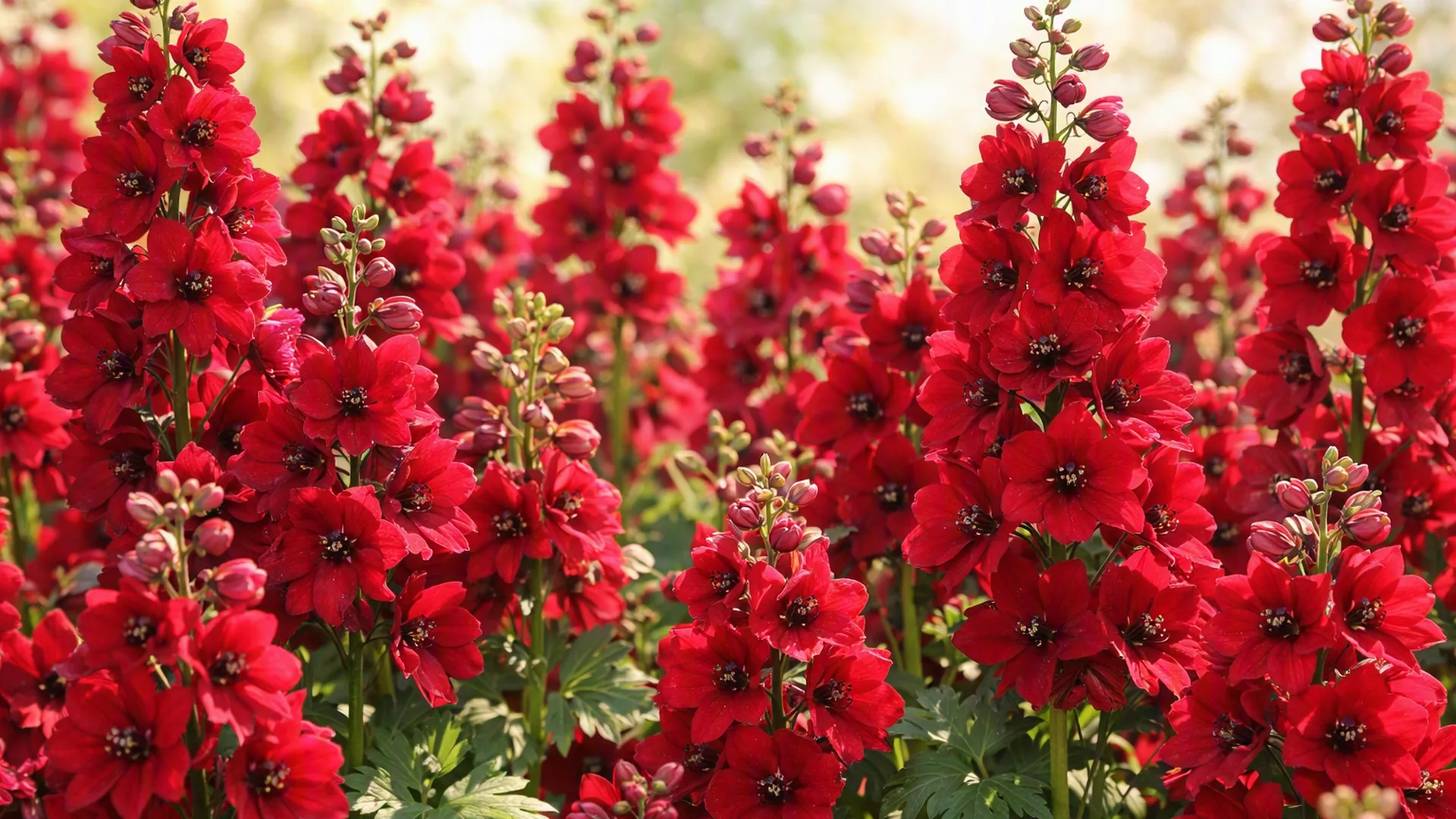
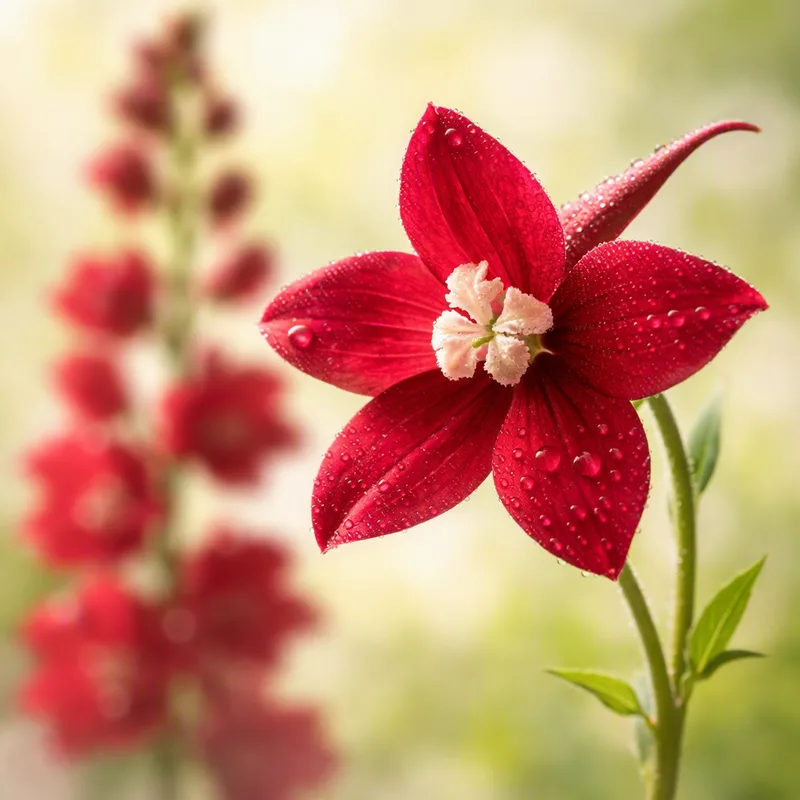
Almost never in the usual border kinds. Hybrids descended from Delphinium elatum come in blue, purple, lavender, pink and white, and breeders have not produced a reliable red. The scarlet Delphinium cardinale, a Californian species, does exist, but it is short-lived and not dependable in a British garden.
The closest alternatives
If you search for red delphiniums, you may find:
- Deep purple-red or claret tones in the Pacific Hybrids, which look dark in shade.
- Delphinium cardinale seed offered by specialist growers, which needs a warm, dry, sheltered position and is unlikely to survive a wet British winter.
- Annual larkspur (Consolida), which can be raised from seed in reddish pink and is a safer substitute for a border.
Photographs often exaggerate the colour, so read descriptions carefully before buying.
Gardeners who still want a warm tone can blend purple-red delphiniums with orange geums and red-leaved plants such as cotinus, which pick up the tone without needing a true scarlet spike.
Growing the plants that are available
Provide full sun, fertile soil and protection from slugs. Stake tall stems and cut back after flowering.
Staying safe
Delphinium and larkspur contain alkaloids that make them poisonous. The ASPCA warns of poisoning in dogs, cats and horses, and the plants can harm people if eaten. Wear gloves, wash your hands, and keep them away from pets and young children. In an emergency call NHS 111 for people, or your vet or the Animal PoisonLine for animals.
For a rich red border without that risk, consider red dahlias or crocosmia in July and August.