A shrub, not a seasonal gift plant
Euphorbia pulcherrima is a woody plant native to Mexico and Central America, where it can reach several metres. The species name means "most beautiful". In Mexico it is called flor de nochebuena, the Christmas Eve flower. The English name honours Joel Poinsett, who brought it to the United States in the nineteenth century.
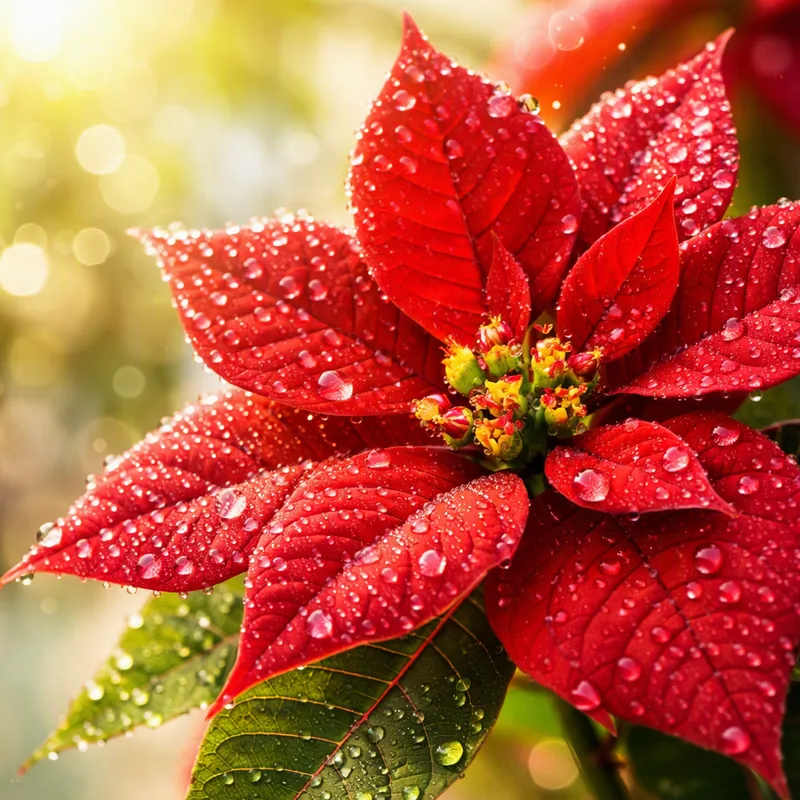
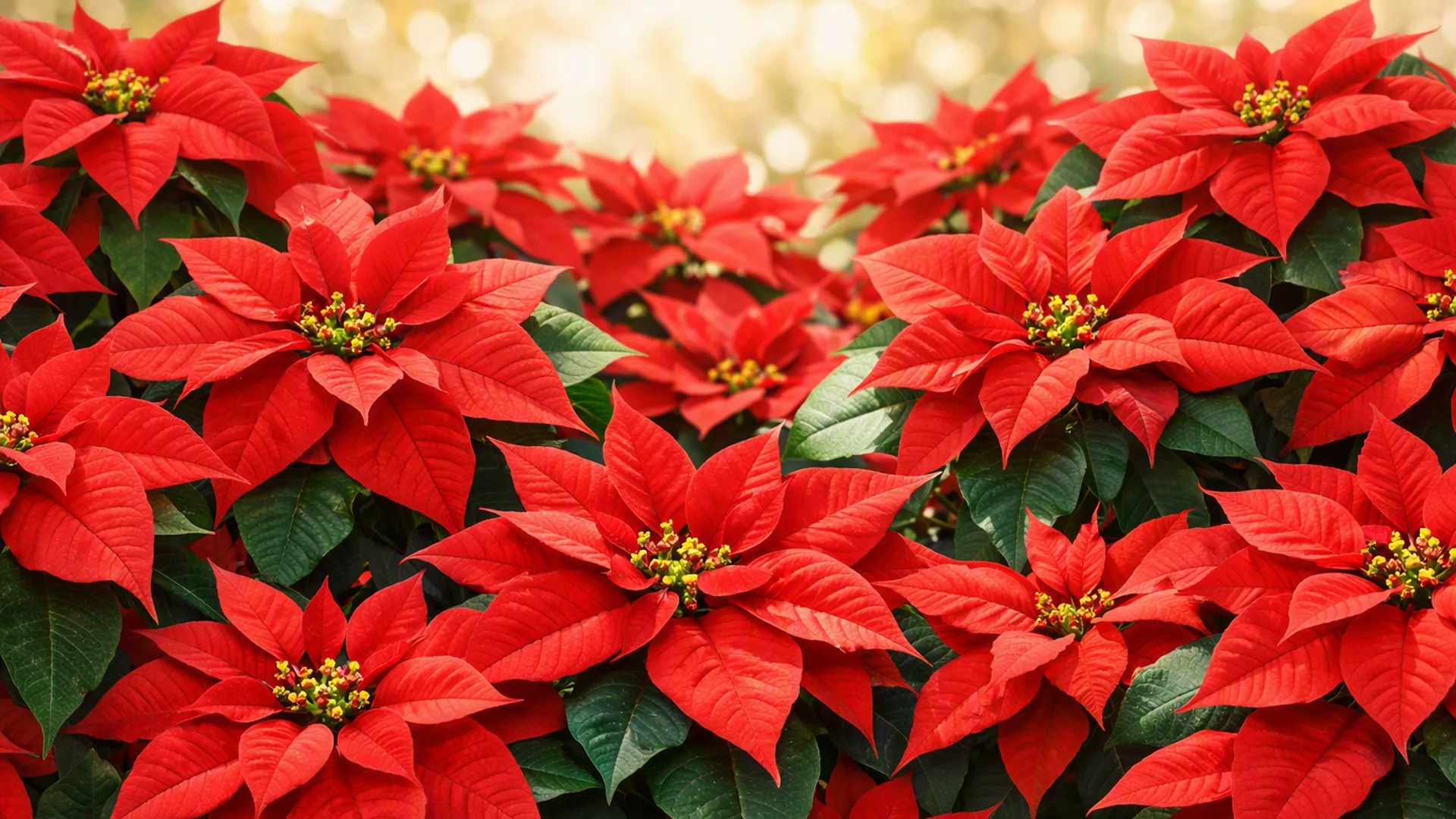
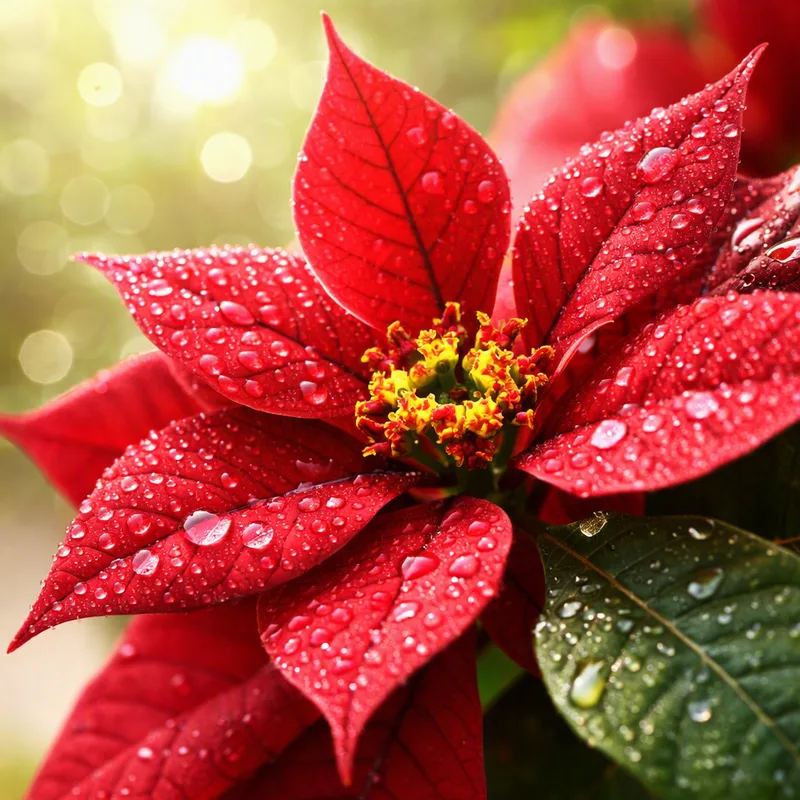
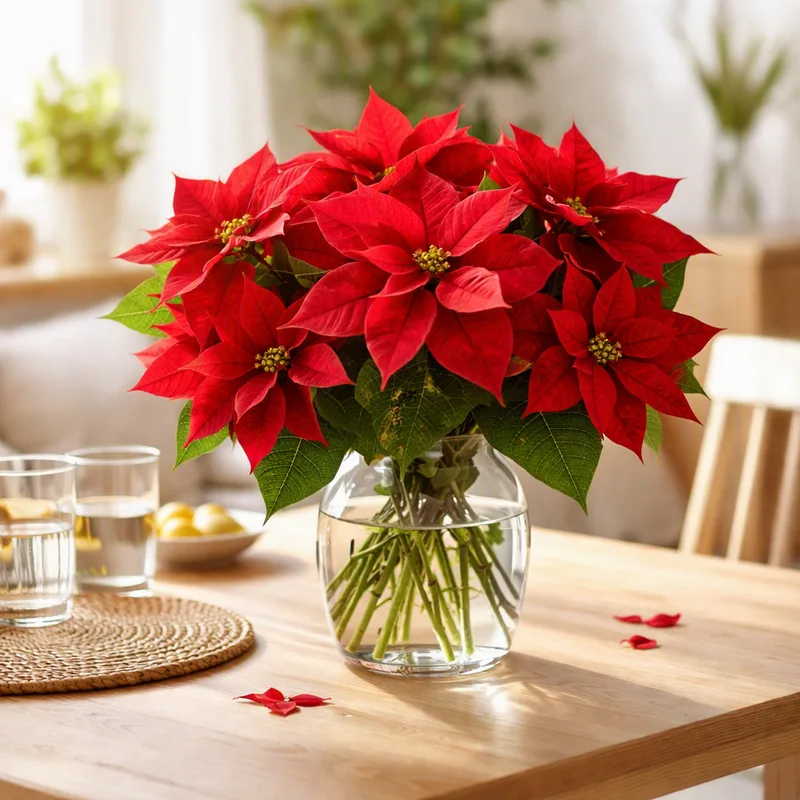
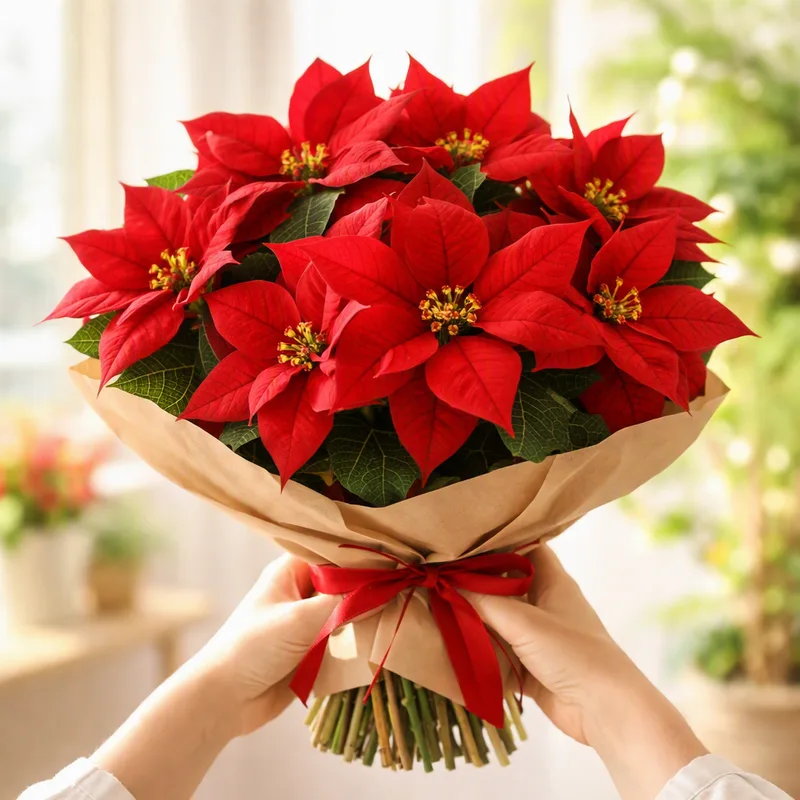
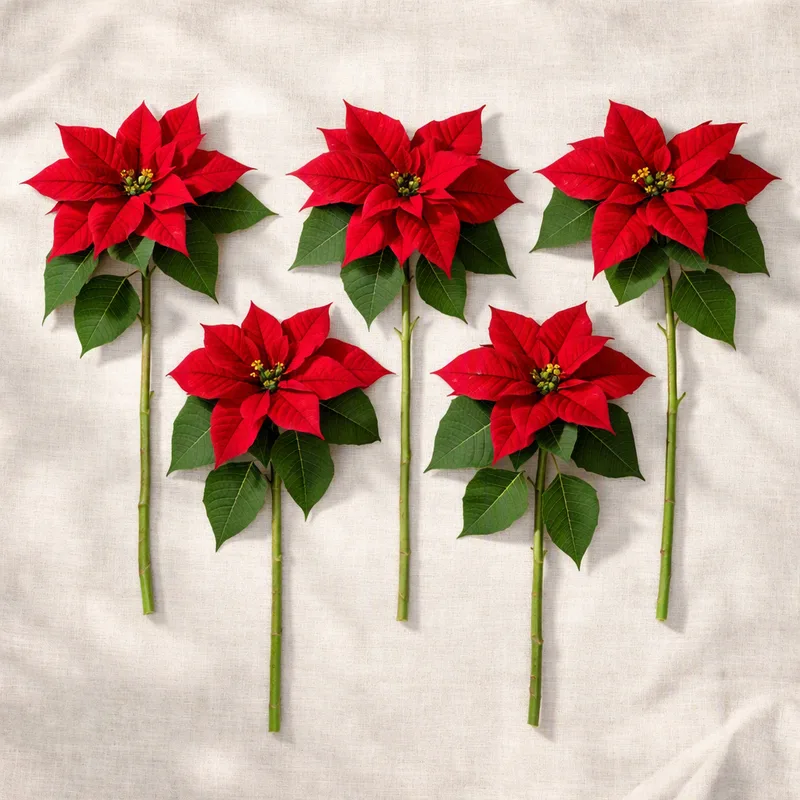
What looks like a flower is a ring of coloured bracts, which are modified leaves. The real flowers are the tiny yellow buds at the centre. Red is the usual colour, though cultivars with cream, pink, white and marbled bracts exist.
Why it colours up at the darkest time of year
The plant responds to day length. To turn colour, it needs long nights over several weeks, which growers arrange so the bracts are showing by Advent. That is why a poinsettia kept under a bright lamp in a hallway all evening may stay green.
Looking after one at home
- Place it in bright, indirect light, away from cold draughts.
- Water only after the surface has dried out, and tip any excess out of the saucer.
- Keep it warm, since a chilly walk from shop to car can make leaves drop.
- Wrap it well on the way home in winter.
How dangerous is the sap?
Its reputation is worse than the facts. The ASPCA does list poinsettia as a plant that can affect dogs, cats and horses, but describes its toxicity as generally over-rated. The milky sap may irritate the lining of the mouth and gut and sometimes causes vomiting. People with a latex allergy should avoid contact with the sap. For a child who has chewed a leaf, NHS 111 can advise, and for a pet, ring your vet.