Scarlet bracts, Aztec dye and nativity processions
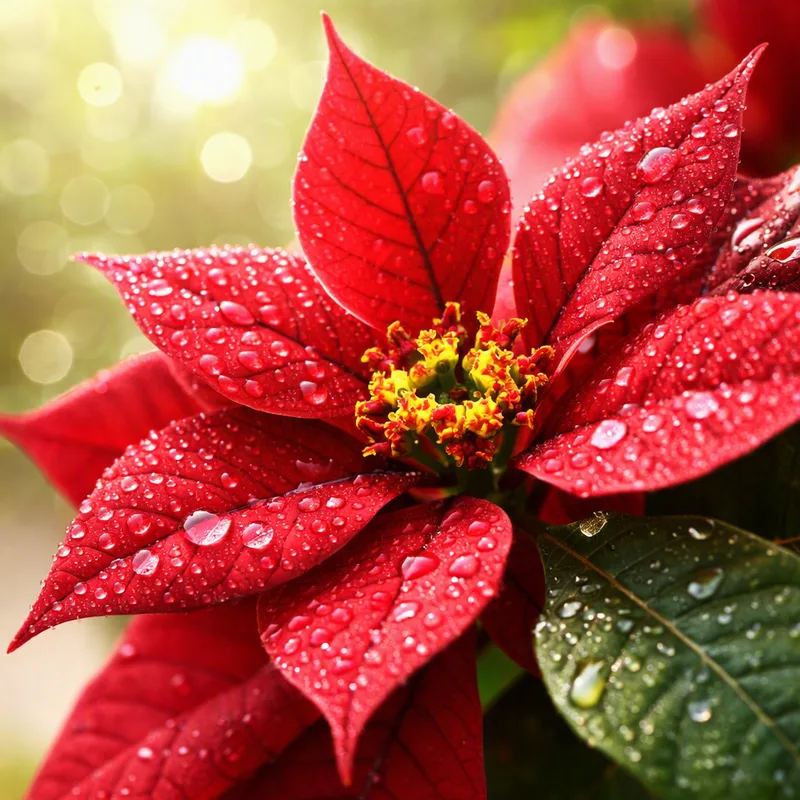
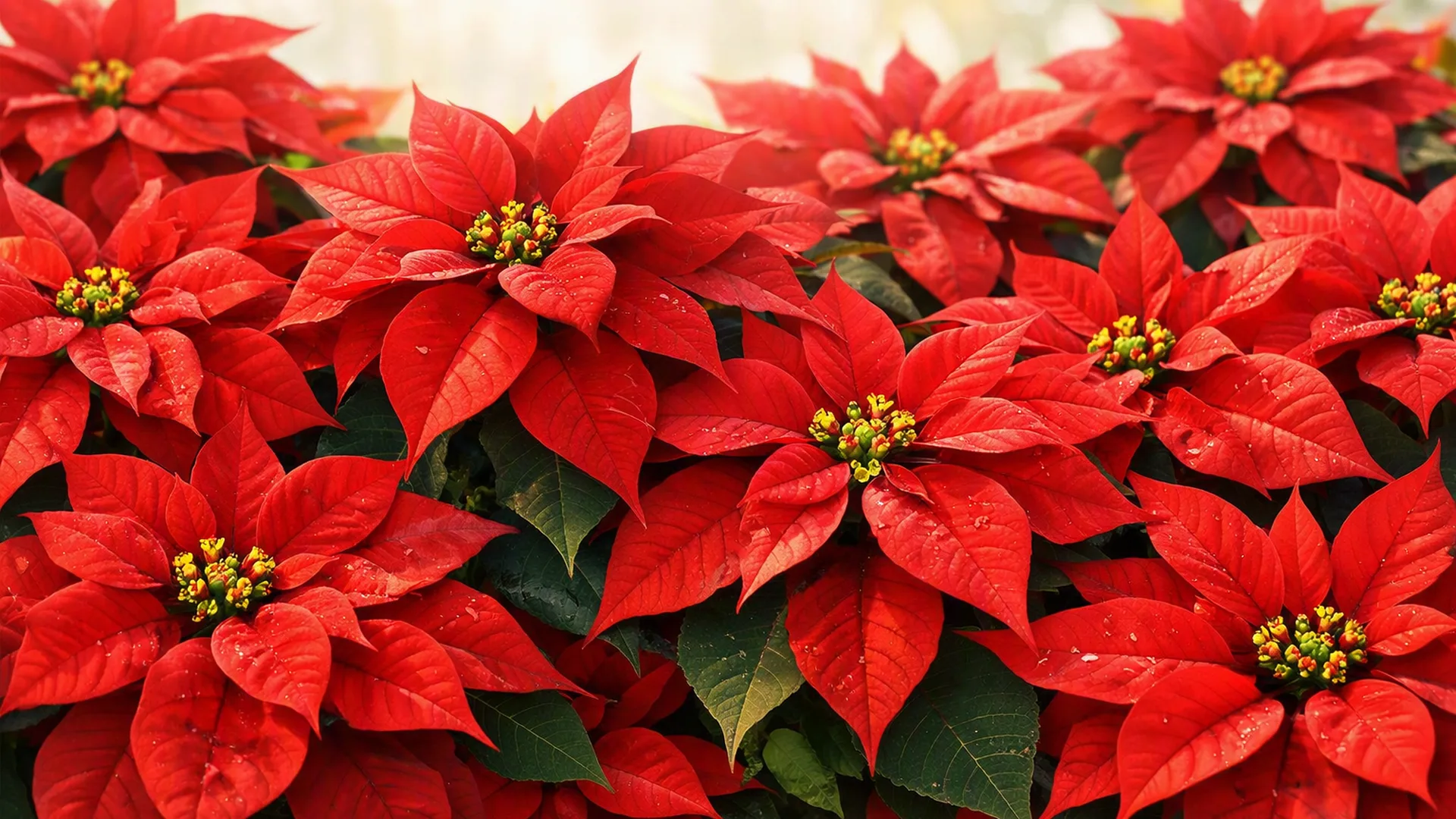
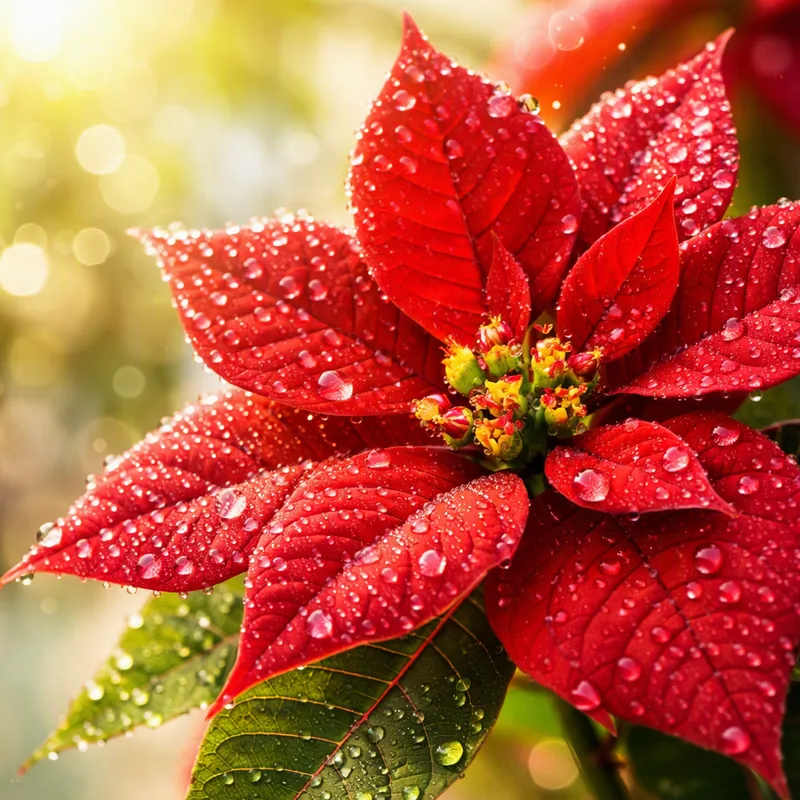
The scarlet of a classic poinsettia comes from its bracts, which are leaves that colour up in short days. Red has been the plant's signature for centuries. The Aztecs used it to make a red dye, and in Mexico it is called nochebuena, Christmas Eve. From the seventeenth century, Franciscan friars in Mexico began using the plant in nativity processions, and the connection with Christmas stuck.
Red varieties
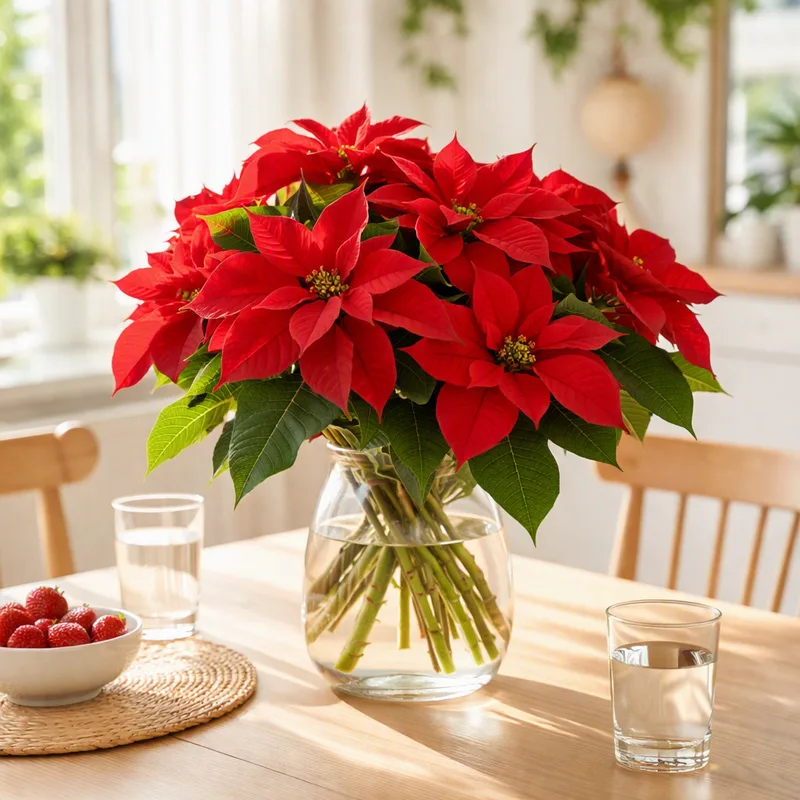
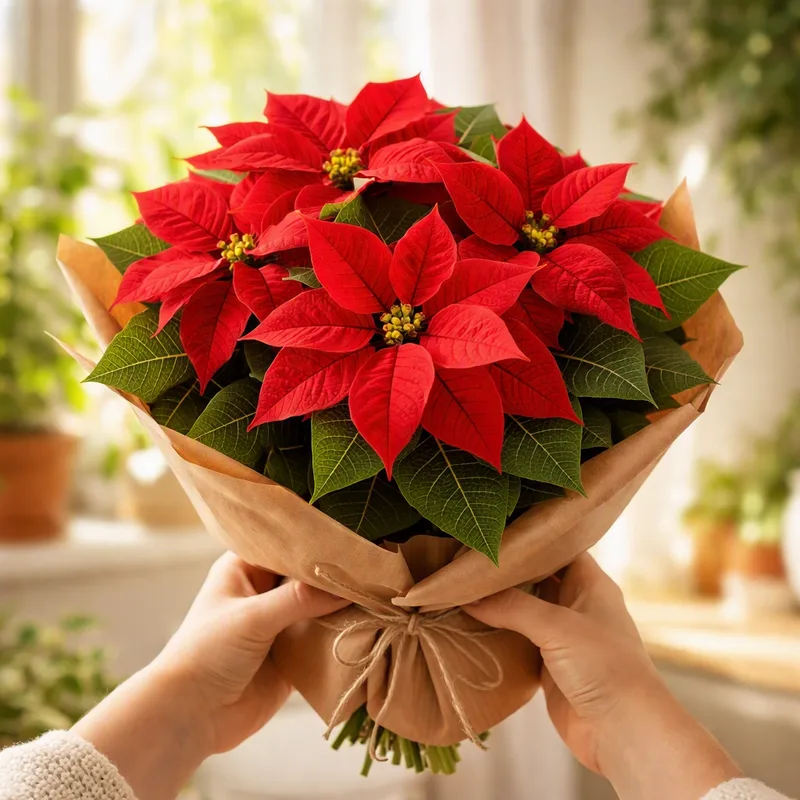
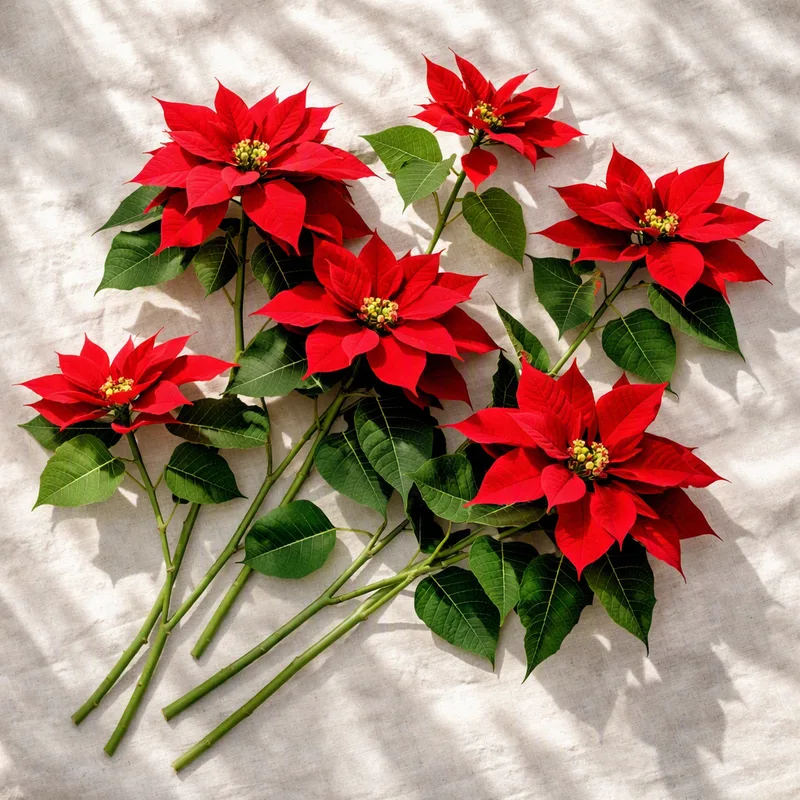
Most modern red poinsettias are compact plants bred to stay tidy in a pot. Bracts can be bright scarlet or a deeper crimson. Check the centre of the plant before you buy: the little yellow buds should still be tight, because open ones suggest it is past its best.
A winter routine
- Choose a bright room that stays above about 15 degrees Celsius.
- Wait until the compost surface feels dry, and empty the saucer afterwards.
- Keep it away from radiators, fireplaces and front-door draughts.
- Do not feed while it is in colour.
Pets, people and the sap
The ASPCA records poinsettia as a plant that can upset dogs, cats and horses, and says its reputation is exaggerated. Sap may irritate the mouth and gut, and vomiting is possible. Anyone with a latex allergy should be careful when trimming the plant. If a pet has chewed a leaf, call your vet for advice; if a person is unwell, NHS 111 is the right route.