


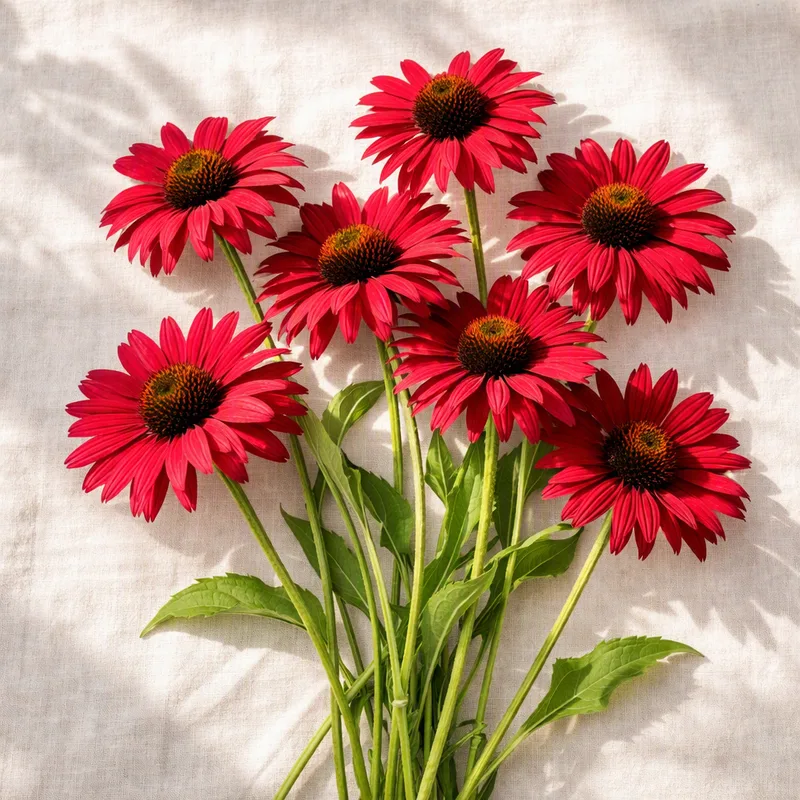
Fire colours from a purple plant
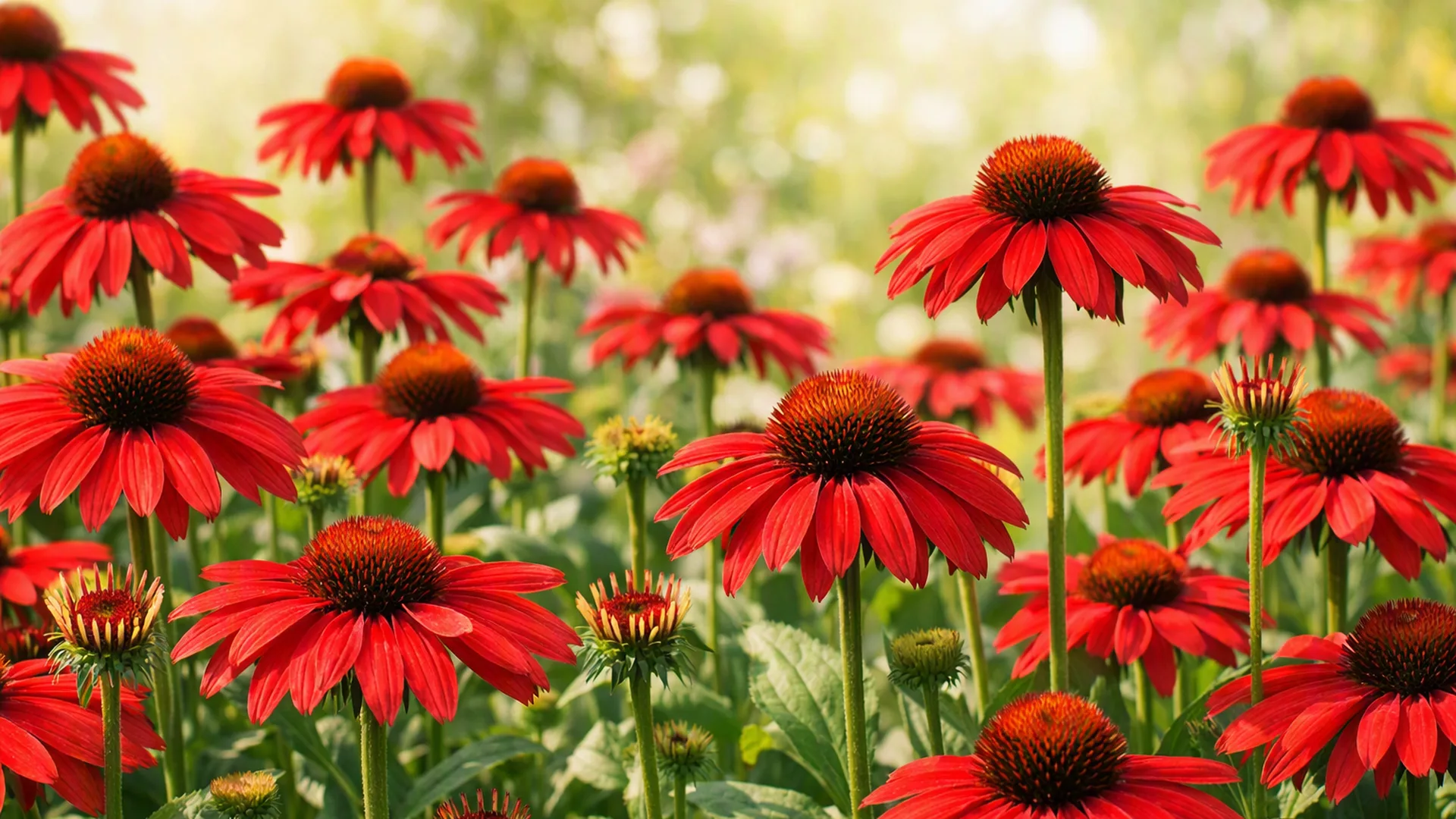
The species Echinacea purpurea is pink-purple. Breeders crossed it with related Echinacea to produce coral, orange and red shades, and these plants are usually more compact than the wild type. The trade-off is that they often live fewer years and demand good drainage. Treat a red coneflower as a short-term treat that you replace or propagate every few years.
Making them last
- Choose full sun and free-draining soil, adding grit to heavy ground.
- Plant in spring so roots establish before winter.
- Mulch lightly with grit rather than a wet compost layer around the crown.
- Try raised beds in clay areas, where wet winters kill plants.
- In May, check the base for new shoots before giving up on a plant that has not appeared.
Combining colours
Red coneflowers need cooler neighbours. Blue-grey grasses, deep purple salvias and silver foliage calm the heat of the colour, while yellow rudbeckias push it harder. The coneflower's dark centre ties everything together.
Insects and seedheads
Bees and butterflies visit the flowers from July to September. Leave seedheads standing so birds can feed.
Medicine and pets
Echinacea products are sold for colds, but Wikipedia reports weak or inconclusive evidence for them, so the plant is best enjoyed for its flowers. The ASPCA does not list the species as toxic to dogs and cats. Speak to a vet before offering supplements to animals.