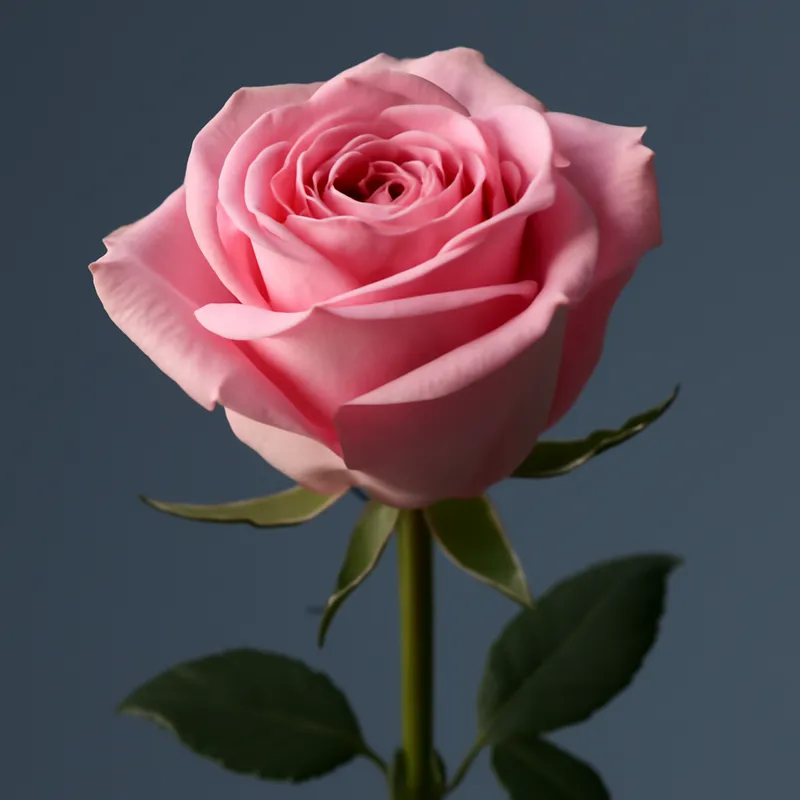
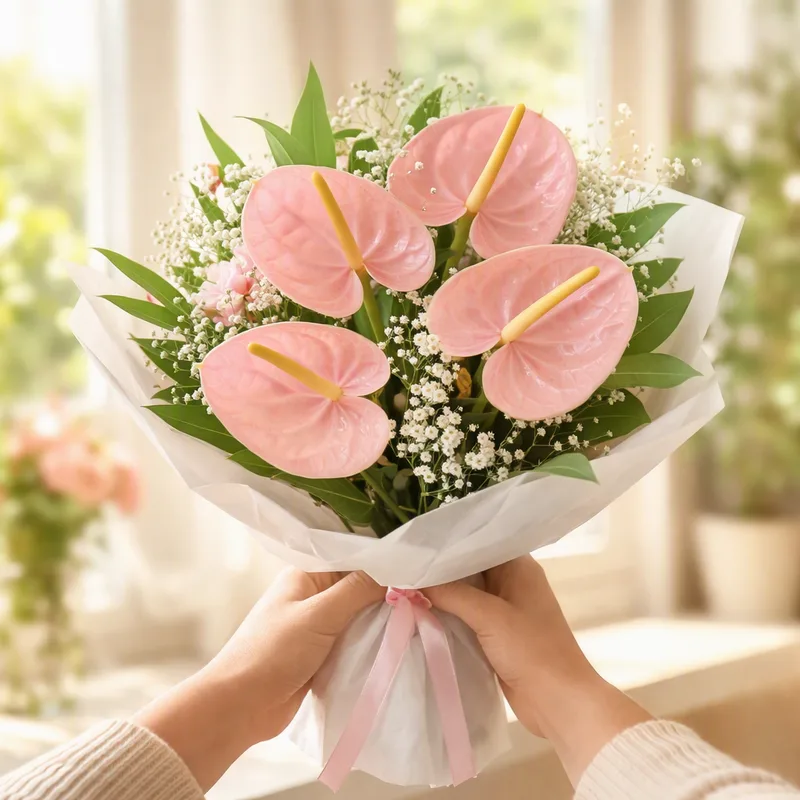
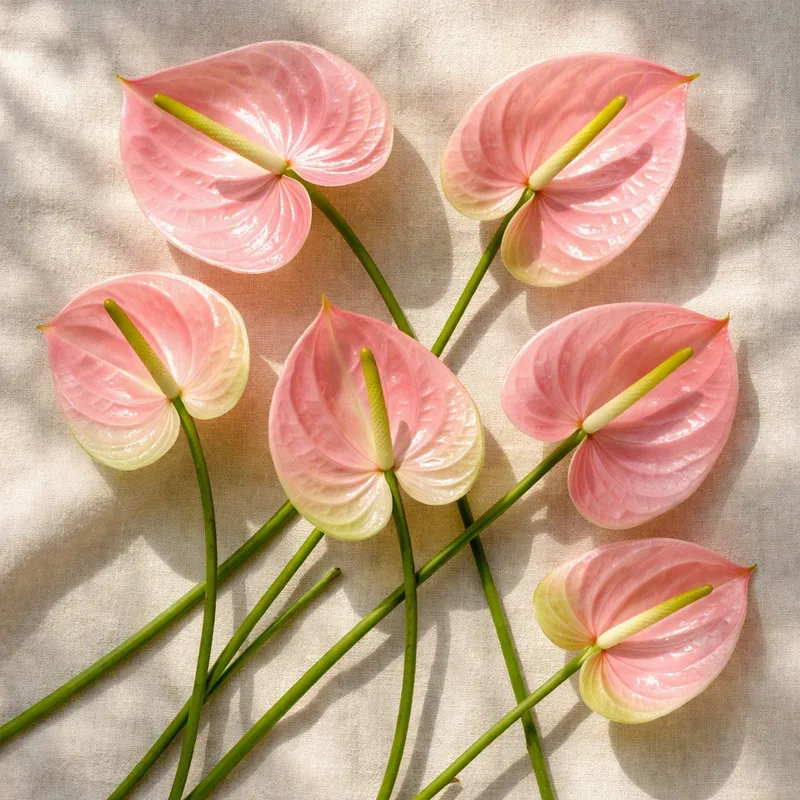
Natural pink
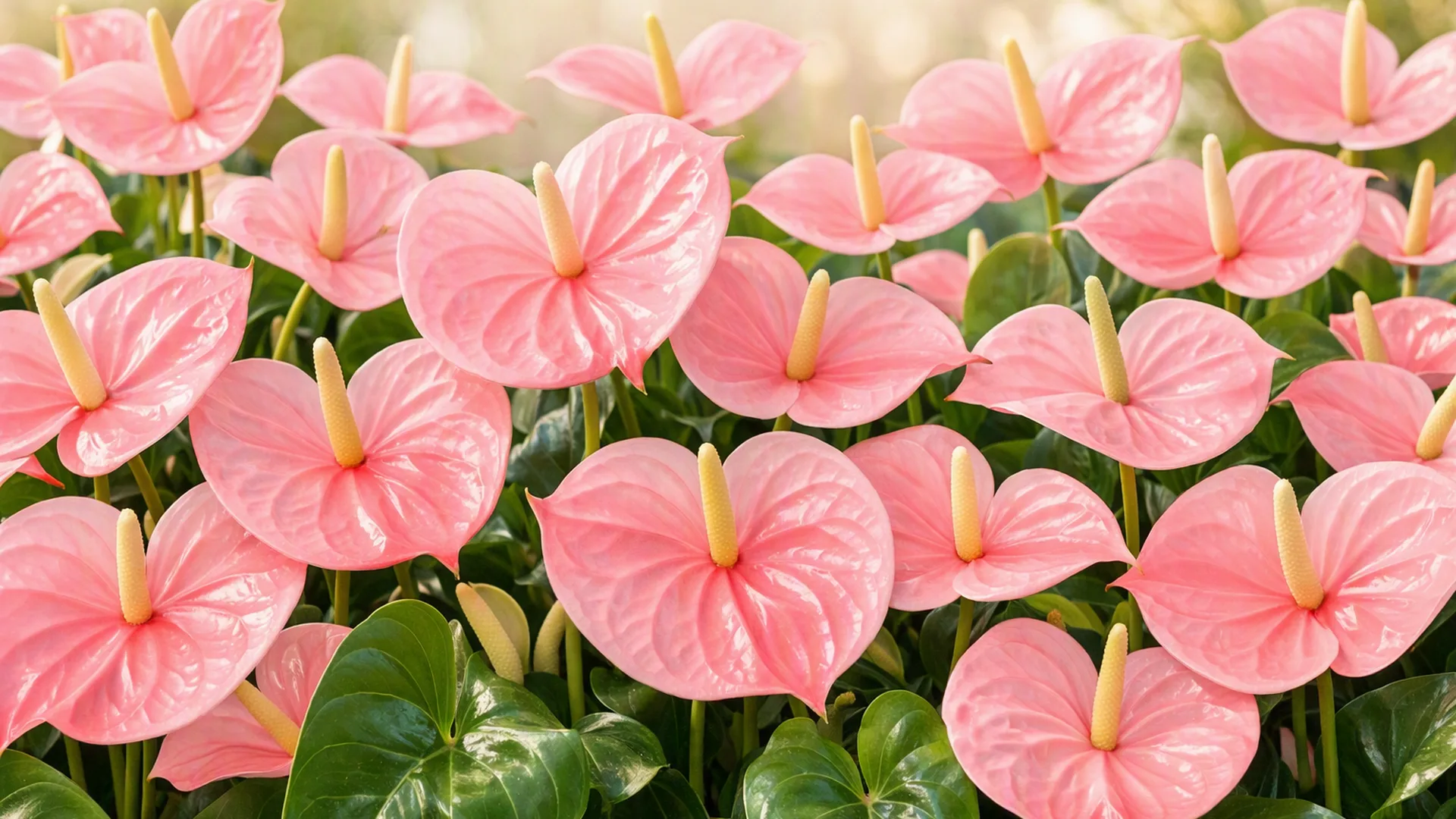
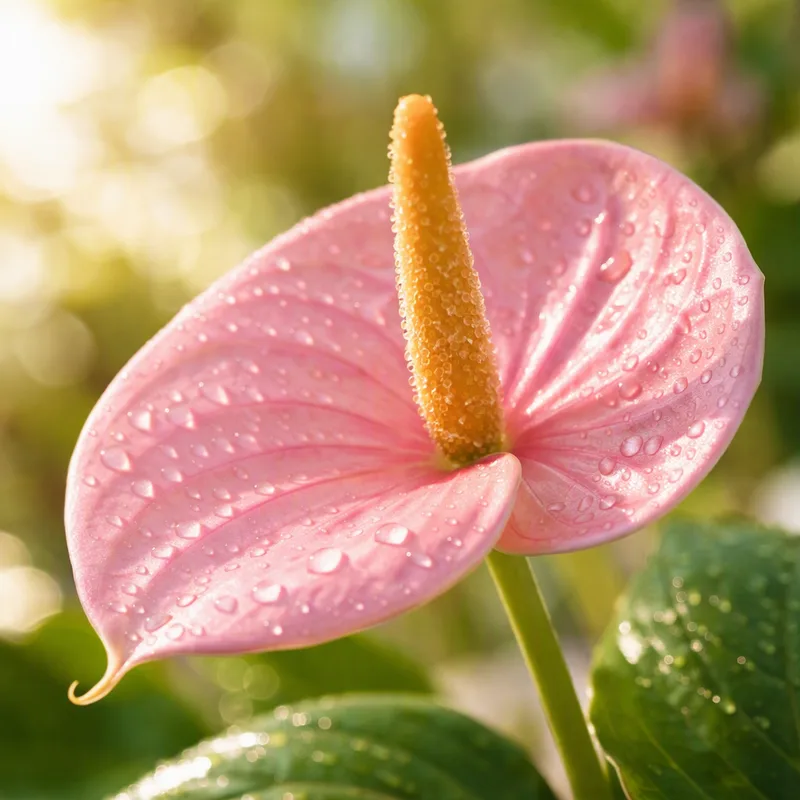
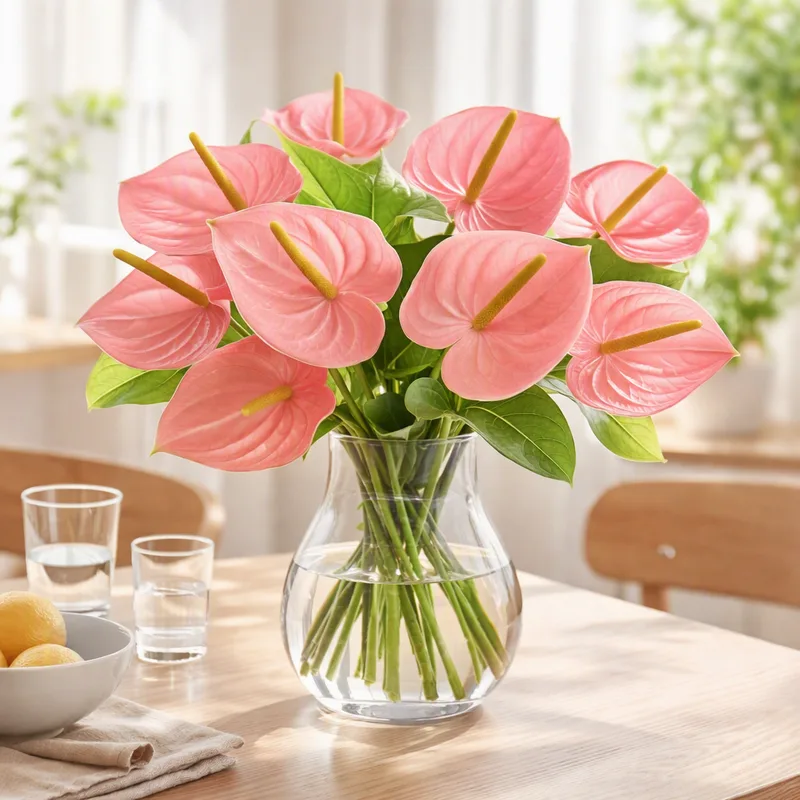
Unlike some colours, pink is found in the wild form: Anthurium andraeanum has a red or pink spathe, so a pink plant is close to the natural look. Cultivated pinks range from pale blush and salmon to bright rose and even near-coral. Pink varieties are available as compact pot plants and as tall stems for cutting. People often search for pink anthurium, flamingo lily and flamingo plant, using names that point to the same family.
Where to put it
Pink looks fresh against green leaves and white walls. In a British home the best place is a bright room without strong direct sun, such as a kitchen or bathroom windowsill facing east. A warm, humid bathroom suits the plant if there is natural light. Avoid draughty halls, where winter draughts can make the leaves brown at the edges.
Practical care
- Water when the top of the compost is drying, using lukewarm water.
- Mist the leaves lightly or stand the pot on a tray of damp pebbles during the heating season.
- Repot every two or three years into a slightly larger pot with airy, bark-rich compost.
- Wipe the leaves and spathes with a damp cloth every few weeks.
Mothering Sunday and beyond
Pink anthurium is a thoughtful choice for Mothering Sunday or a birthday, because it should flower again for months and does not drop petals or pollen on the carpet.
Toxic if chewed
The ASPCA says the plant is toxic to cats, dogs and horses, causing oral irritation and drooling. The calcium oxalate in the sap can also irritate human skin, so wear gloves. NHS 111 or a vet can advise after any ingestion.