Pure white with a scent
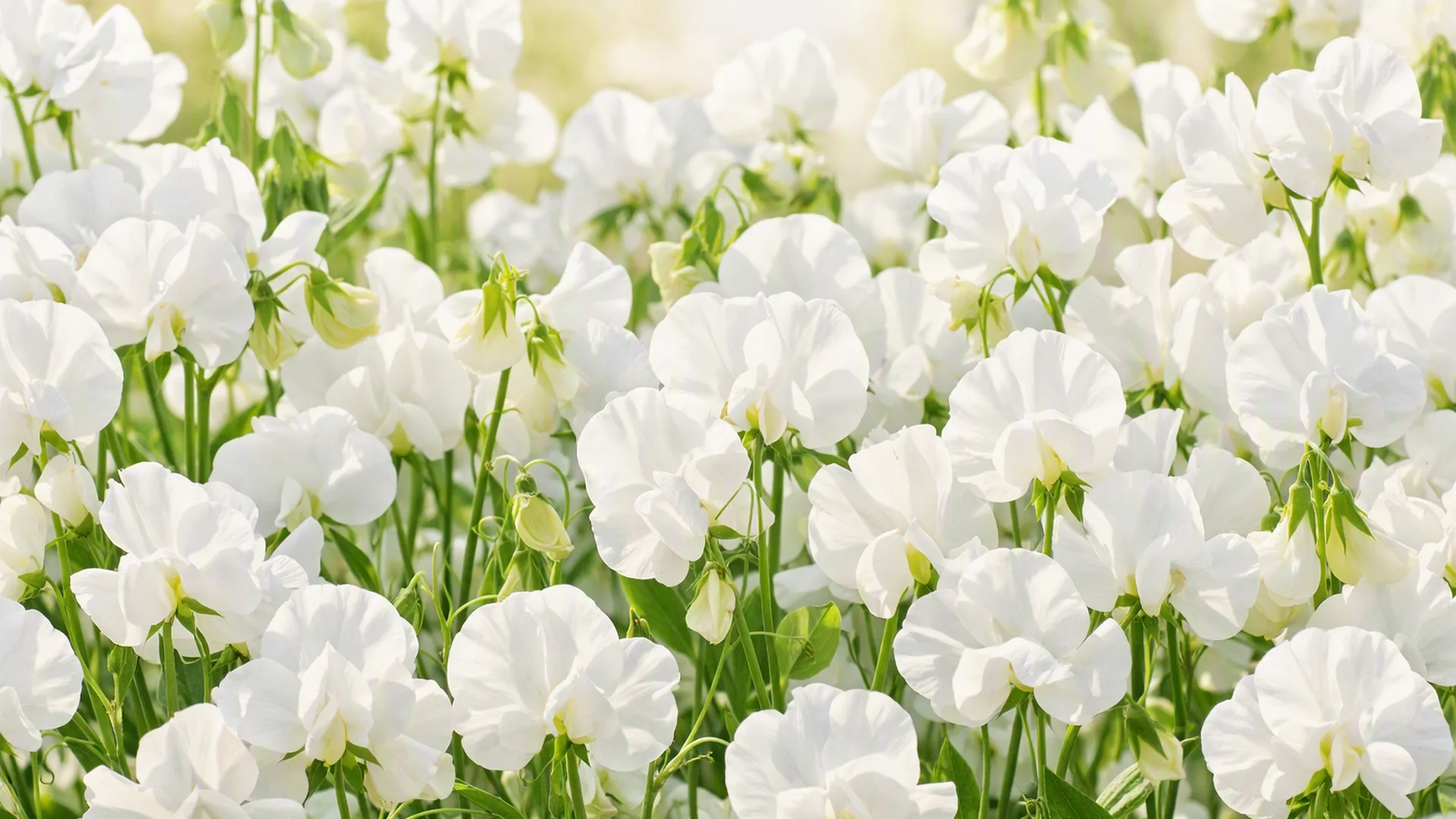
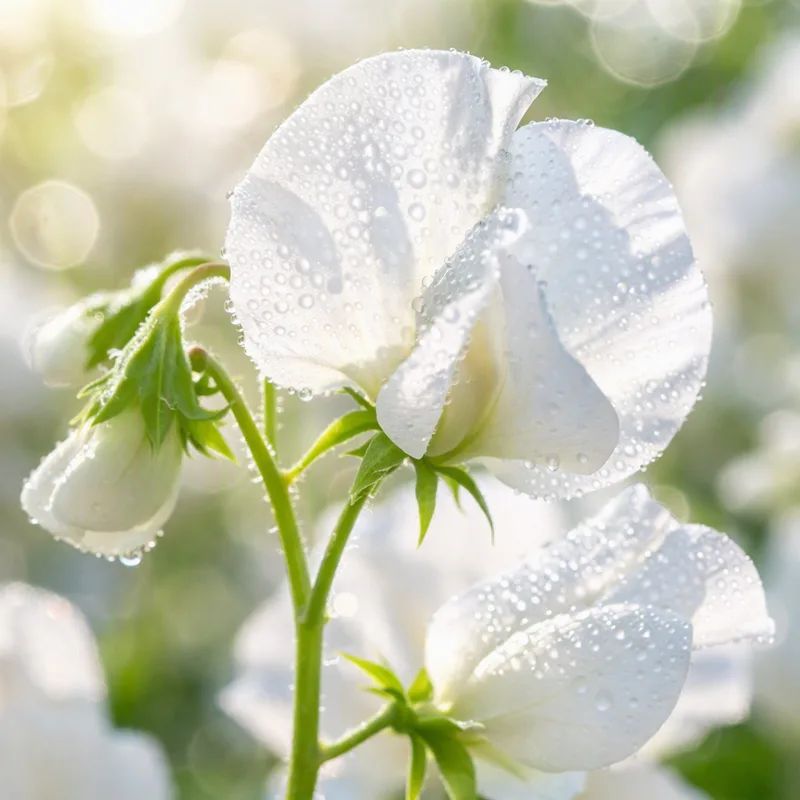
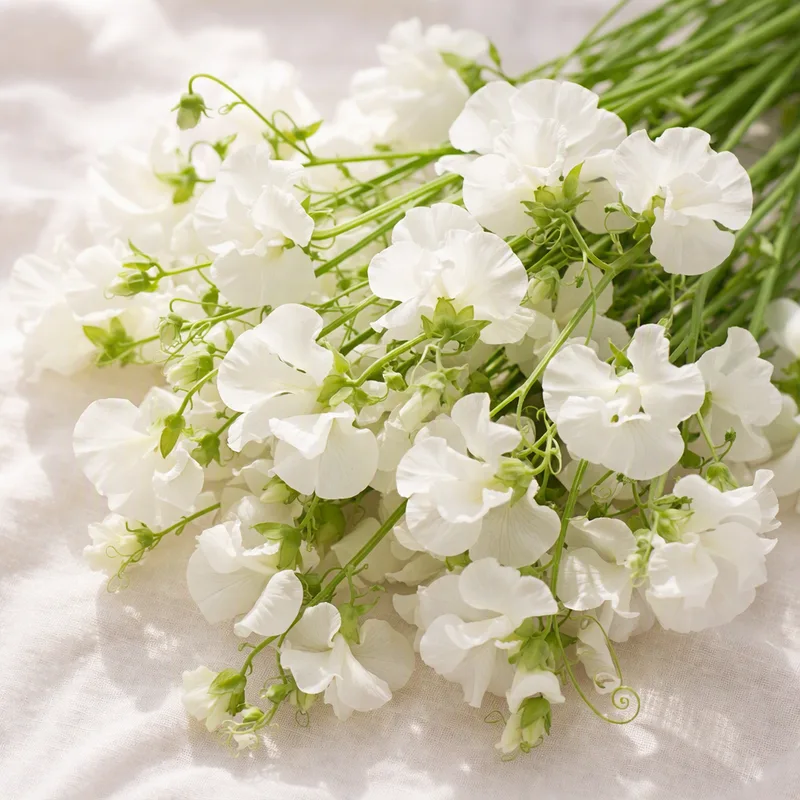
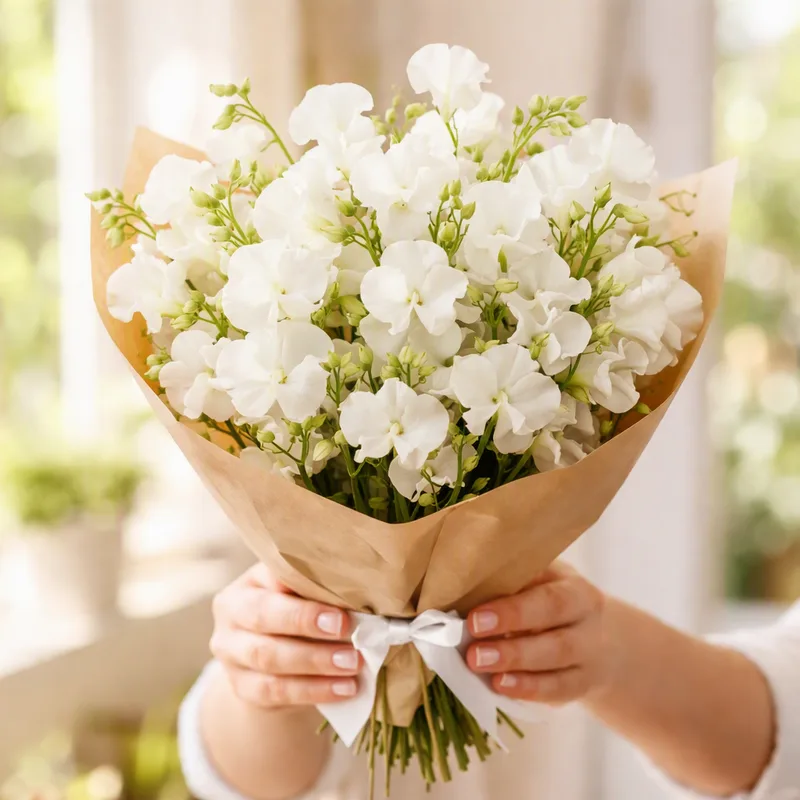
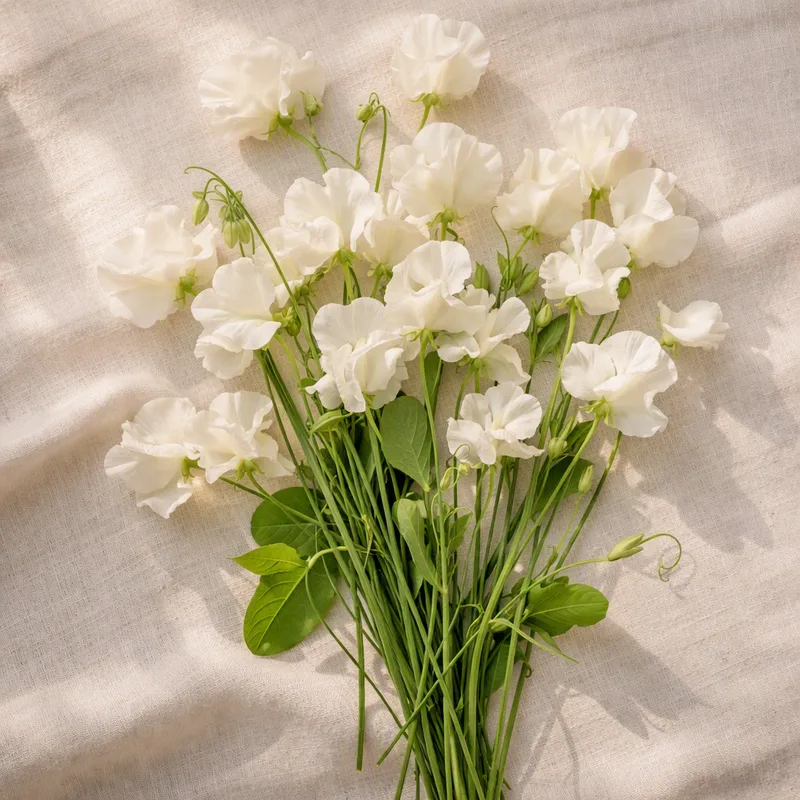
White sweet peas are cultivated forms of Lathyrus odoratus, a plant whose wild form is purple. White varieties pair well with almost any other colour, which is why they feature in wedding arrangements and shop bunches. Cream and ivory shades often sit alongside the whites, and a small blush of colour on the edge of the petals is common. 'Mrs Collier', a cream-white heritage variety, is a name seen in seed catalogues.
A cutting garden favourite
The long stems and heavy scent make white sweet peas an obvious choice for a cutting patch on an allotment.
- Grow a row of cordon plants up a cane frame and tie in each stem as it grows.
- Remove side shoots and tendrils on cordons for longer, straighter flower stems.
- Pick when the lowest flowers on the stem are open and the top ones still in bud.
- Stand cut stems in cool water straight away, because they wilt quickly.
Caring for your plants
Dig a trench in autumn and add plenty of well-rotted compost, since sweet peas root deeply and enjoy moisture. They flower from about June until the end of August in most British gardens, and sooner in mild areas of the south-west. Regular picking is vital because seed pods tell the plant to stop. Powdery mildew can appear in late summer, especially on plants that have dried out.
Traditional meaning
In the language of flowers sweet peas are traditionally associated with delicate pleasure and goodbyes, and white ones are often linked to purity.
A note on safety
The seeds and pods are poisonous when eaten in quantity and can cause lathyrism. Keep them away from small children and pets.