
A white form of a blue flower
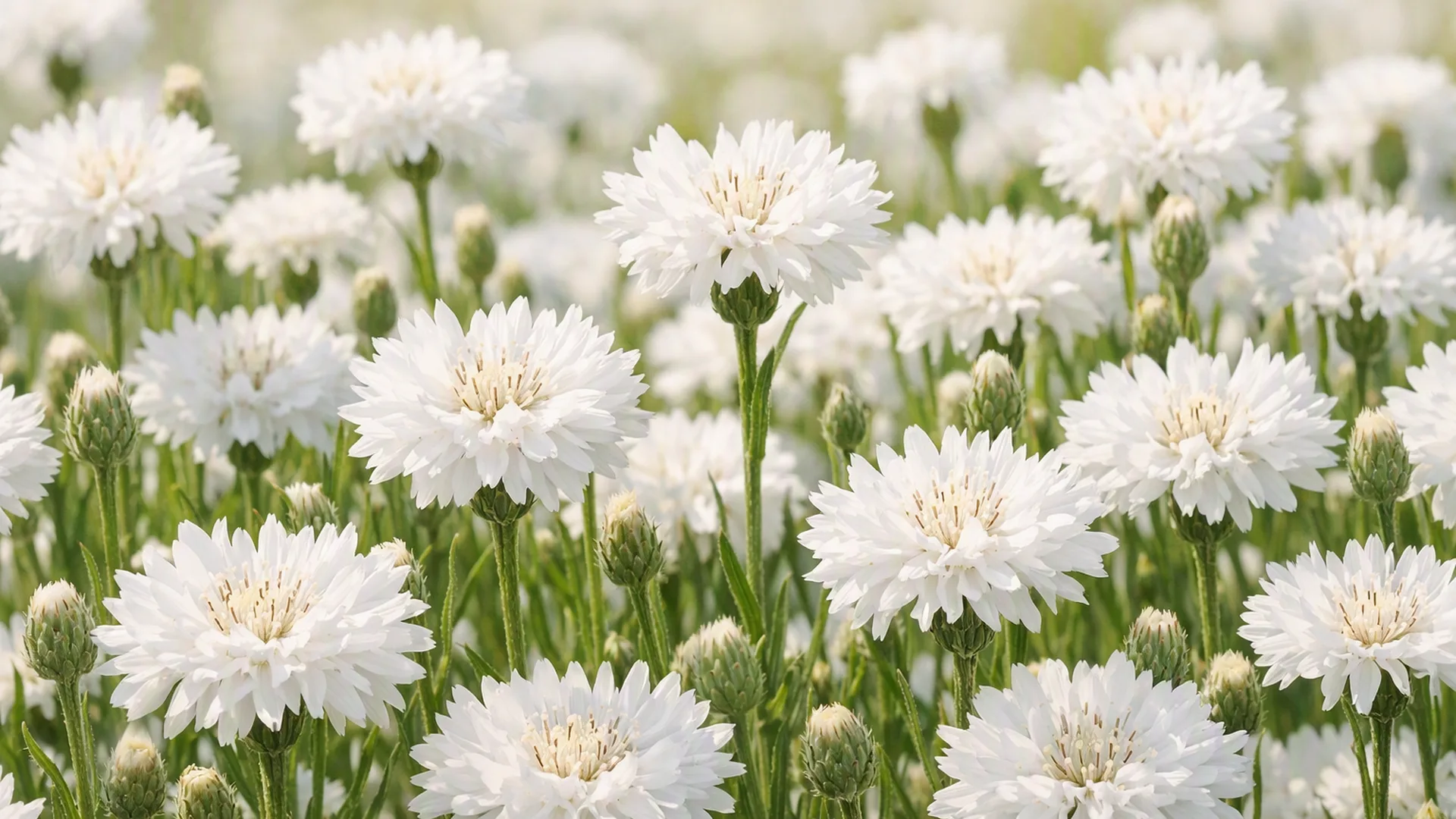
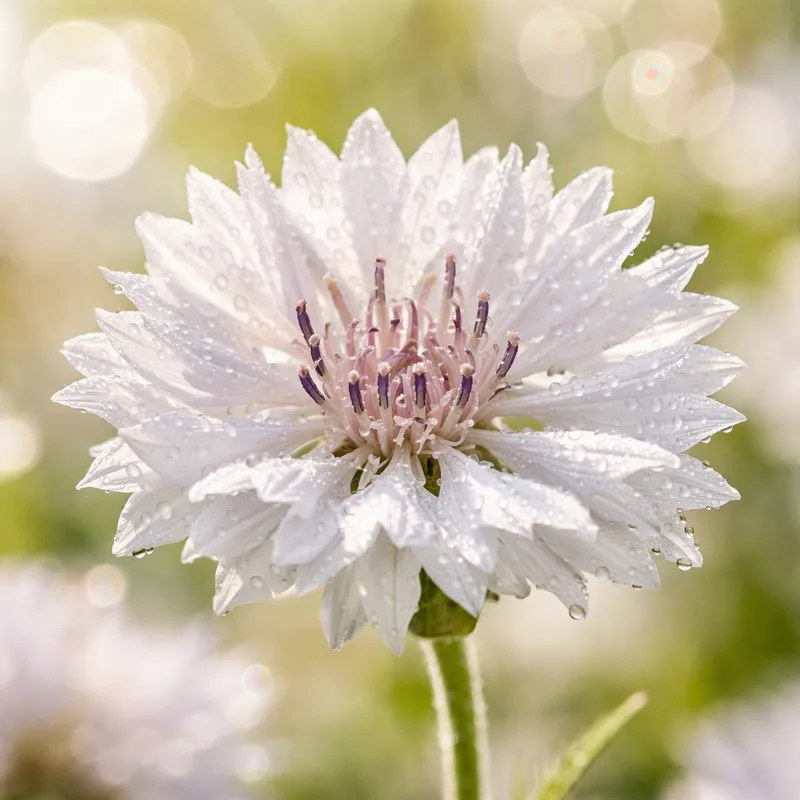
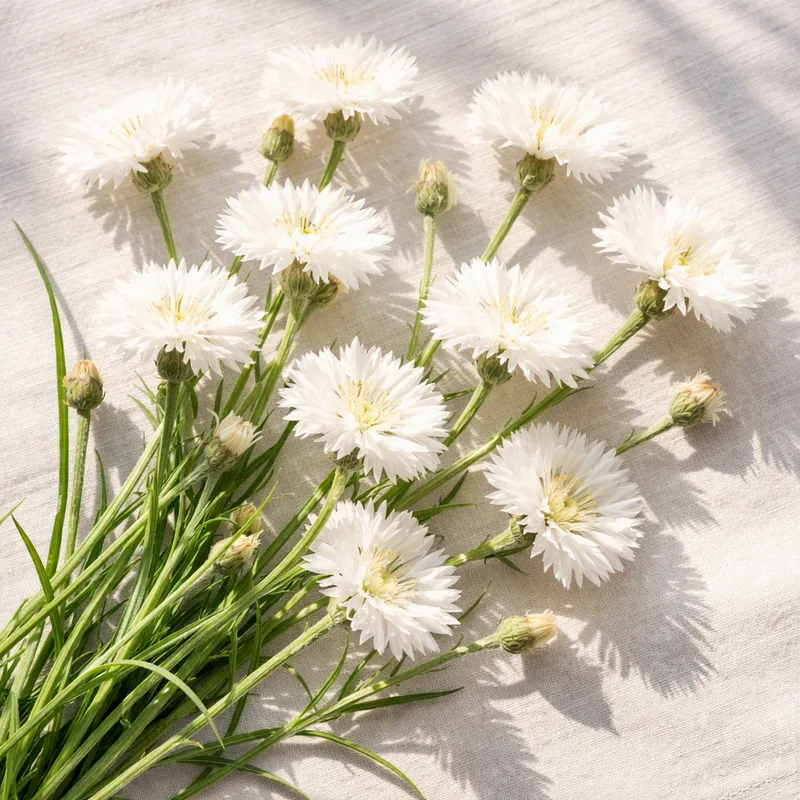
Wild cornflowers are blue, but gardeners have long selected paler forms. White cornflowers have the same fringed, tufted flowers on the same slender stems, giving a look that is airy rather than bright. They are hardy annuals, flowering from June until the first frosts in most of Britain.
Varieties to try
- 'Snowman' is a tall white cultivar for the back of a border and for cutting.
- The 'Florence' series includes a white, a compact type around 35 cm tall, suited to pots.
- 'Ball' series mixtures often contain white among blue, pink and dark maroon.
Seed from a mixed packet will usually give a variety of colours, so choose a named white if you want a pure patch.
For weddings and buttonholes
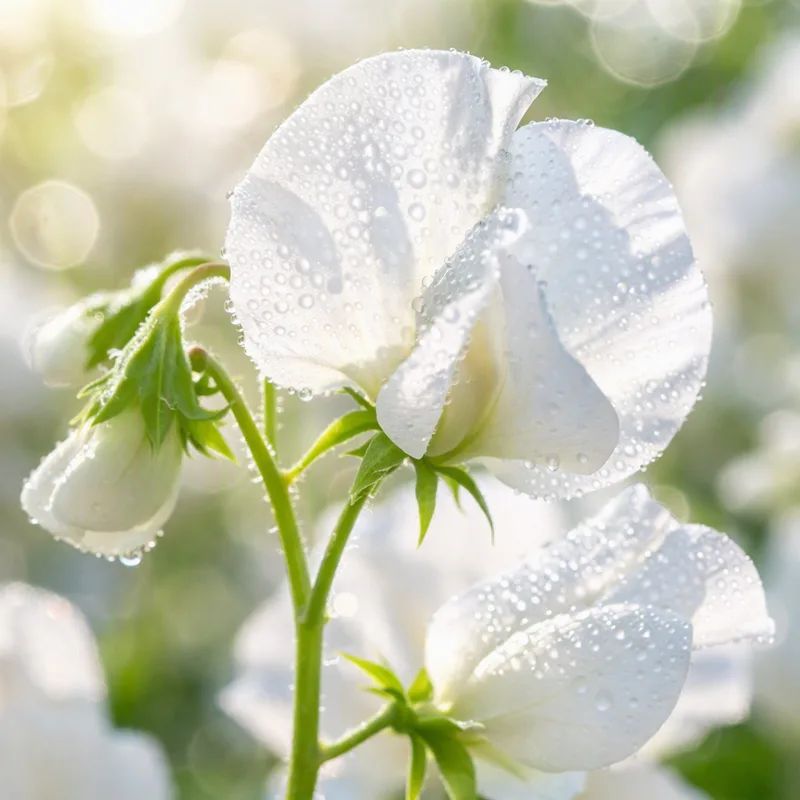
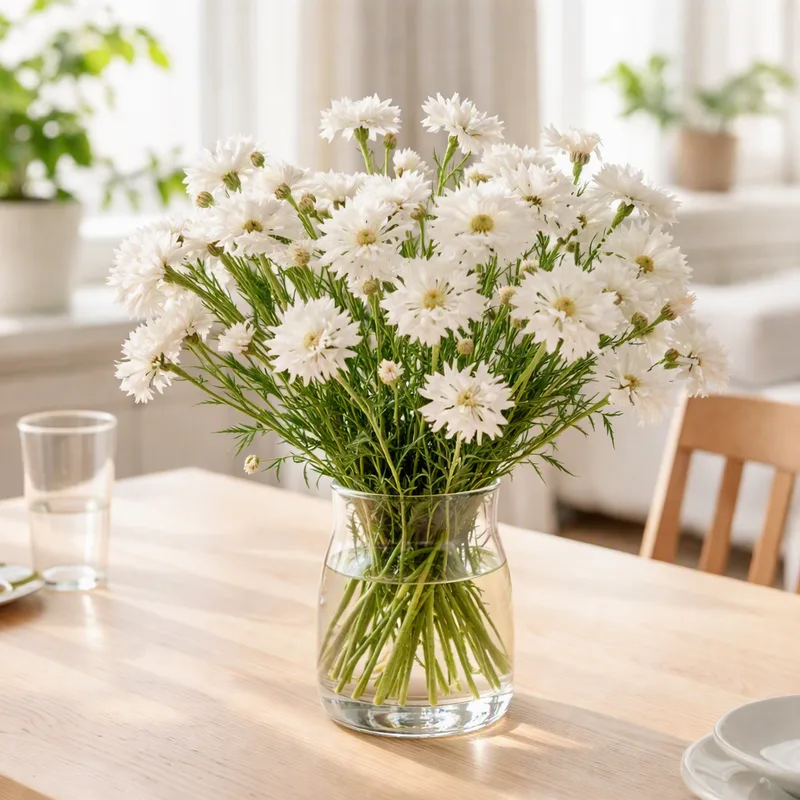
White cornflowers are often used in wedding work for buttonholes and posies, as tradition has linked cornflowers with young men wearing them as bachelor's buttons. They mix well with sweet peas, feverfew and gypsophila, and the tufted shape contrasts nicely with rounded roses. In late summer, a jug of white cornflowers on a table looks fresh without any fuss.
Sowing
Sow outdoors where they are to flower, from March to May or in early September. Scatter seed thinly over raked soil, cover lightly and thin to roughly 15 cm. They need sun and dislike rich soil. Sowing a batch every three weeks until June gives a succession of flowers for cutting. White flowers show up especially well at dusk, which makes them a good choice near a patio.
Safe for animals
The ASPCA lists Centaurea cyanus as non-toxic to dogs, cats and horses, so it works well in a garden with pets.