Quick profile
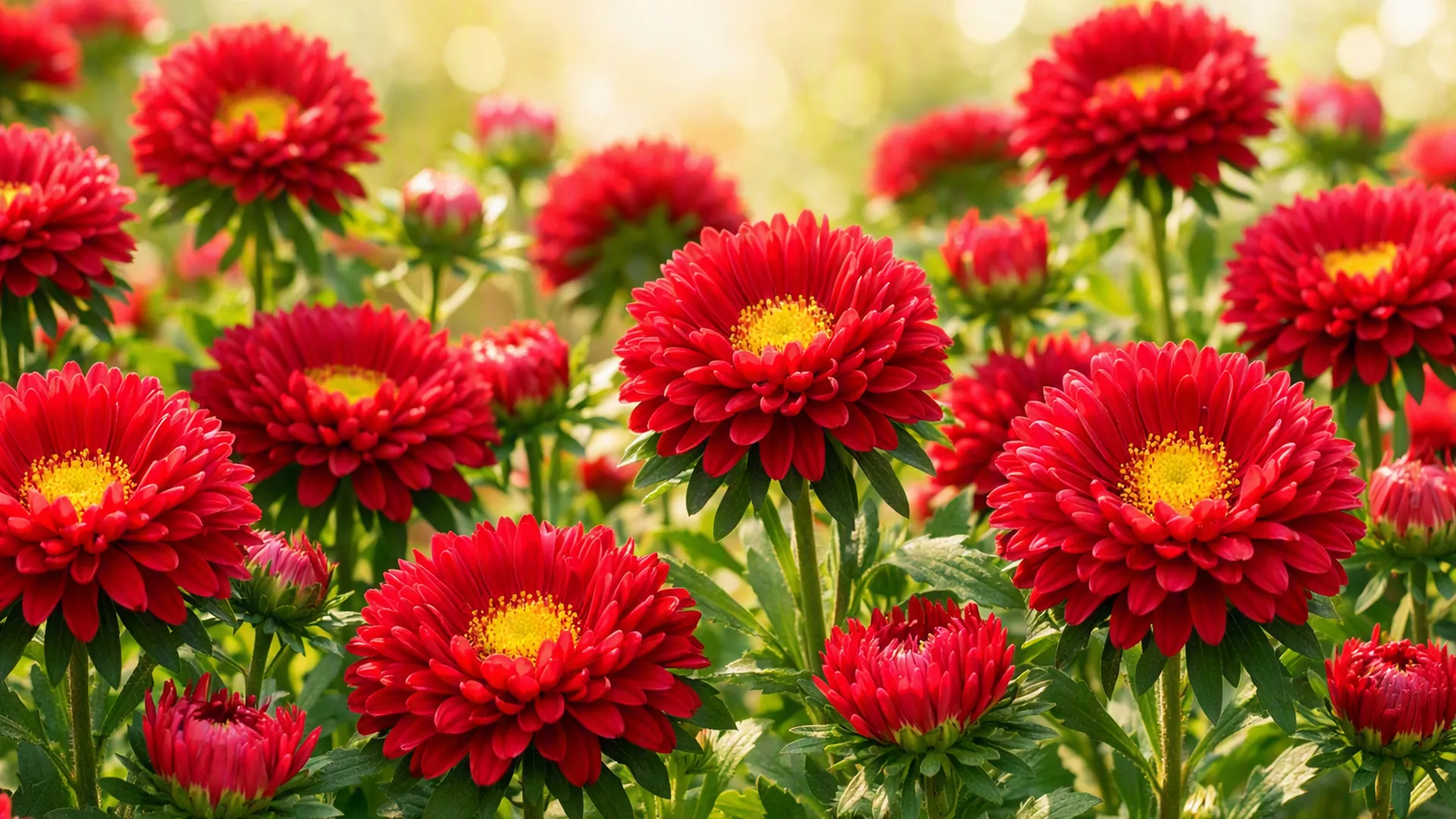
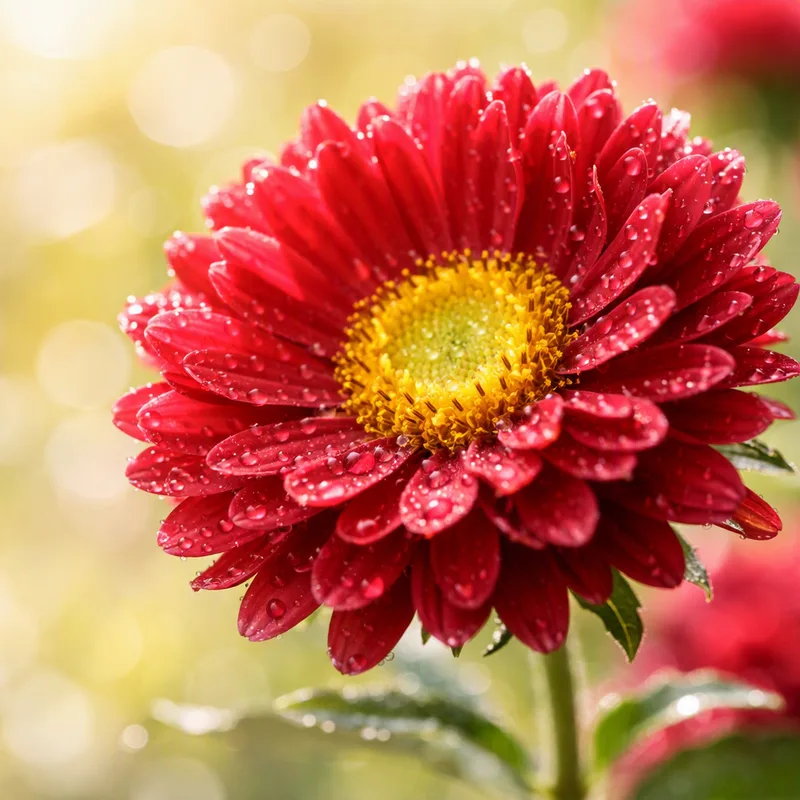
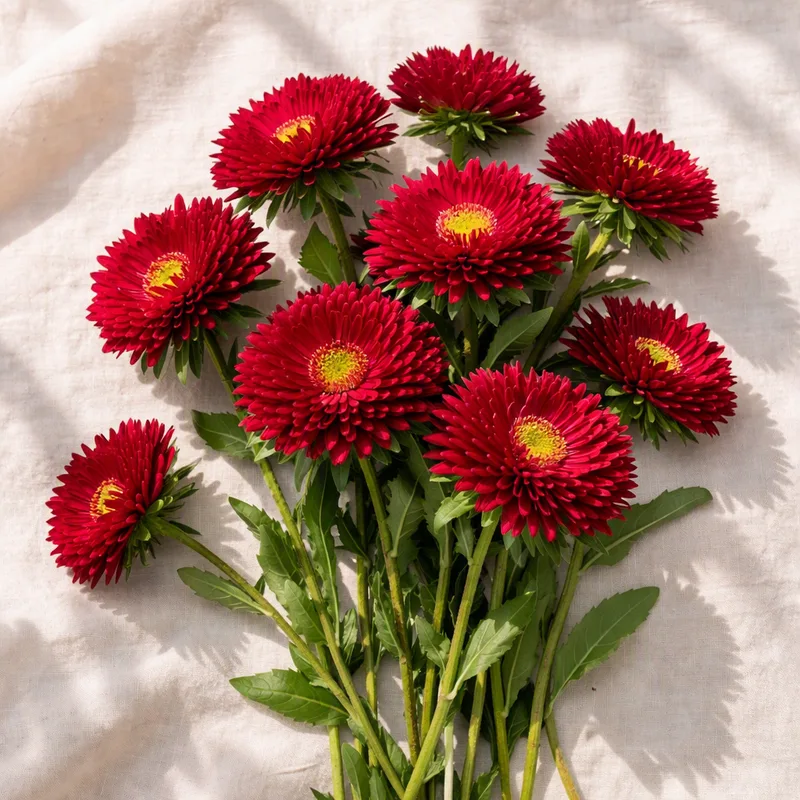
Searches for China aster facts often ask the same questions, so here are the basics. Callistephus chinensis is an annual, with a single erect stem that may branch higher up. It reaches about 40 to 80 centimetres and carries daisy-like heads with yellow centres on single forms. The red cultivars are garden selections, since the wild plant is purple. It belongs to the daisy family and is native to China and Korea.
Growing red China asters in Britain
The plant needs warmth and sun, and it is ruined by frost. In the UK most gardeners sow under glass in spring and plant out around the end of May, when nights have warmed up.
- Pick a sunny, sheltered position with rich, free-draining soil.
- Tie in tall stems before they flop.
- Pinch out the growing tip of young plants for a bushier shape.
- Water at the base to keep leaves dry.
Pests and disease
Fusarium wilt is the main risk, and it lives in the soil. A new bed every year helps greatly. Aphids and leafhoppers may also visit.
Insect visitors
Single and semi-double red flowers give bees and hoverflies easy access to pollen. Fully double forms offer far less, so choose single types if wildlife matters to you.
Pet safety
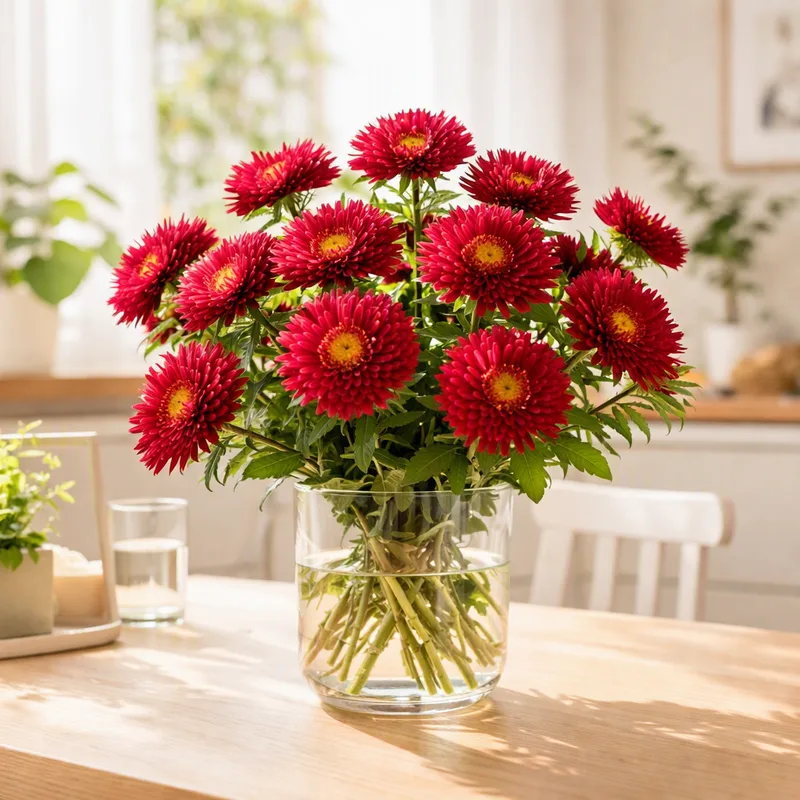
The ASPCA's plant list marks China aster as safe for dogs, cats and horses. A bunch of stems on the table is therefore less worrying than lilies or foxgloves, though a vet is still the best contact if an animal seems unwell.