
Dark and dramatic
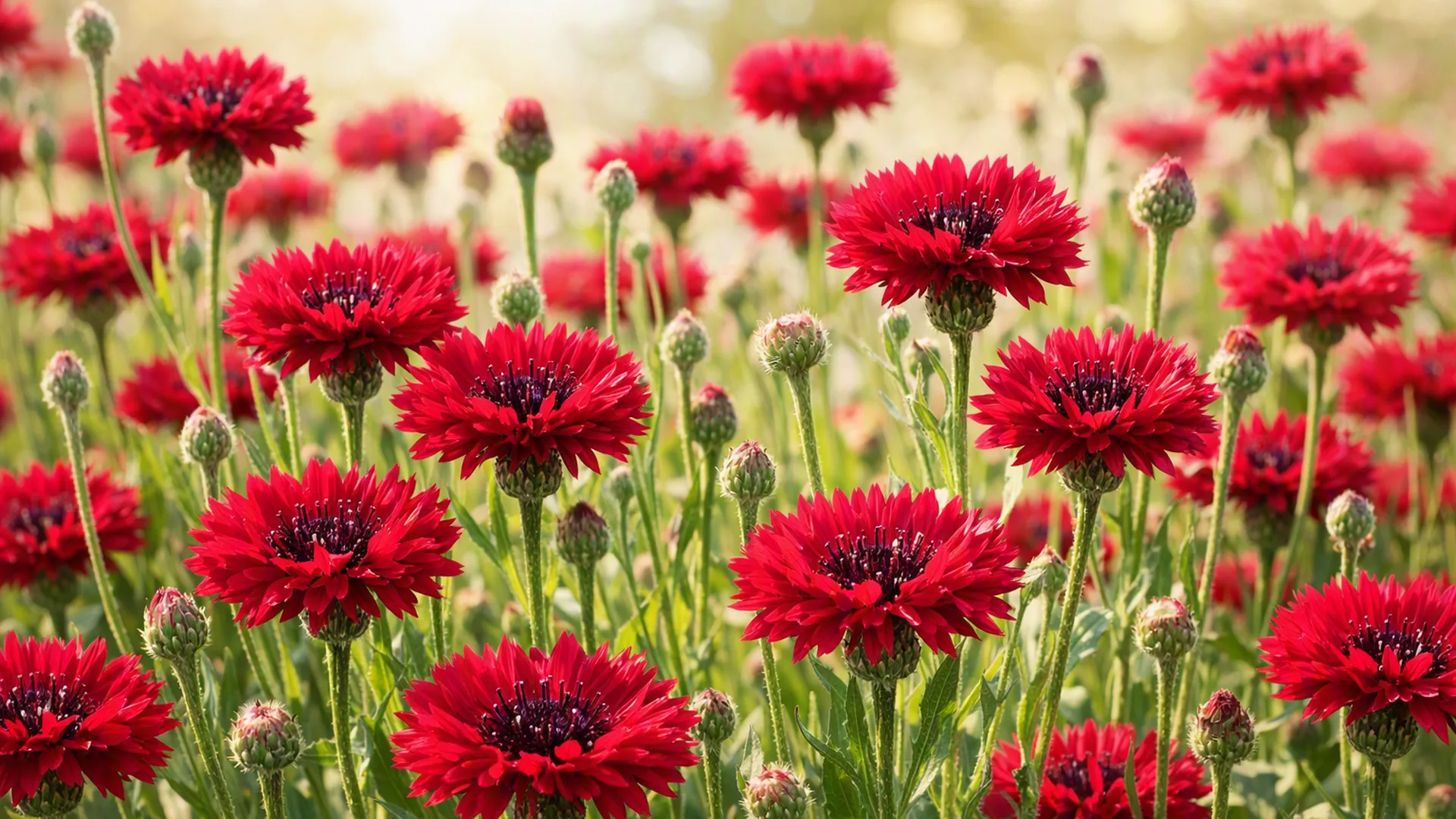
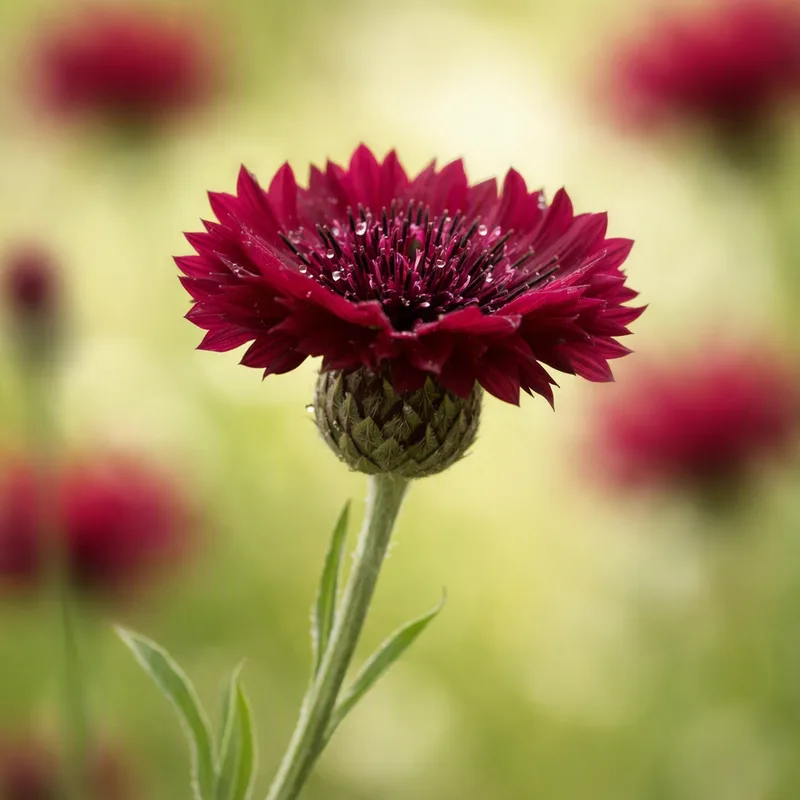
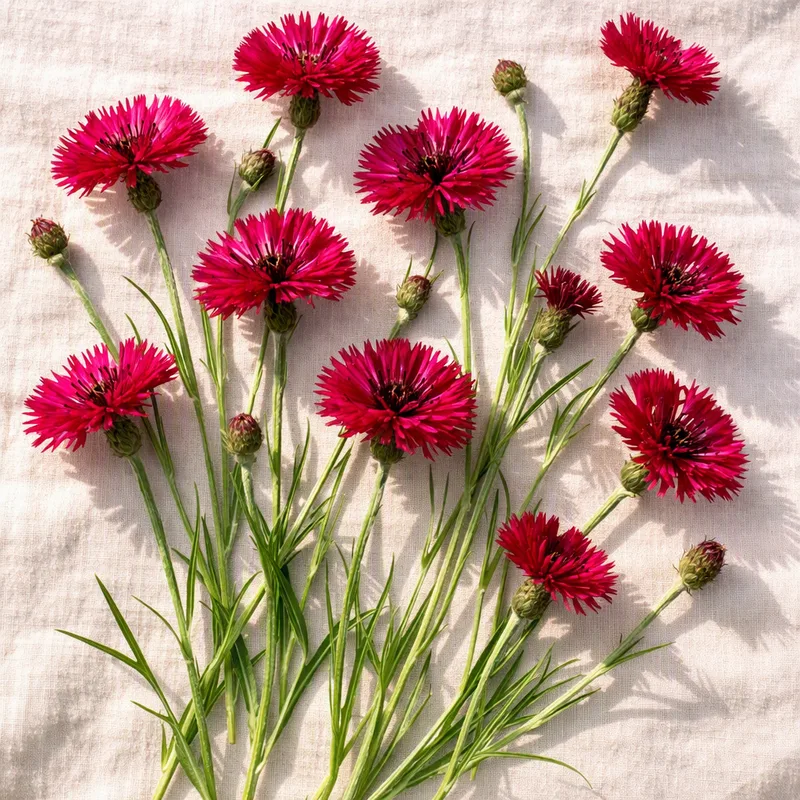
The true cornflower is blue, yet seed breeders have brought out deep red-purple and crimson forms that give a rich, velvety look. None is a pure red, so describe them as maroon, claret or burgundy rather than scarlet. The foliage and habit stay the same as in the blue types, and the flowers still carry the characteristic fringed petals.
Varieties to try
- 'Black Ball' is a very dark maroon, almost black, and grows to around 90 cm.
- 'Red Ball' and 'Red Boy' are deep red-pink shades, often described as crimson.
- The 'Florence' series includes a red, a compact dwarf type for pots.
Check the label, as cornflower seed may include a mix of crimson, pink and white.
Colour companions
Dark cornflowers are striking beside cream or lemon flowers, such as ox-eye daisies, or beside orange pot marigolds. A mix of blue, white and red cornflowers gives a patriotic palette that suits a summer party, and the combination of poppies and cornflowers is the old image of a cornfield. In the language of flowers, dark flowers are often linked with deep feeling, and in a garden they can stand for a more modern, moody taste.
Sowing and care
- Sow outdoors from March to May, or in September for sturdier plants.
- Sun and poor to moderate soil produce the strongest stems.
- Pinch out tips once to encourage branching.
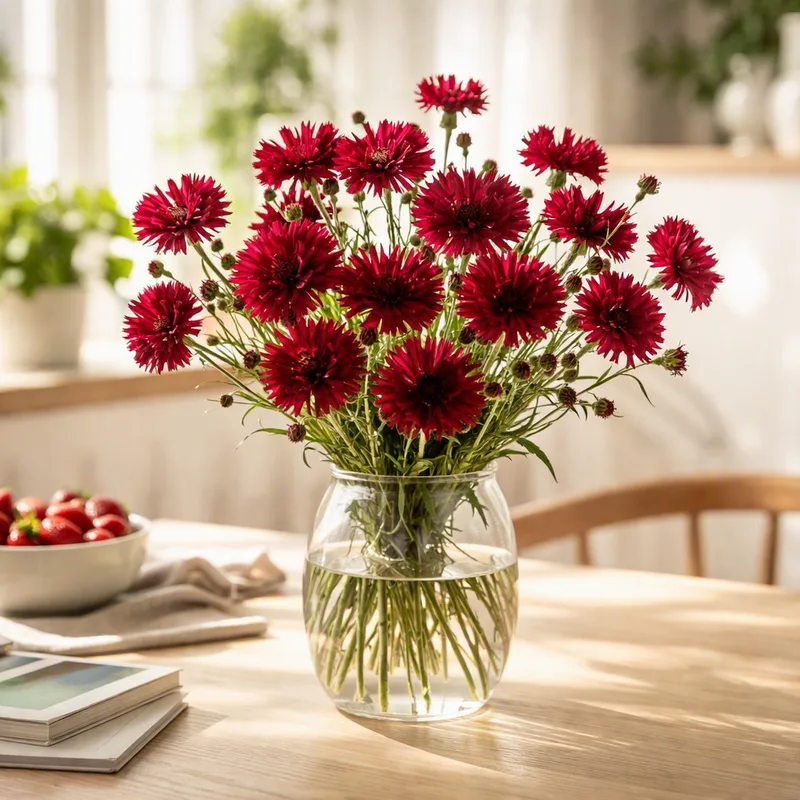
- Cut for the vase as flowers open, and they last about a week.
- Leave a few heads to set seed for birds and for next year's plants.
Plants in the wetter west may need staking after heavy rain.
For pets
The ASPCA lists Centaurea cyanus as non-toxic to dogs, cats and horses.