
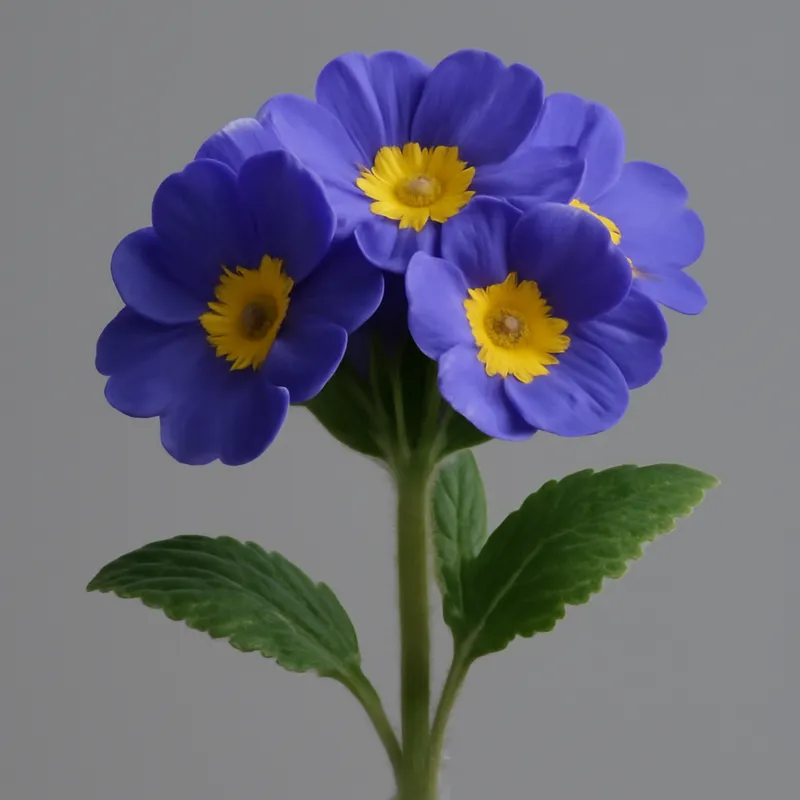


Britain's first flower of spring
The genus Primula takes its name from the Latin for "first", and the pale yellow common primrose (Primula vulgaris) is a native of British banks, hedgerows and woodland edges. It often starts flowering in February and carries on to May. The yellow primula sold in garden centres is usually a bred form of the same plant, with larger blooms than the wild version and a stronger yellow.
Primrose, cowslip, polyanthus
- The primrose carries one flower per stem, on slim stalks that rise from the leaf rosette.
- The cowslip (Primula veris) has a cluster of small, nodding, sweetly scented yellow flowers on a single tall stem and prefers grassland, often on chalk or limestone.
- The oxlip (Primula elatior) is a rare native with a loose cluster on one side of the stem, found in old woodland in East Anglia.
- Polyanthus (Primula x polyanthos) are cultivated crosses of primrose and cowslip, with several flowers on a stem and a wide colour range.
Wild plants and the law
Primroses and cowslips are easy to spot in the countryside, but it is an offence under the Wildlife and Countryside Act 1981 to uproot any wild plant without the landowner's permission. Leave them where they grow and buy named garden forms instead. Cowslips in particular are now valued in wildflower meadows, and the charity Plantlife encourages people to protect road verges that still support them.
Keeping pot primulas going
Primulas in pots like a bright, cool spot out of strong sun. A warm living room shortens flowering, so a cool porch or windowsill suits them best. Keep the compost evenly moist but never waterlogged, and remove spent flowers. After flowering you can plant them out in partial shade, where they usually settle in and often come back for many years. Watch for slugs in spring and vine weevil grubs in pots.
A note on skin and pets
Primula obconica carries a compound called primin which can irritate sensitive skin. Wash your hands after handling it. The ASPCA lists Primula as mildly toxic to dogs and cats, mainly causing stomach upset, so contact your vet if your pet has eaten a lot.