
The Shirley story
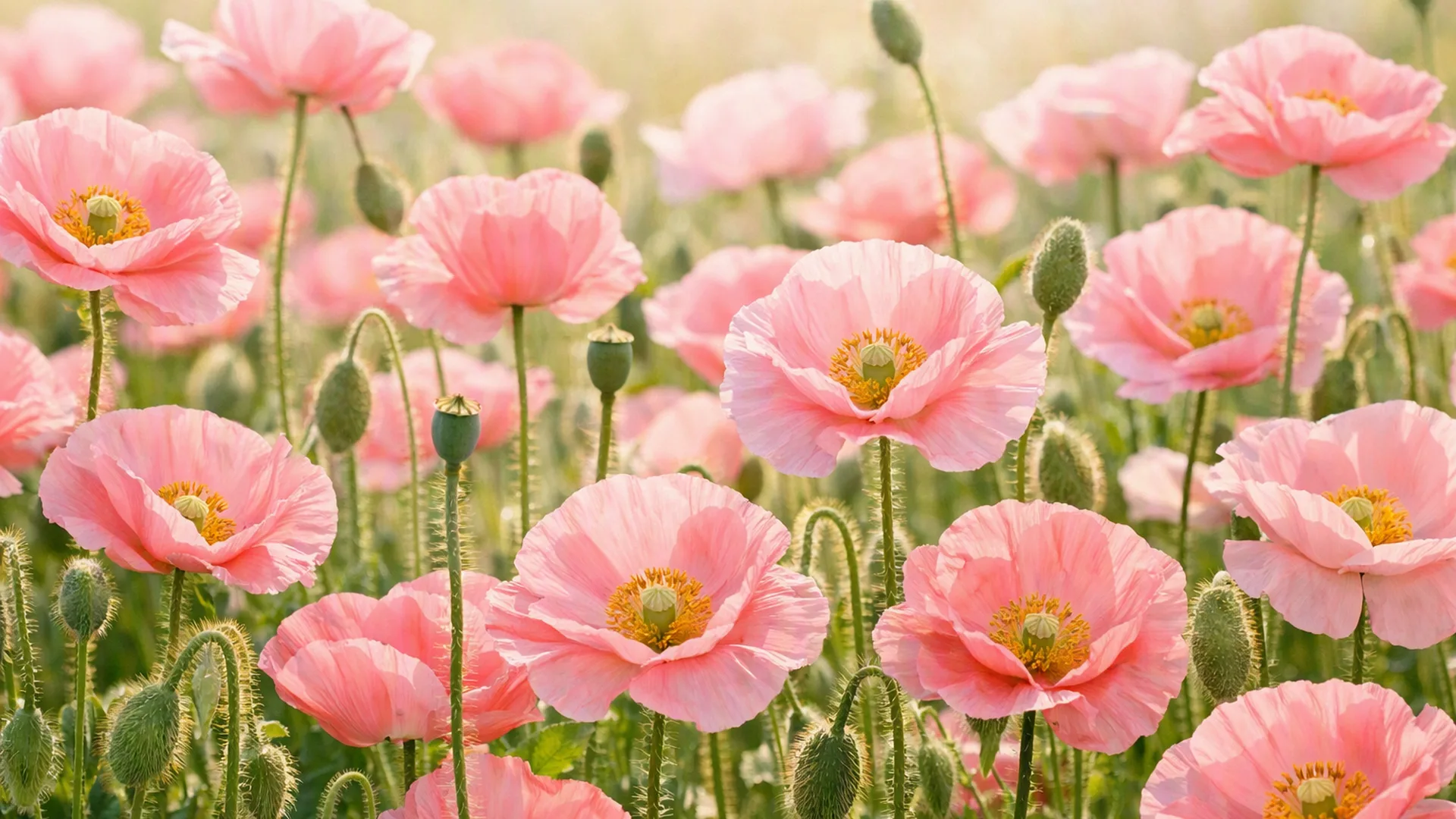
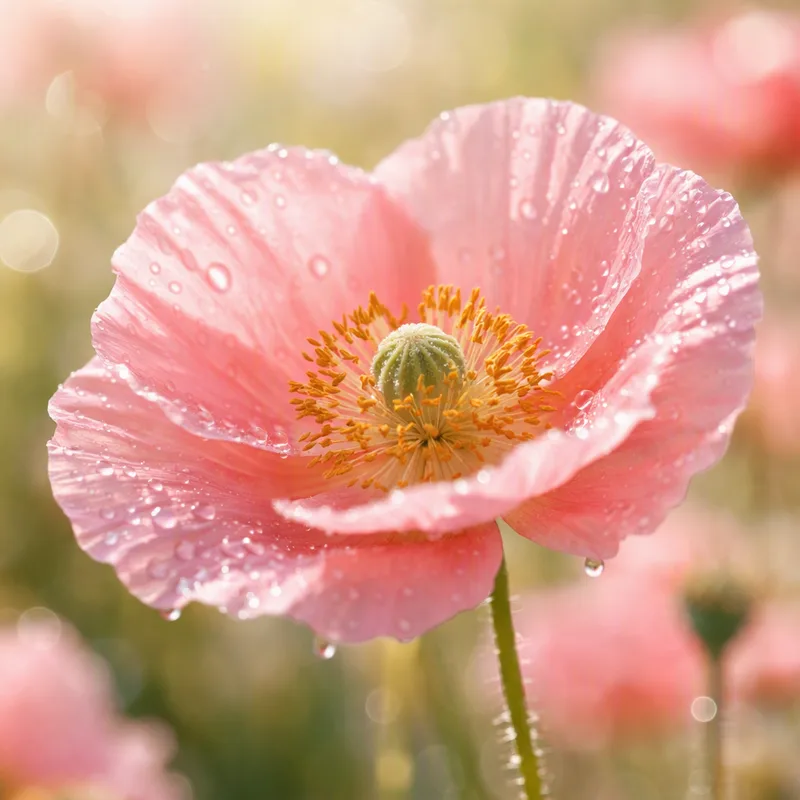
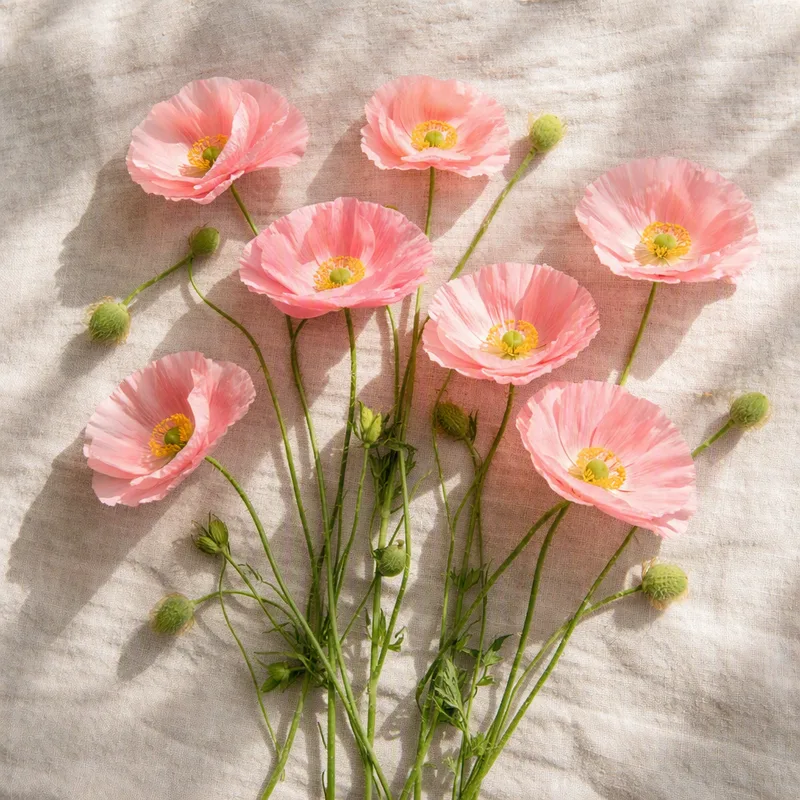
The best-known pink poppy is the Shirley poppy, a cultivated group derived from the field poppy. It was created from 1880 onwards by the Reverend William Wilks, vicar of Shirley parish. He noticed a field poppy variant with a narrow white edge to the petals in a corner of his garden, then selected and crossed plants over many years. The strain he produced ranged from white and pale lilac to pink and red, with no dark blotch at the base. Later breeding added semi-double, double and picotee forms.
Other pink poppies
Not every pink poppy is a Shirley. Icelandic poppies and oriental poppies are separate species and can be pink too, but they are perennial or short-lived rather than annual. If you want a particular plant, check the Latin name on the packet.
What pink might say
In flower language pink is a gentle colour, usually read as soft affection. Because the poppy is also a flower of remembrance, many people look for pink poppies precisely because they carry none of that association.
Growing guide
- Sow Shirley poppy seed in spring where the plants will stand, in full sun.
- Press the seed in, do not bury it, and thin to a hand's width apart.
- Deadhead to prolong flowering through the summer.
Safety
The poppy family contains milky latex, and field poppies are considered mildly toxic. Keep an eye on dogs and children around seed heads, and contact a vet or NHS 111 as appropriate if anything is eaten.