
Soft pink on a wild flower
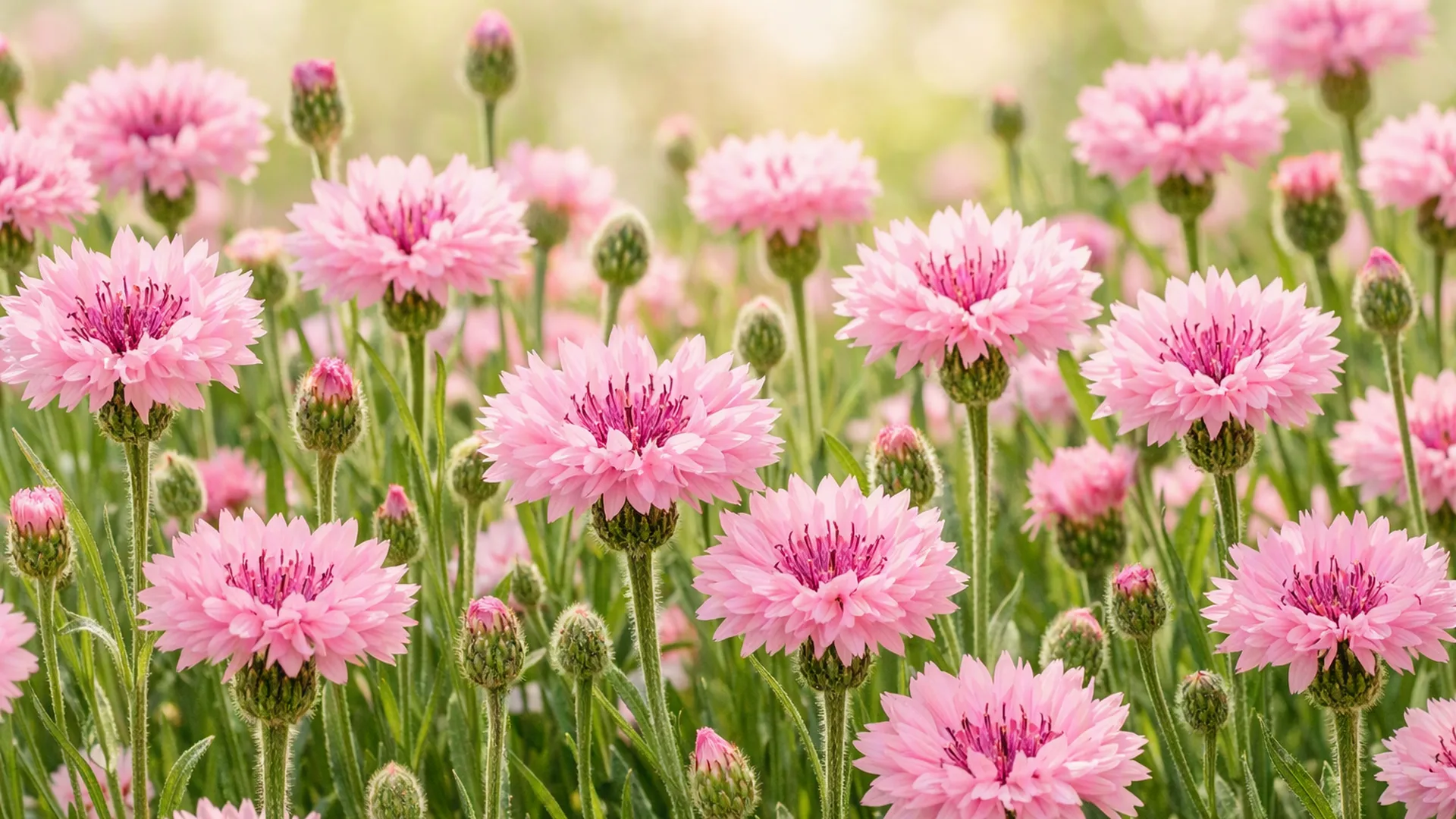
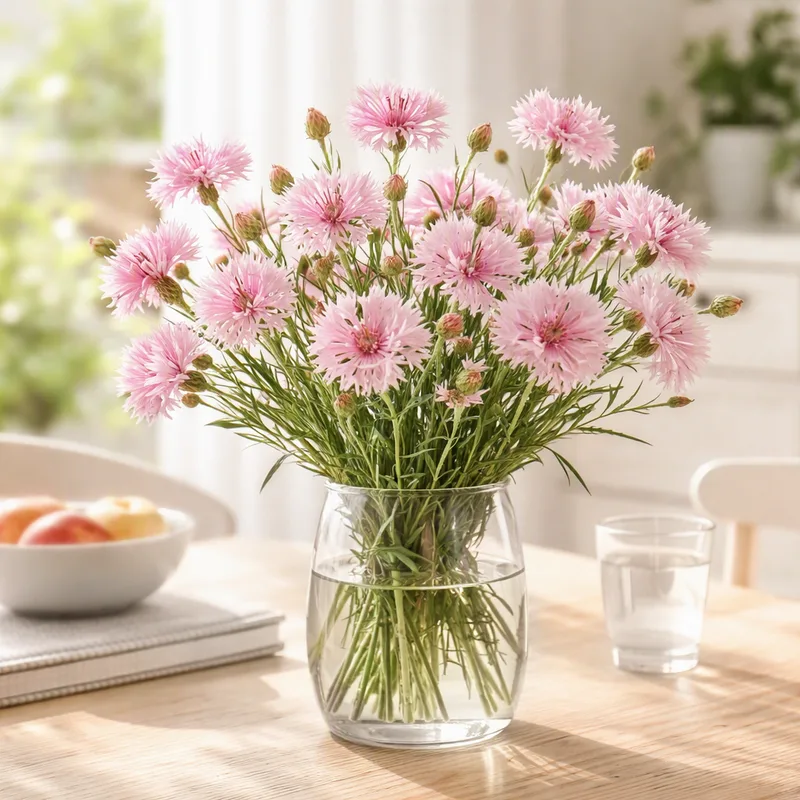
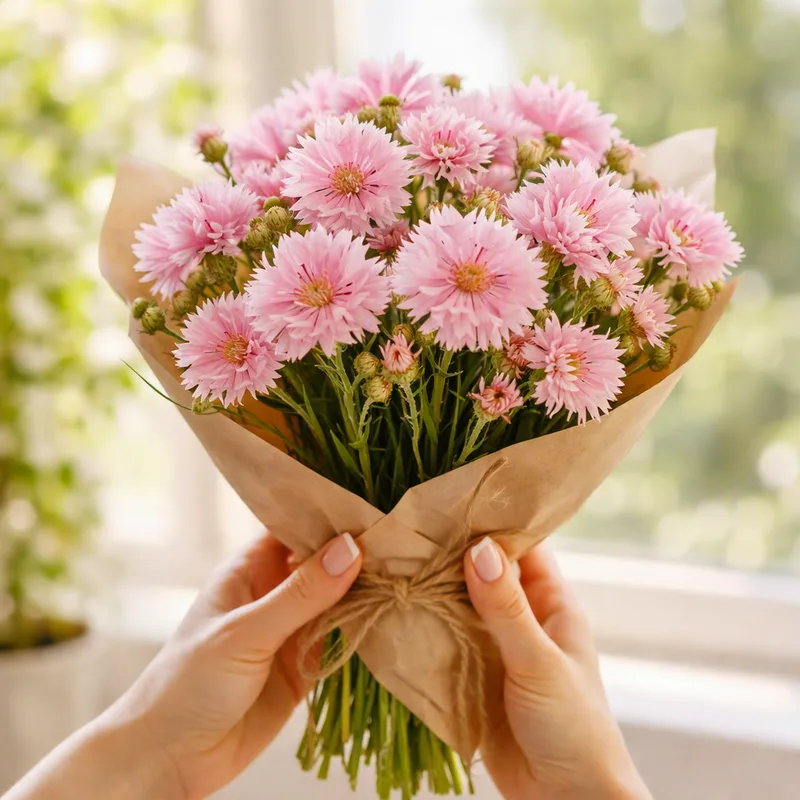
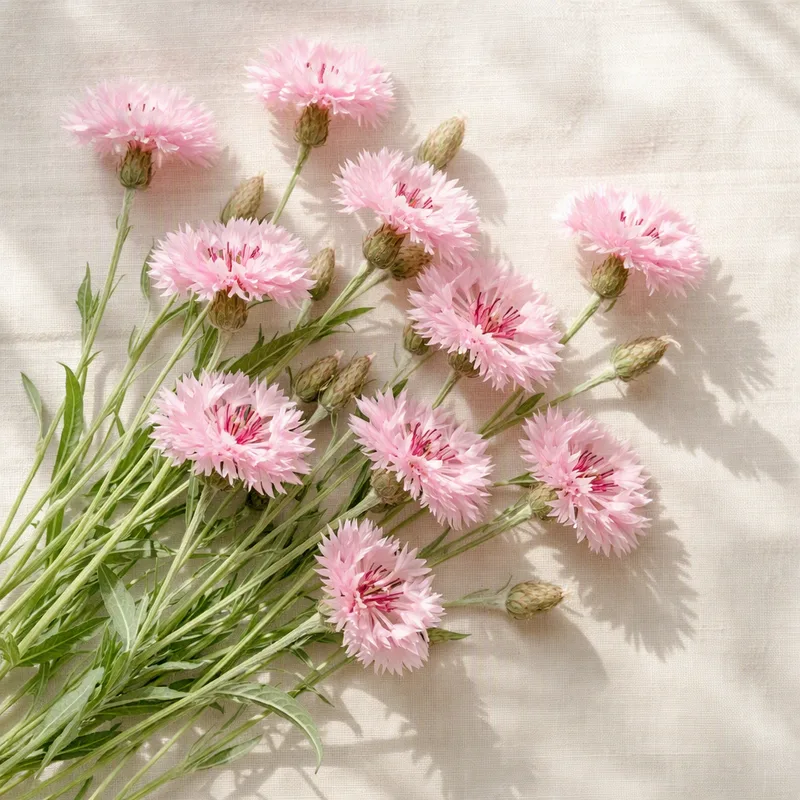
Centaurea cyanus is blue in the wild, but pink forms have been in gardens for a long time. They range from pale blush to a strong rose, always on the same wiry stems and with the same ragged, tufted blooms. They suit relaxed schemes in cottage gardens and prairie-style plantings.
Pink cultivars
- 'Pink Ball' is a tall rose-pink type, good for cutting.
- 'Classic Romantic' is a mixture with soft pink and burgundy.
- The 'Florence' series has a pink in its dwarf range, around 35 cm tall.
Seeds sold as "pink" can include variable shades, so think of the result as a gentle wash of colour rather than a uniform patch.
Combining pink cornflowers
They look pretty with blue love-in-a-mist, white ox-eye daisies, and the silvery foliage of artemisia. Pink and blue make a gentle pairing that has a long history in British borders, from the Victorian cottage garden to modern naturalistic plantings. In a vase, they suit a loose, meadowy arrangement with grasses and sweet peas.
Practical sowing
Direct sow from March to May in a sunny, open spot, then thin seedlings to 15 cm. An early autumn sowing, around September, gives stockier plants that bloom a few weeks sooner than spring sowings. They do well on chalky and sandy soils, which suits the dry south-east, while in damp clay gardens, raised beds help. Remove faded blooms to keep the plants flowering well into September.
Bees and animals
Cornflowers feed bees and hoverflies, and the seedheads provide food for small birds such as goldfinches. Pets are safe around the plant, as far as the ASPCA is concerned.