
A range of pinks
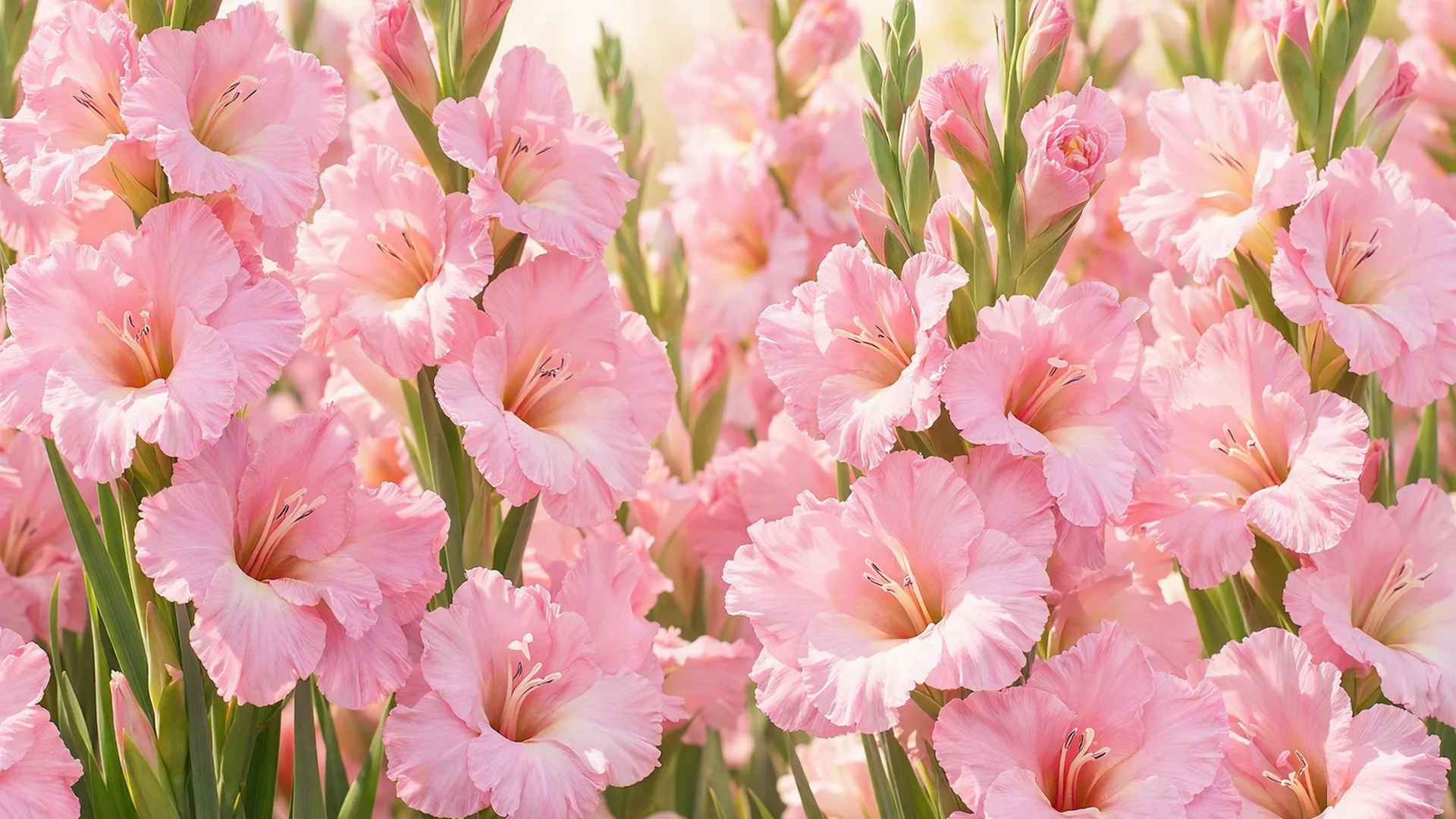
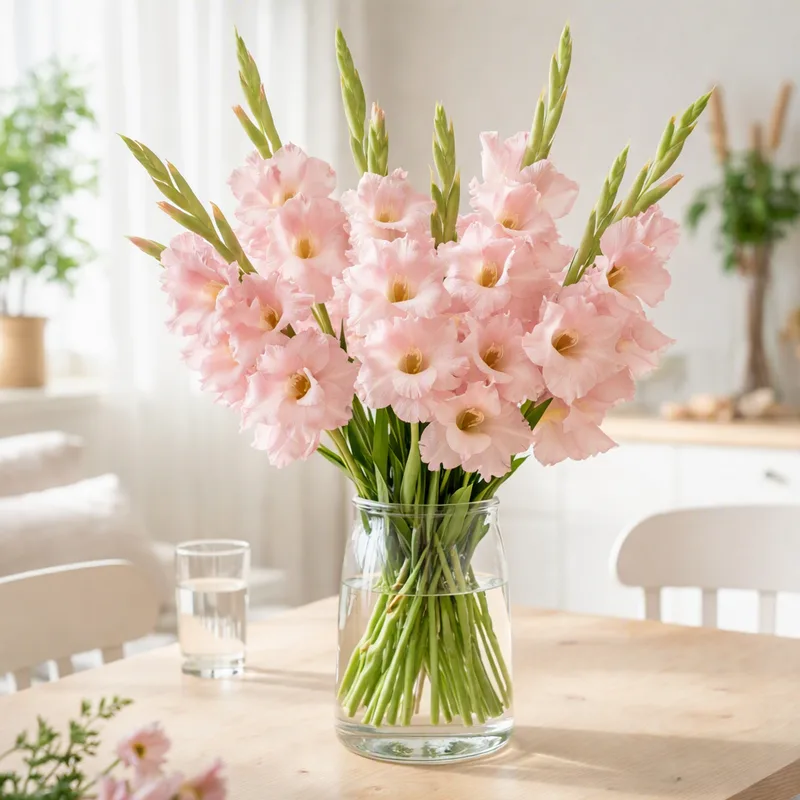
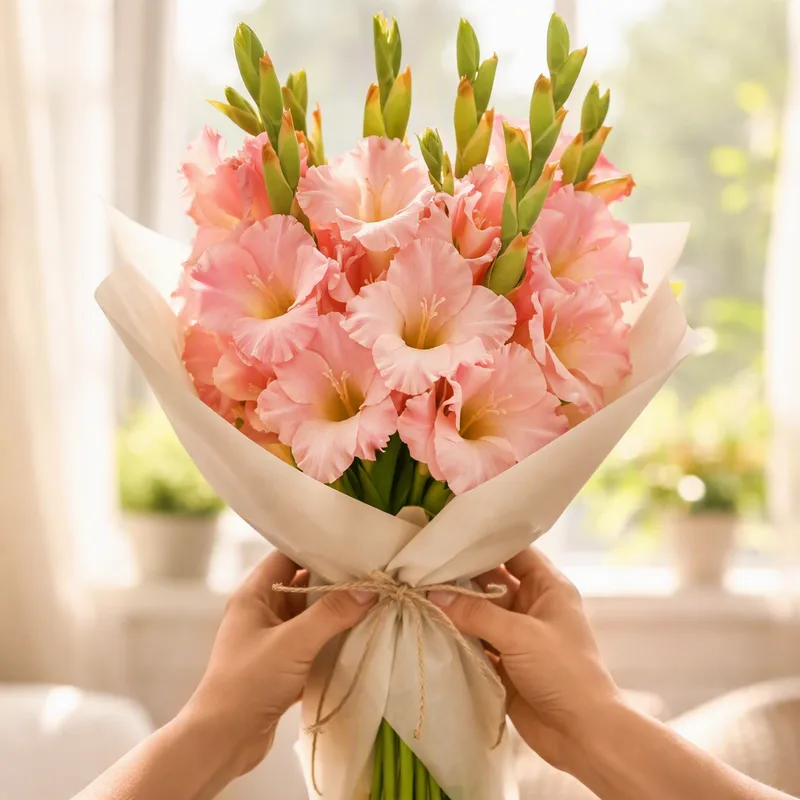
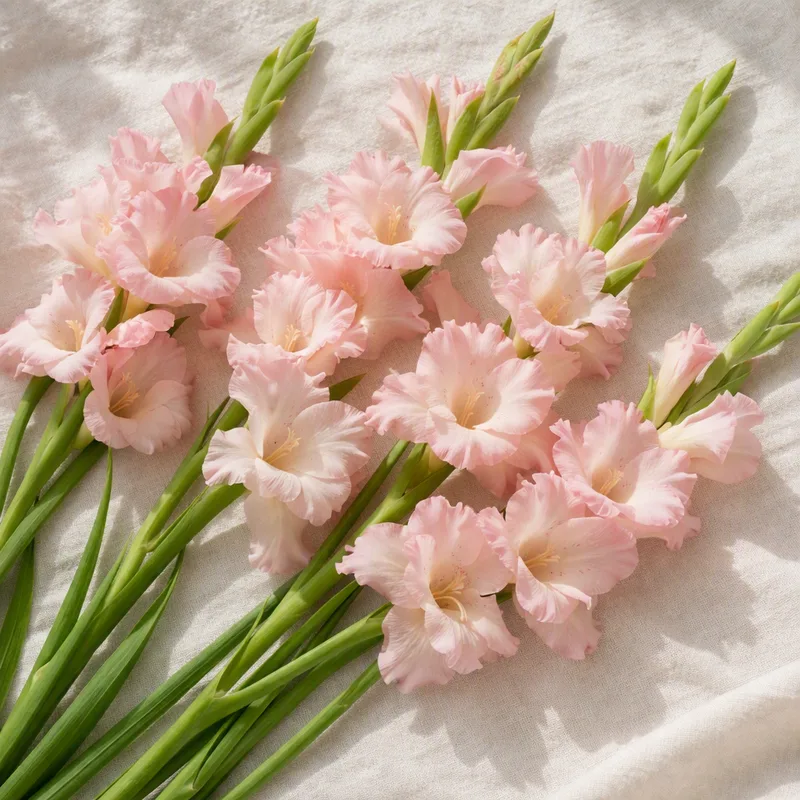
The pink gladiolus covers everything from nearly white blush to strong cerise. Many varieties have ruffled petals and a pale throat, which makes each floret look like a small, frilly trumpet. A tall spike carries a dozen or more, so one stem can supply a lot of colour. In British gardens pink gladioli mix naturally with roses, sweet peas and delphiniums.
What pink gladioli mean
Gladioli are traditionally tied to strength of character and sincerity. Pink softens that message into warmth and appreciation, which makes it a thoughtful choice for a birthday, an anniversary or a thank-you. Gladioli are also the flower of the fortieth wedding anniversary and the birth flower of August.
Planting pink gladioli
From March to June, set the corms 10 to 15 centimetres deep in sun. Add grit if the soil is heavy. Plant a batch every two weeks for flowers into September, and give them a high-potash feed once the spikes appear. Stake against wind. Lift tender hybrids after the first frosts blacken the leaves, then dry and store them. Divide clumps every few years.
- Cut spikes as the first flowers open.
- Remove the top buds to make the lower ones last.
- Use clean vases and change the water.
Thrips and storage
Check flowers for thrips, which cause pale marks, and discard any soft corms before winter.
Pet safety
Per the ASPCA, gladiolus is toxic to dogs, cats and horses, and the corm is the part to keep away from them. Keep both bulbs and vases out of reach.