
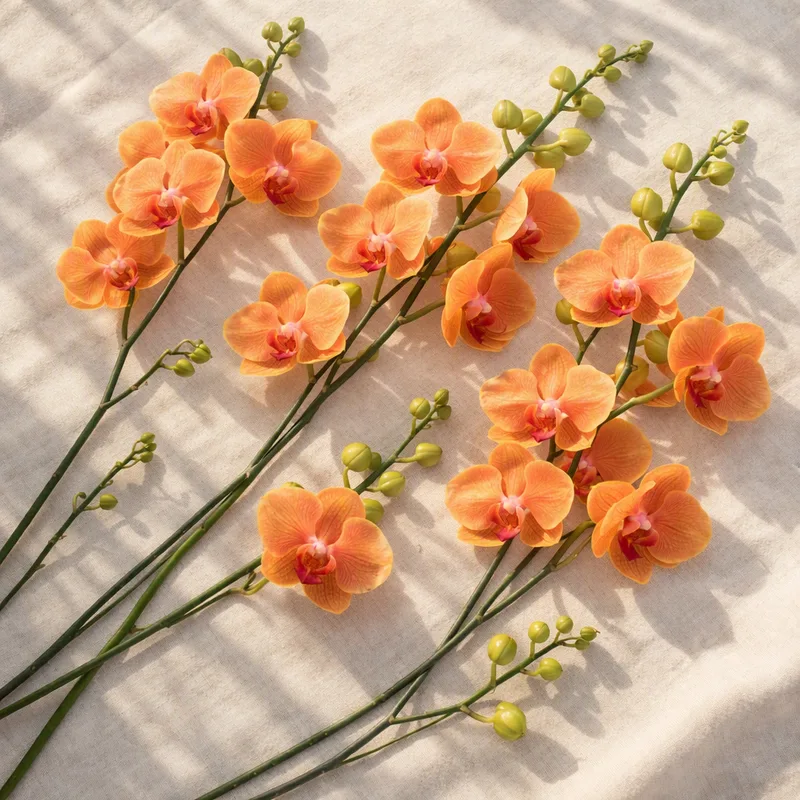
Rainforest roots on a British windowsill
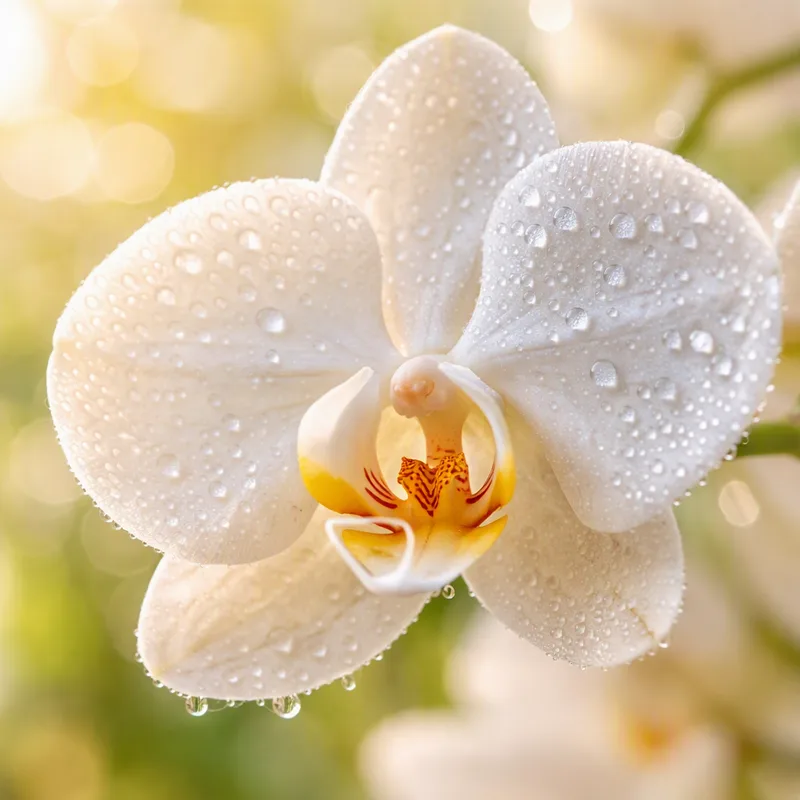
Phalaenopsis is a genus of about seventy species native to Asia, New Guinea and Australia, with most of them in Indonesia and the Philippines. The name comes from Greek words meaning moth and appearance, because an open flower looks like a moth in flight. In the wild these plants cling to tree trunks as epiphytes. The thick silvery roots you see poking over the pot rim are meant to be exposed to air, and they photosynthesise as well as drinking.
Almost every plant sold in shops is a hybrid, bred to be tougher than the wild species. That is why a moth orchid copes with a centrally heated sitting room better than most other orchids.
Looking after one
- Choose a bright spot out of harsh midday sun. An east- or west-facing windowsill suits it well.
- Keep the room reliably warm. A cold sill in a January cold snap is the quickest way to lose flowers and buds.
- Water by soaking the pot for a few minutes about once a week, then let it drain fully. Never leave the base standing in a saucer of water.
- Use orchid bark in a clear pot rather than ordinary compost, so the roots get light and air.
- A drop in night temperature in autumn often encourages a new flower spike.
Getting a second flush
When the last flower drops, a green spike can be trimmed back just above a node, counting up from the base. Many plants send out a side shoot and flower again. If the spike turns brown and dry, cut it off near the leaves.
The orange question
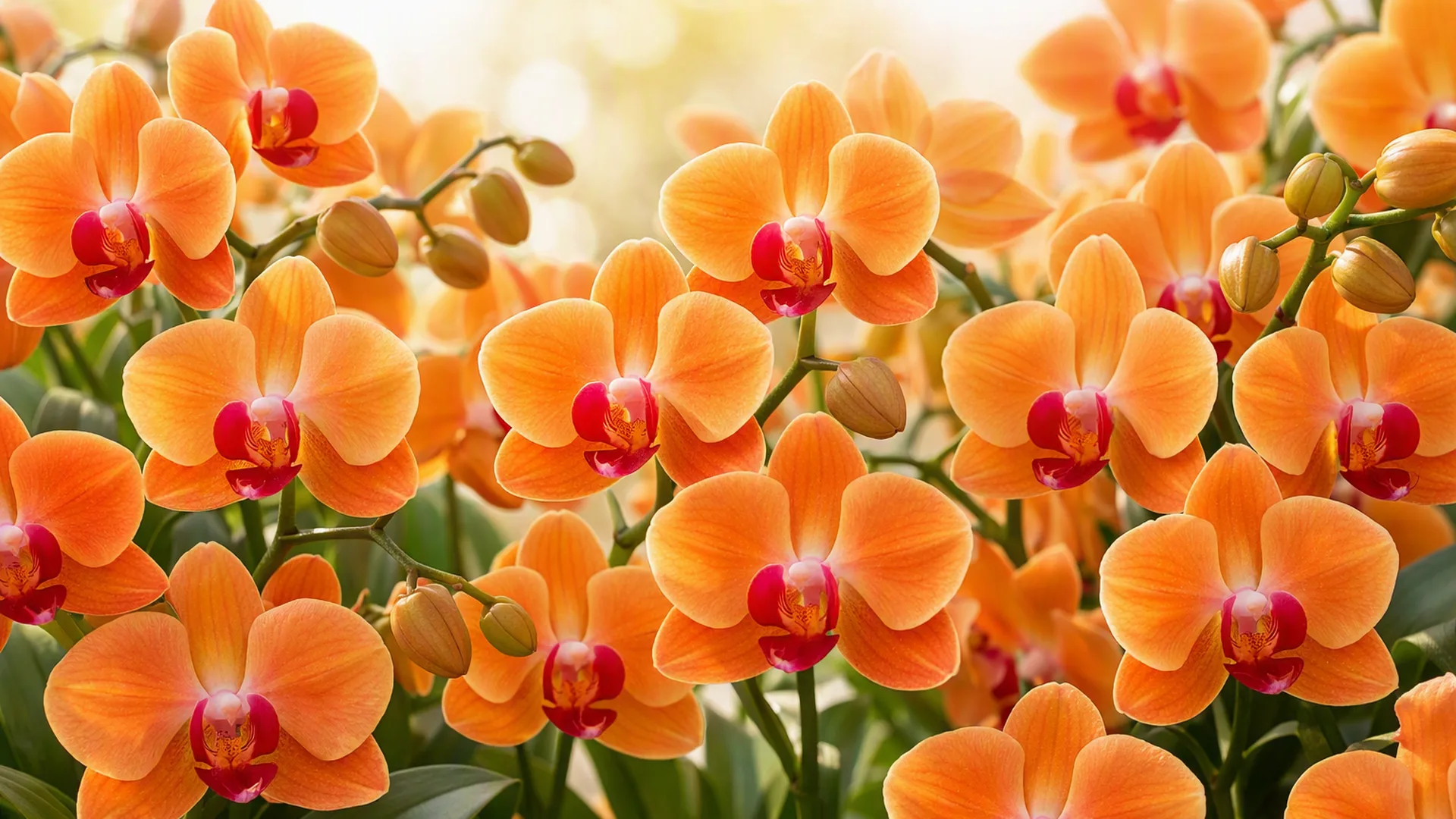
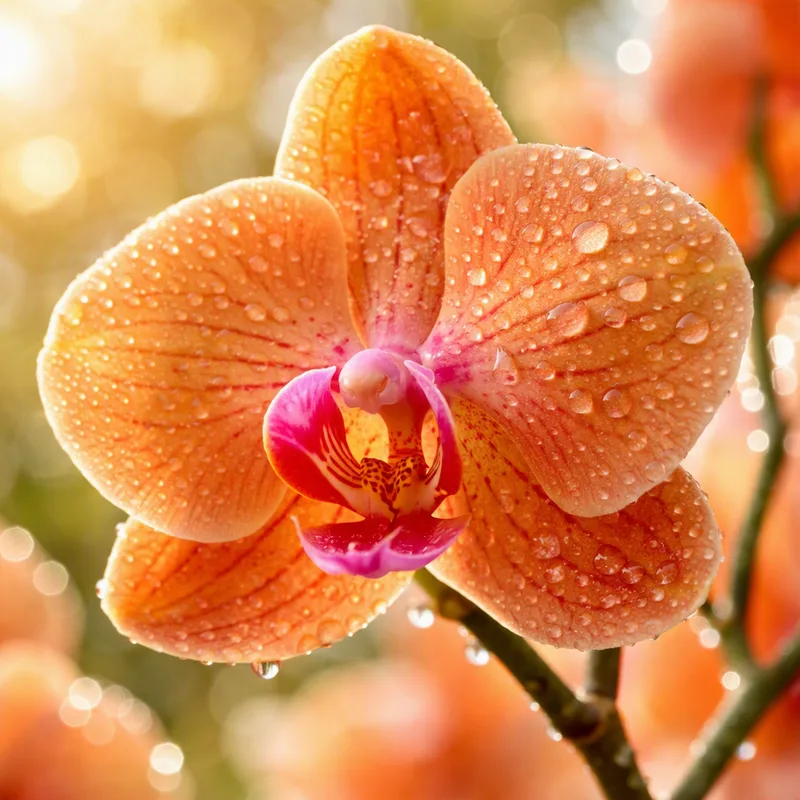
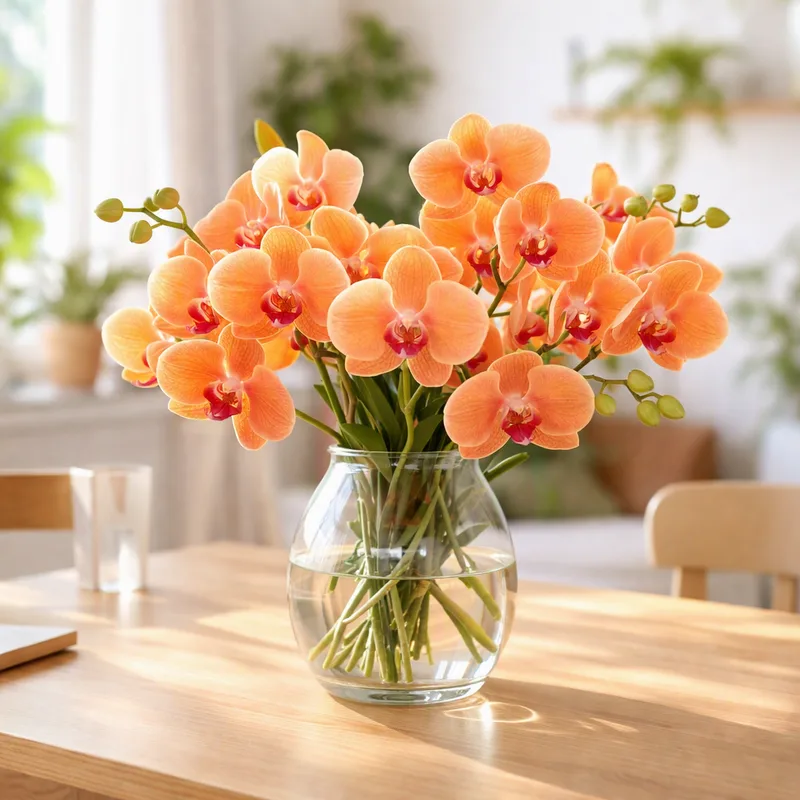
True orange is a less common shade in this genus. Warm peach, apricot and yellow-orange hybrids do exist, but this page covers moth orchids in general, so the care advice applies whatever the colour of your plant.
Pets
The ASPCA classes Phalaenopsis as non-toxic to dogs, cats and horses, which makes it a sensible gift for a household with pets.