A pale spike for shady corners
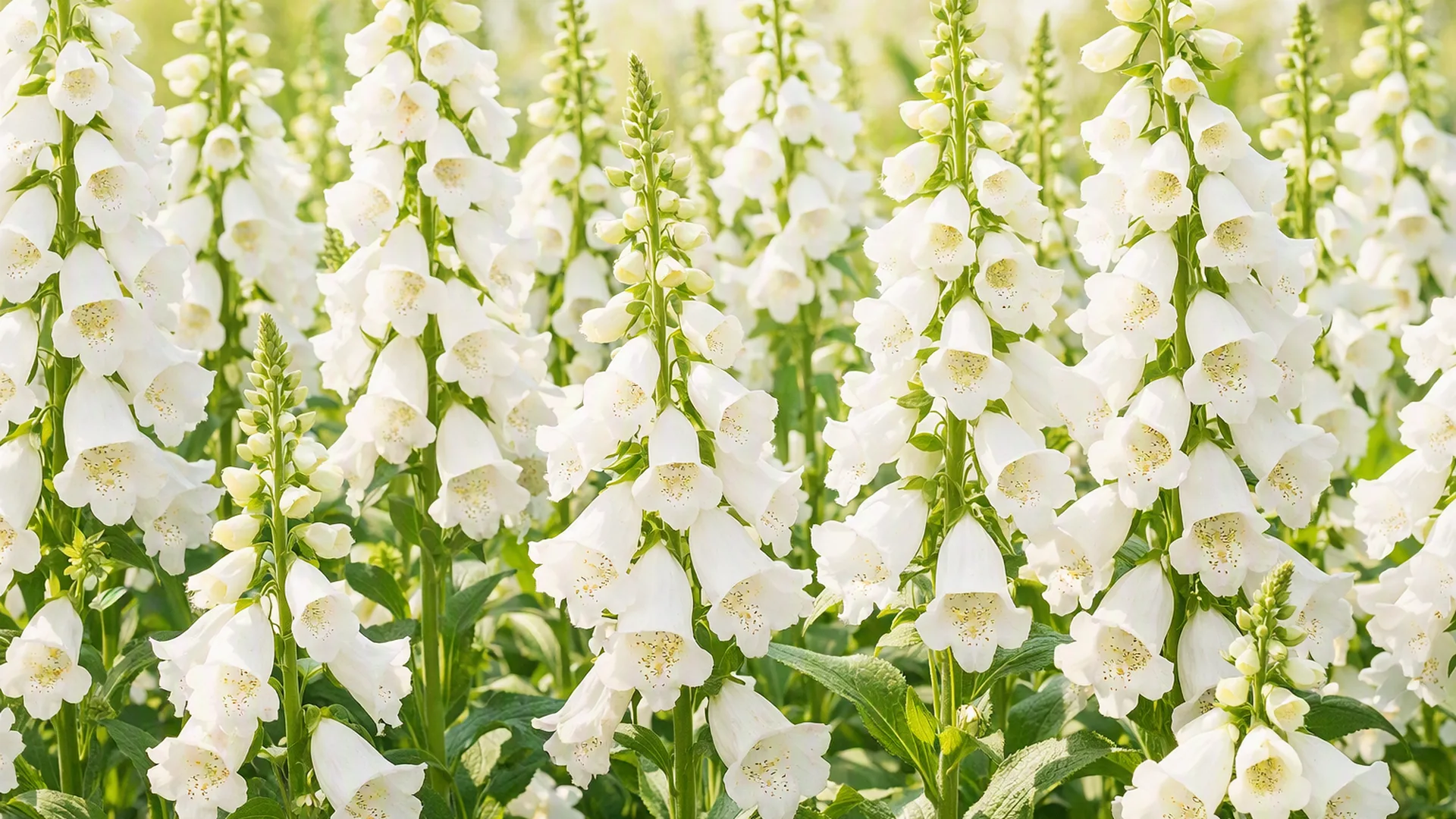
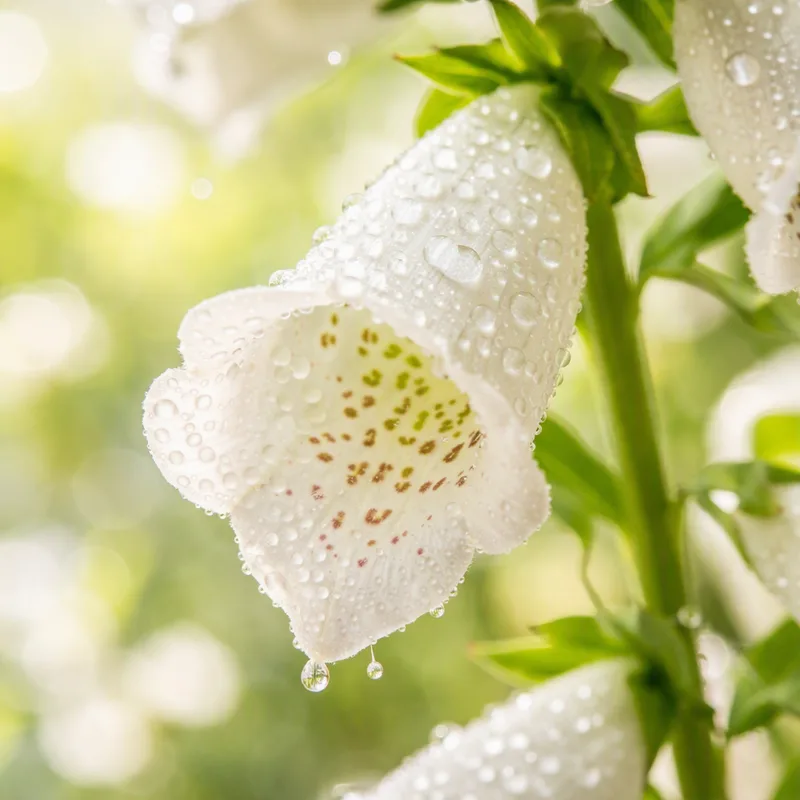
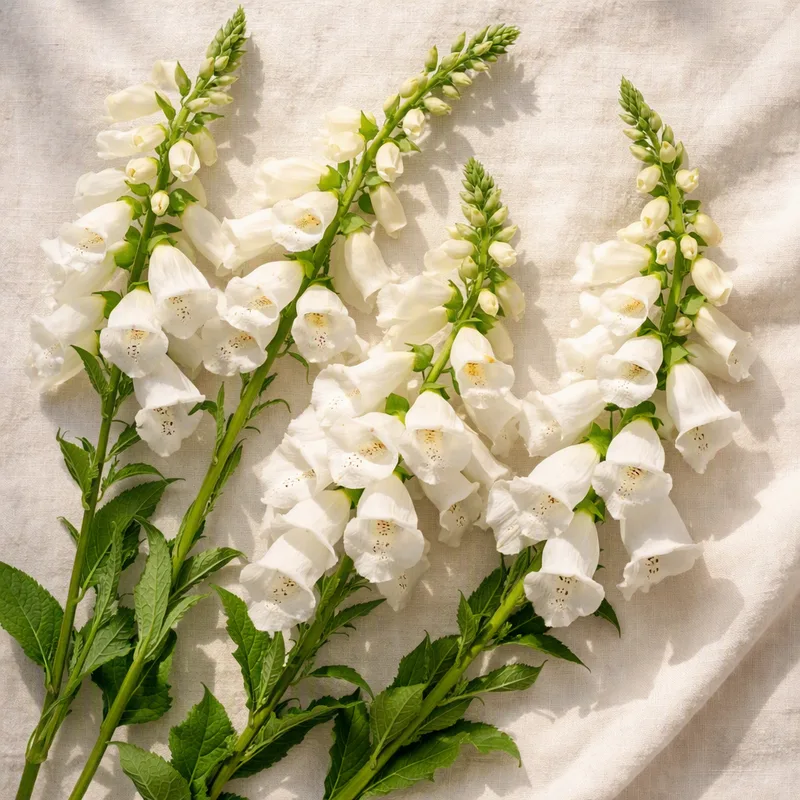
Most wild foxgloves are purple, but white forms occur naturally and are widely grown in gardens. A tall white spike stands out under trees and at the back of a border, where it catches the last light of an evening. The inside of each bell is normally dotted with fine spots, in a deep purple or maroon, so the flowers are rarely pure white throughout.
Seed mixtures such as the Excelsior hybrids offer white alongside pink and purple. Seed collected from white plants does not always produce white offspring, as the colour is controlled by genes that can recombine, so expect a mix.
In the garden
- Plant in light shade, where the soil stays damp but not waterlogged.
- Combine with ferns, hostas and white campanulas for a cool, woodland look.
- Stake in exposed gardens, since tall spikes can snap in strong wind.
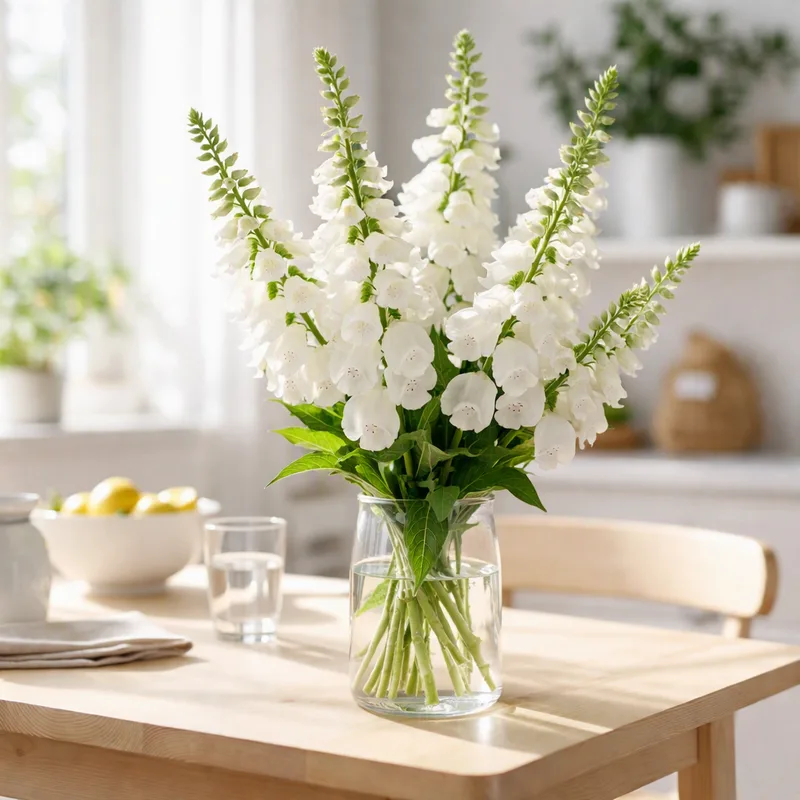
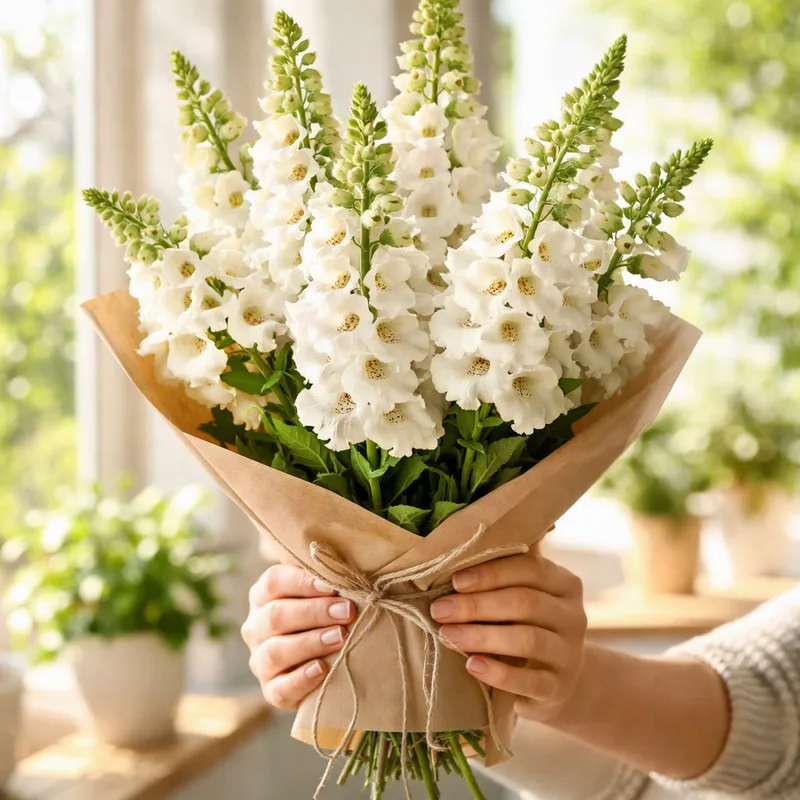
Foxgloves can be grown as cut flowers, but they are not commonly used because the stems wilt quickly and the plant is poisonous. If you do cut some, wear gloves and keep the vase out of reach.
Keep it safe
The leaves, flowers and seeds hold digitoxin and related substances that affect the heart. The ASPCA warns that dogs, cats and horses may develop an irregular heartbeat, vomiting and diarrhoea, and can die. Anyone who may have eaten some should get medical help. Call 999 in an emergency, or NHS 111 for advice, and ring your vet for animals.