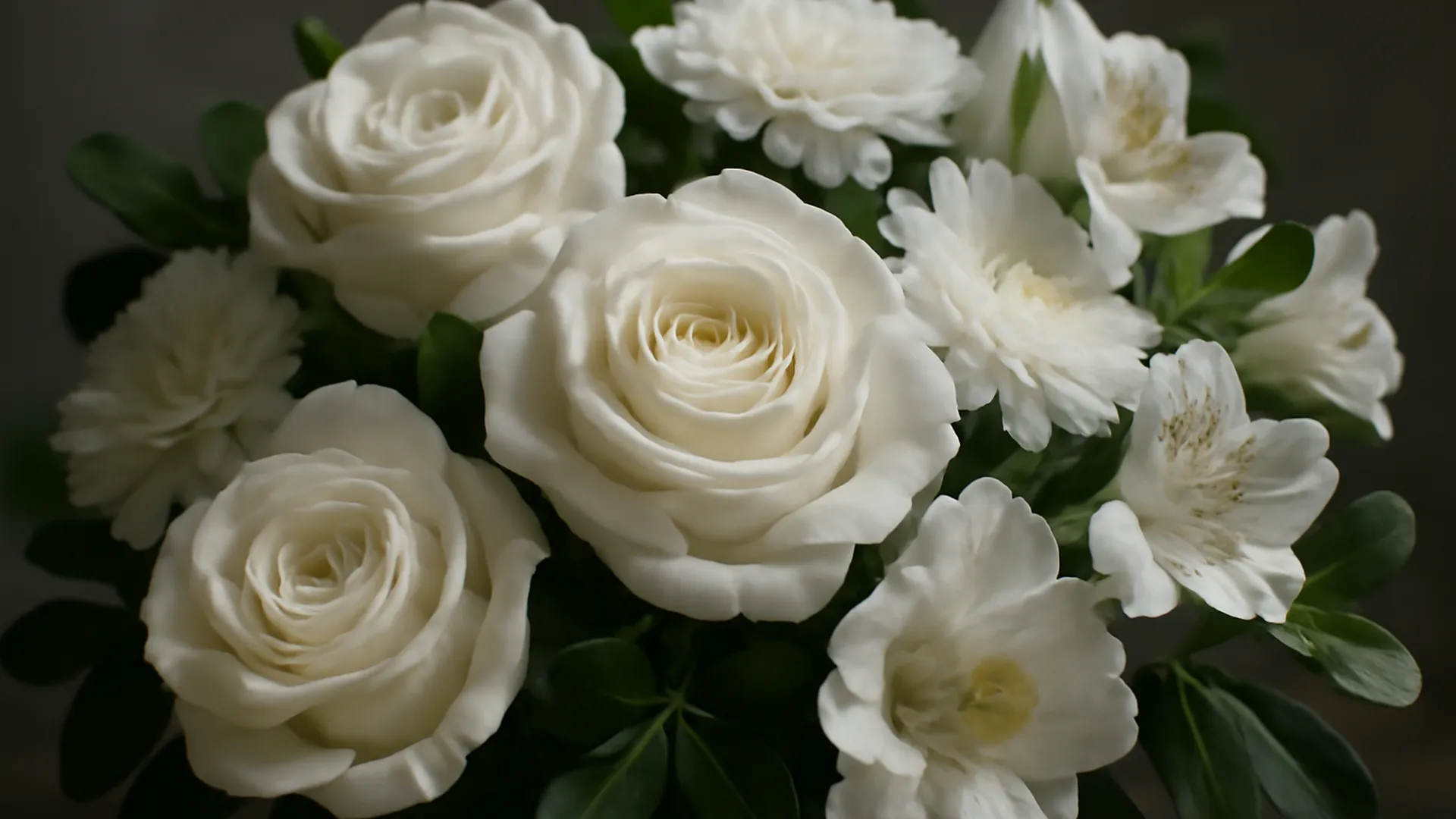




The white rose stands as a symbol of purity, elegance and timeless beauty in the garden. With its Latin name Rosa, this classic flower represents one of the most beloved and cultivated plants throughout the world. White roses have been treasured throughout history for their ability to brighten dark corners and create a sense of calm and harmony in the garden environment.
Planting and Soil Conditions
White roses thrive best in nutrient-rich, well-drained soil with a pH value between 6.0 and 7.0. The soil should be deep and humus-rich to provide optimal conditions for the roots. Choose a sunny location with at least six hours of direct sunlight per day, as this promotes both flowering and the plant's general health. Good air circulation is also important to prevent fungal diseases.
Watering and Feeding
Regular watering is essential for the wellbeing of white roses. Water deeply but less frequently, preferably early in the morning so the leaves have time to dry before evening. Avoid watering over the foliage to reduce the risk of fungal attack. During the growing season, roses need regular feeding with a balanced rose fertiliser containing both macro and micronutrients.
Pruning for Optimal Growth
Pruning is an art that requires both timing and technique. The main pruning is best carried out in late autumn or early spring before the buds break. Remove dead, diseased and weak branches first, followed by branches growing inward towards the plant's centre. Aim to create an open, airy structure that promotes good air circulation and light penetration.
Common Problems and Solutions
White roses can be affected by various pests and diseases. Aphids are a common problem that can be managed with natural predators or mild soapy solution. Fungal diseases such as powdery mildew and black spot are best prevented through good air circulation and correct watering technique. Regular inspection of plants helps to identify problems early.
Overwintering and Seasonal Adjustment
In colder climates, white roses need protection during winter. Heap soil around the plant's base and cover with conifer branches or other insulation. Climbing roses may need to be taken down and covered over completely. Potted roses are best moved to a cool, bright place indoors or buried in the garden over winter.
Varieties and Uses
White roses come in countless varieties, from compact shrub roses to majestic climbing roses. They work excellently as specimen plants, in flower beds or as part of a colour-coordinated planting scheme. Their neutral colour makes them perfect companions for both pastel and boldly coloured plants, creating beautiful contrasts and harmonies in garden design.