
Two plants, one name
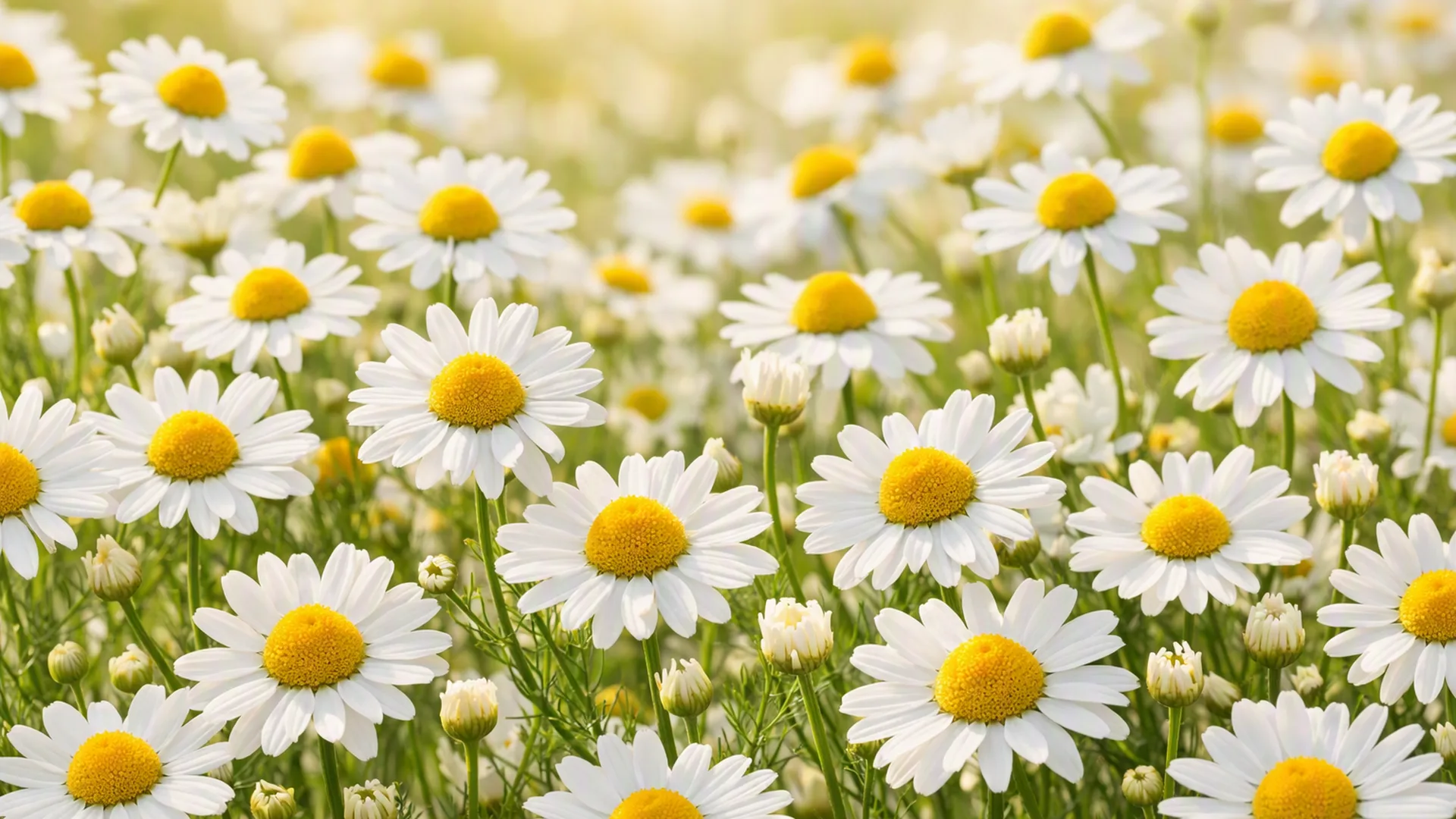
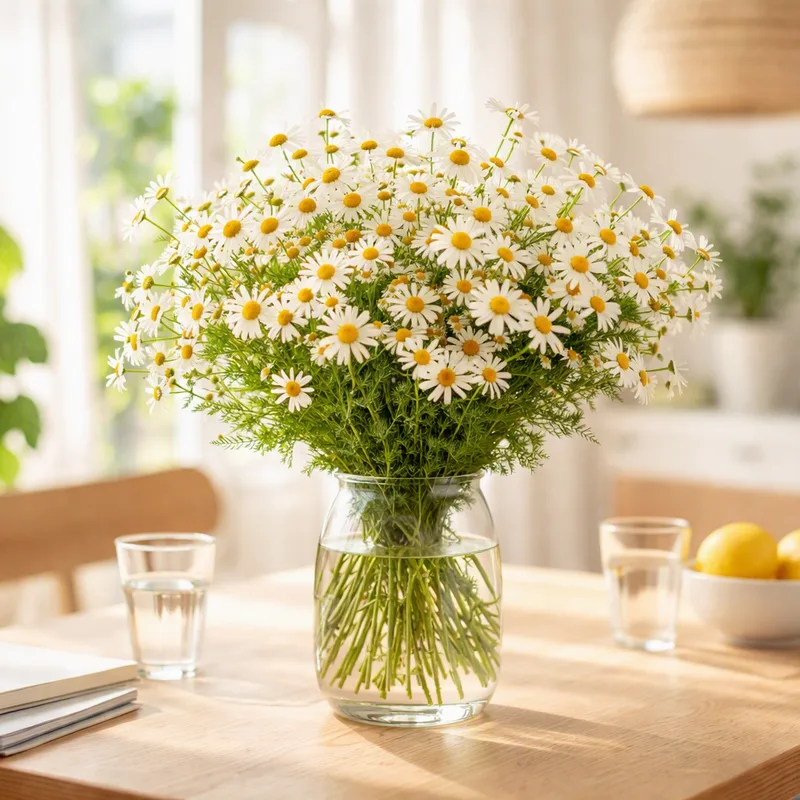
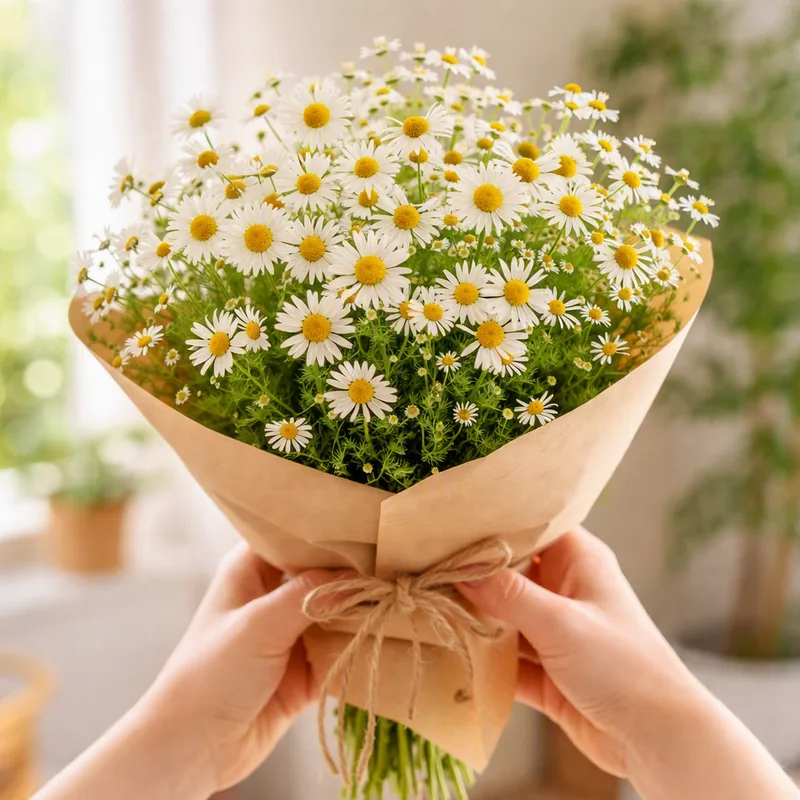
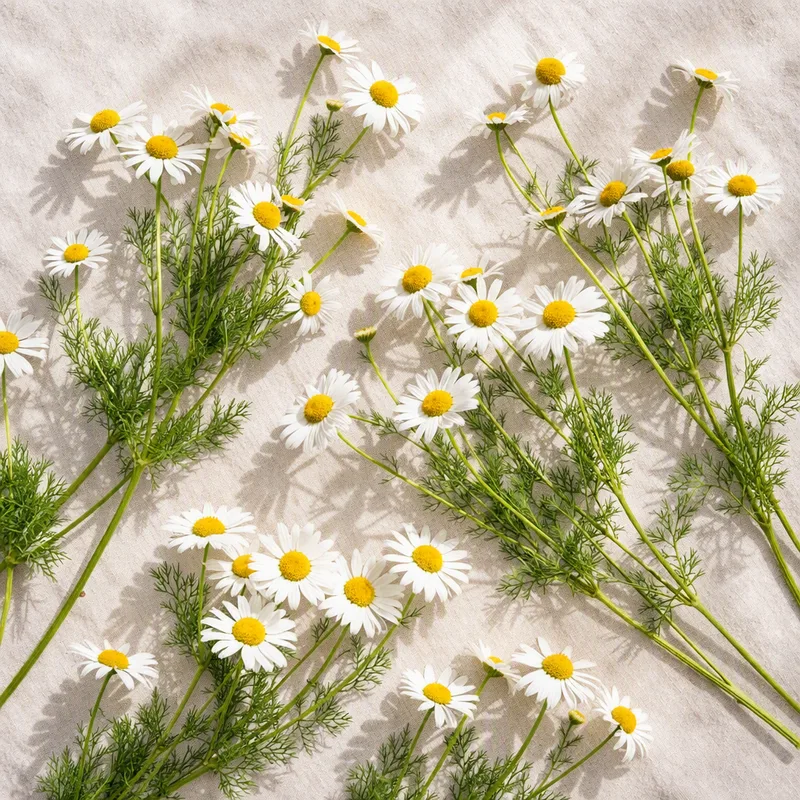
Chamomile, also spelled camomile, usually means one of two plants. Matricaria chamomilla, German or scented chamomile, is an annual that grows 15 to 60 cm tall. Its flower heads have a hollow, cone-shaped centre and white petals, and the plant has an apple-like scent. Roman chamomile, Chamaemelum nobile, is a low perennial native to western Europe, including the south of England and Wales, where it grows in places such as Cornwall, Dartmoor and the New Forest.
Telling them apart
- German chamomile: upright annual, self-seeds, flowers June to August
- Roman chamomile: creeping perennial, often used for scented lawns
- Scentless mayweed: similar flowers without the smell
- Pineappleweed: green-yellow buttons with no white petals
Slice a flower head lengthwise. The hollow centre marks true German chamomile.
What it means
Searches about chamomile flower meaning in love point to the old Victorian idea of "energy in adversity", because the plant thrives when trodden. Treat this as a tradition, since lists vary.
Tea and allergy
Dried flower heads are used for tea. Wikipedia notes that evidence for medical effects is limited, that caution is needed in pregnancy, and that people with ragweed allergy may react because chamomile is in the daisy family. If you take medicines, ask a pharmacist.
A word about pets
The ASPCA entry for chamomile names Anthemis nobilis, now called Roman chamomile. It is listed as toxic to dogs, cats and horses, with vomiting, diarrhoea and skin reactions among the signs. Avoid giving pets chamomile tea.