Red-tinged, not red
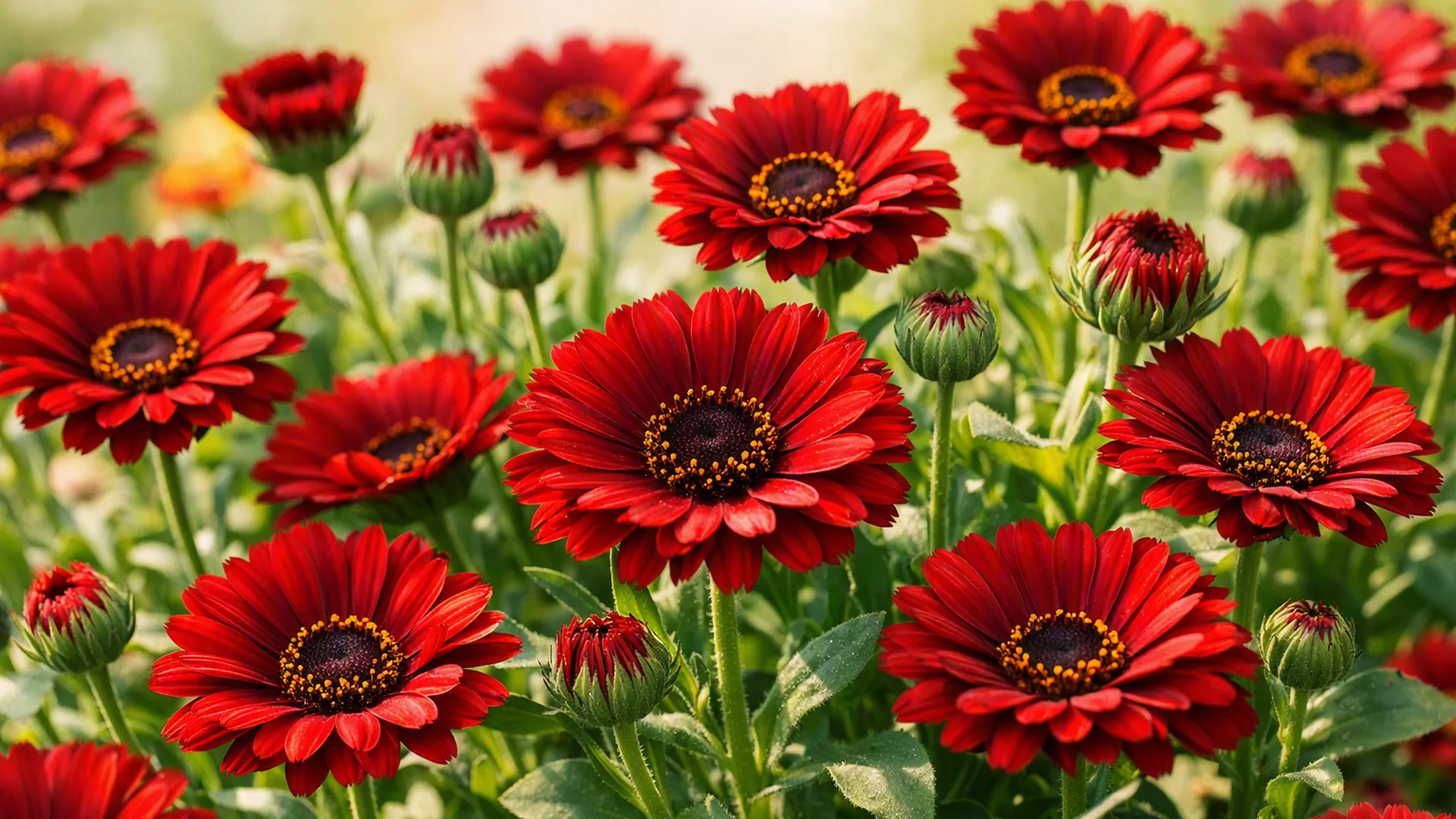
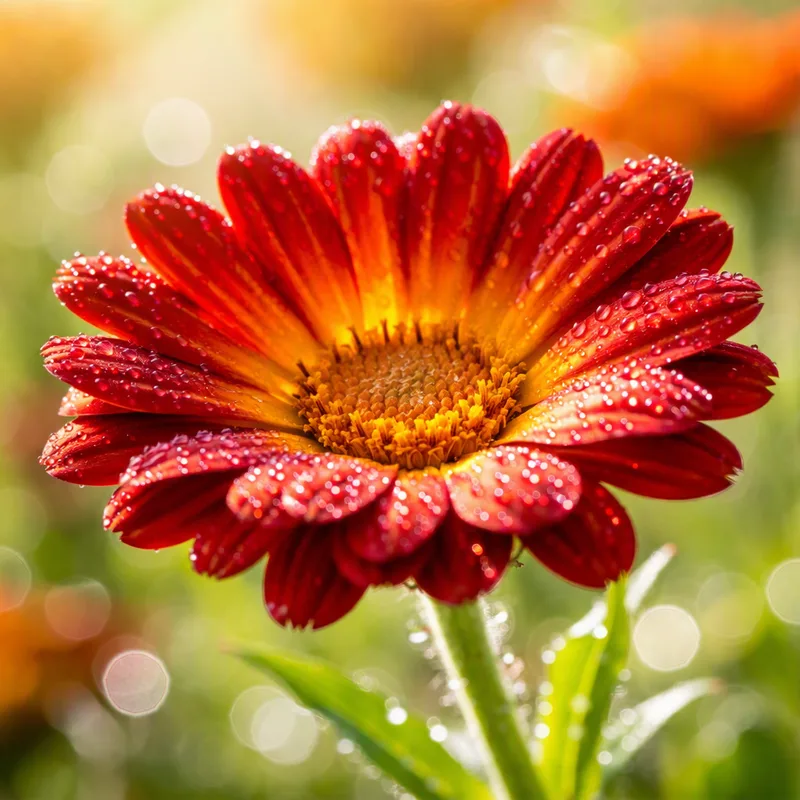
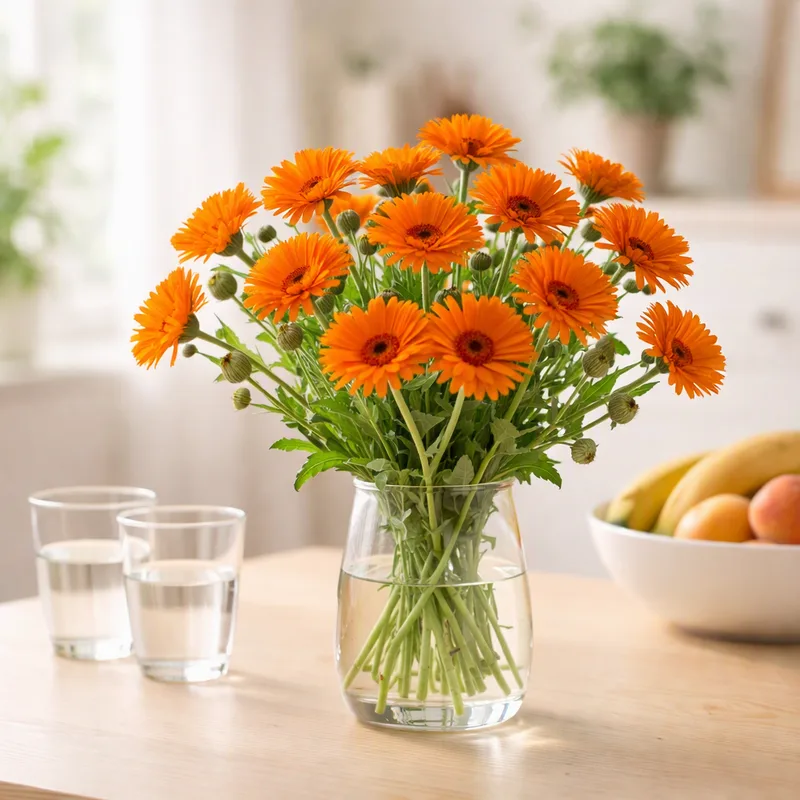
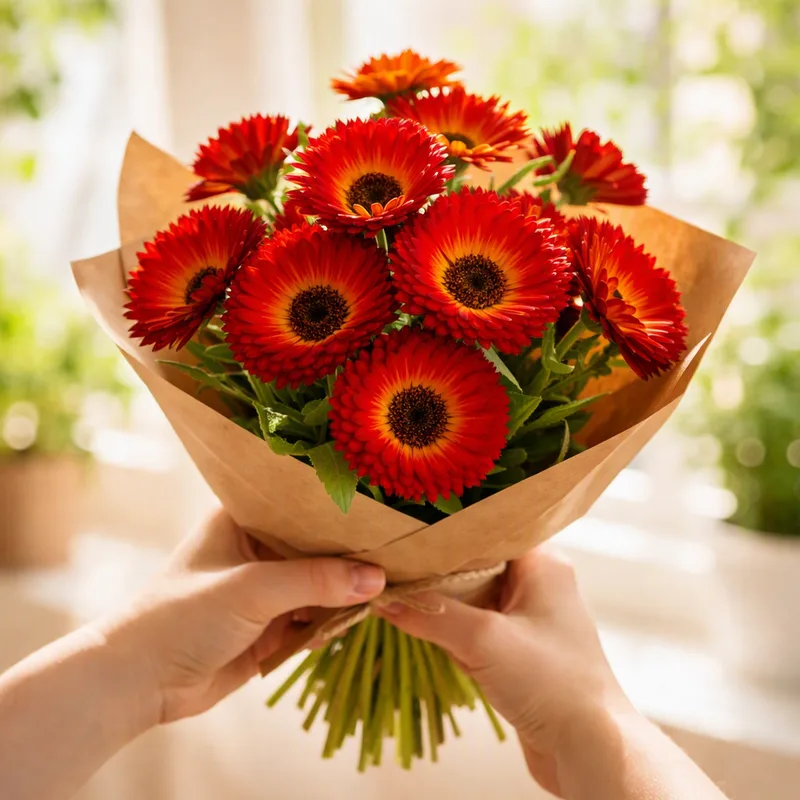
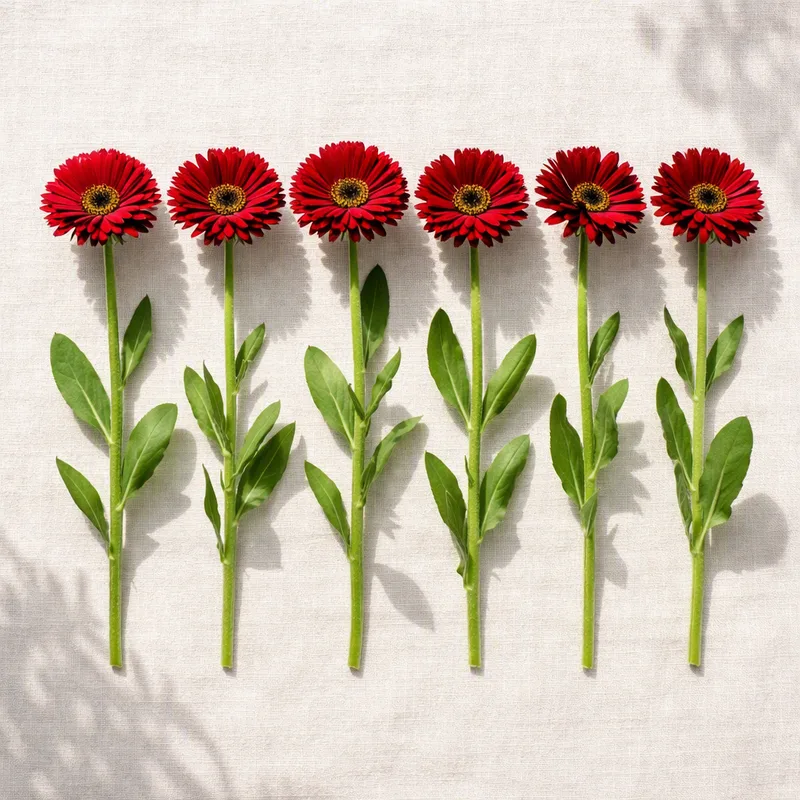
Wild pot marigolds are orange or yellow, and breeders have never produced a true scarlet. What you can buy are strong orange flowers with a red-brown reverse or red flushes on the petals, which look striking in a warm border. Treat "red calendula" as a description of a colour impression and not as a separate species.
Varieties that lean red
- 'Indian Prince' is a deep orange calendula with a maroon-brown reverse and tall stems.
- 'Touch of Red' has orange petals edged and backed in mahogany.
- Seed mixes with names such as "Art Shades" combine apricot, orange and bronze tones.
Autumn colour in the garden
Pot marigolds with red tones come into their own as light drops in September and October. They pair well with the bronze foliage of heleniums, purple asters and the seedheads of ornamental grasses. In the south and west, flowering can carry on into November and sometimes beyond if frosts hold off, while in Scotland and on the Pennines the first hard frost will usually end it.
Growing guide
- Sow outdoors from March to May, and again in September in milder areas.
- Choose a sunny spot with ordinary, even poor soil.
- Water in dry spells, but avoid overfeeding, which gives leaves instead of flowers.
- Pinch out the main stem early for a bushier plant.
- Let a few flowerheads set seed if you want new plants next year.
Allotment companion
Many allotment holders plant a row of calendula beside beans or tomatoes, because hoverflies visit the flowers, and hoverfly larvae eat aphids. The petals are edible, and the ASPCA lists the plant as non-toxic to dogs, cats and horses.