


The pot marigold of the British garden
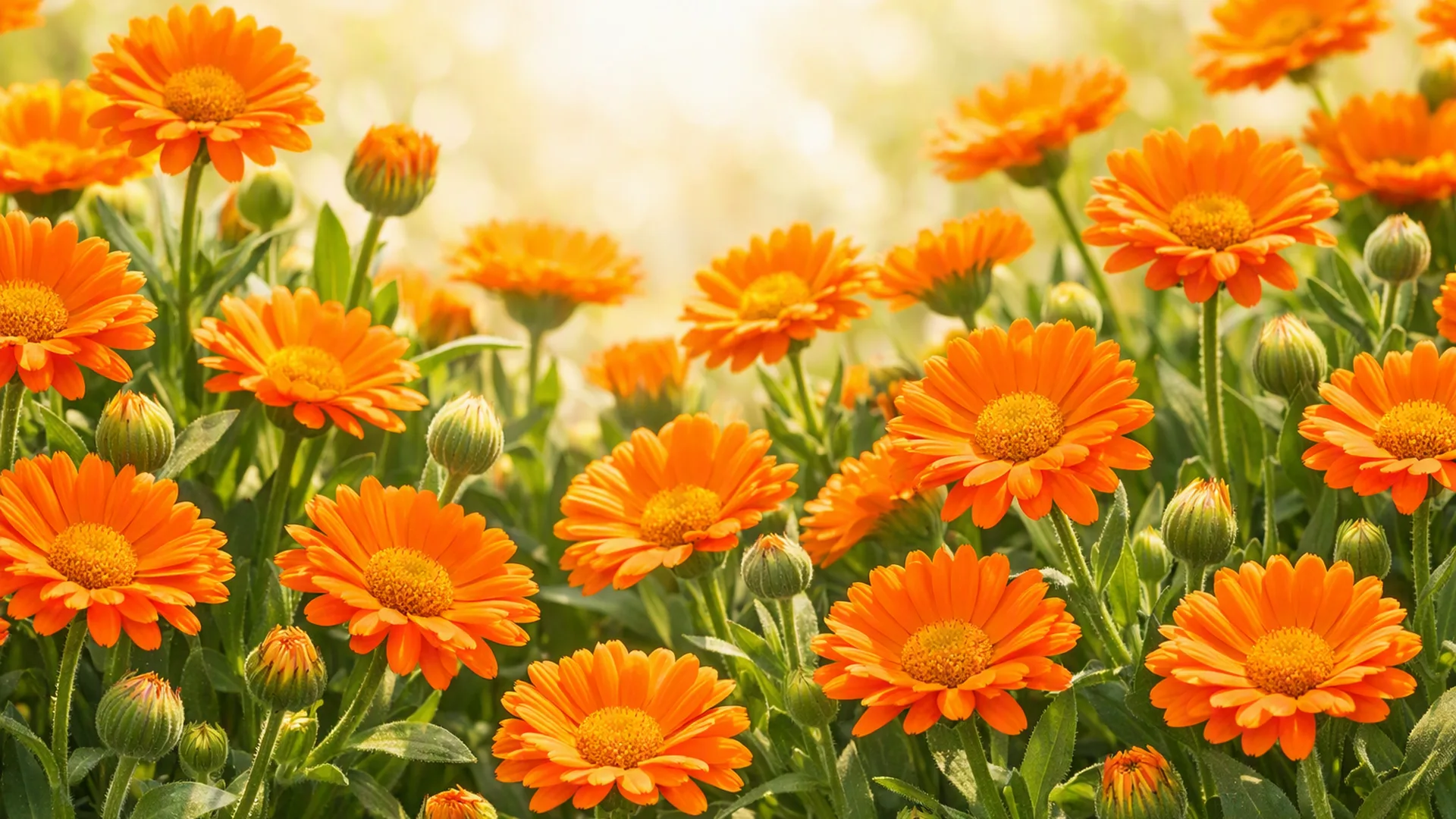
Calendula officinalis, usually called pot marigold in Britain, is a hardy annual with orange to golden daisy-like flowers. It has been grown in gardens for centuries and is an easy, forgiving plant for beginners, children and busy allotment holders. Plants reach about 30 to 60 cm and flower from early summer until the first hard frosts, which in a mild year can mean well into November in the south.
Not to be confused with French marigolds
Pot marigolds belong to the genus Calendula, while the stronger-smelling French and African marigolds sold as bedding belong to Tagetes. Tagetes come from the Americas and have pungent, ferny foliage. Calendula leaves are simple and slightly sticky, and the scent is lighter and resinous. The Latin name echoes the Roman calendae, the first day of the month, perhaps because the plant seems to flower nearly every month.
Sowing and growing
- Sow seed straight into the ground from March to May, about 1 cm deep, and thin seedlings to around 20 cm apart.
- A sowing in September gives sturdier plants that flower early next year in mild areas.
- Any reasonable soil in sun will do, and poor soil often gives more flowers than rich, fertilised ground.
- Pick or deadhead regularly to keep new buds coming.
- Powdery mildew can appear in late summer, but the plants are easily replaced.
Left to set seed, pot marigolds come up year after year, which is why they appear in so many old cottage gardens.
Useful as well as pretty
Hoverflies and bees visit the open flowers, and gardeners often plant calendula among vegetables for that reason. The petals are edible and were once used to colour butter and cheese, sometimes called "poor man's saffron". They are also used in skincare products, although the evidence for medical benefits is limited, and people who react to daisy-family plants should take care.
Pets
The ASPCA does not list Calendula officinalis as toxic to dogs, cats or horses. If your pet eats a lot of any garden plant and seems unwell, ring your vet.