
The meadow flower
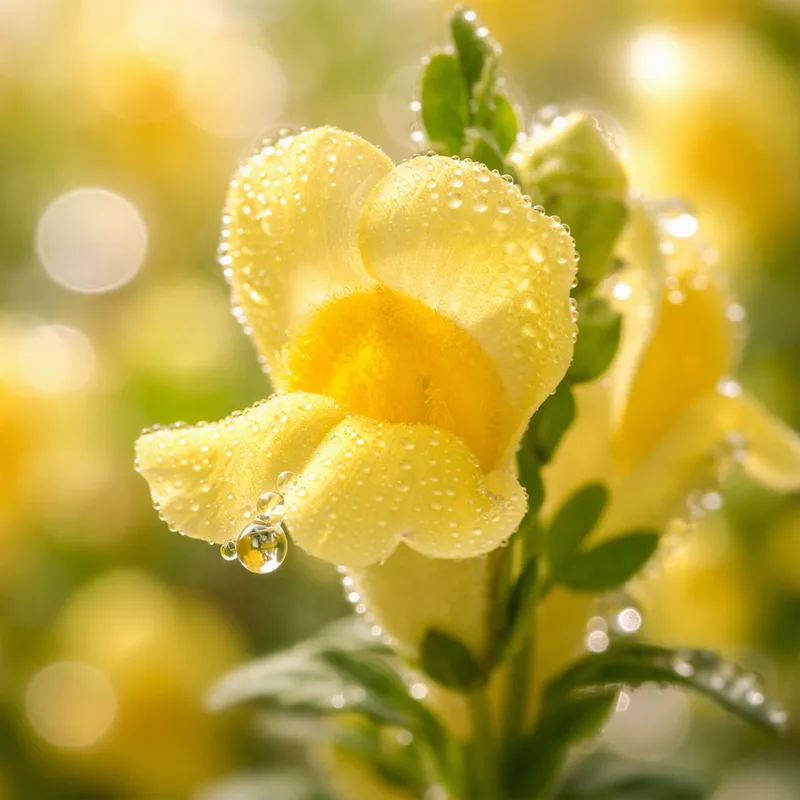
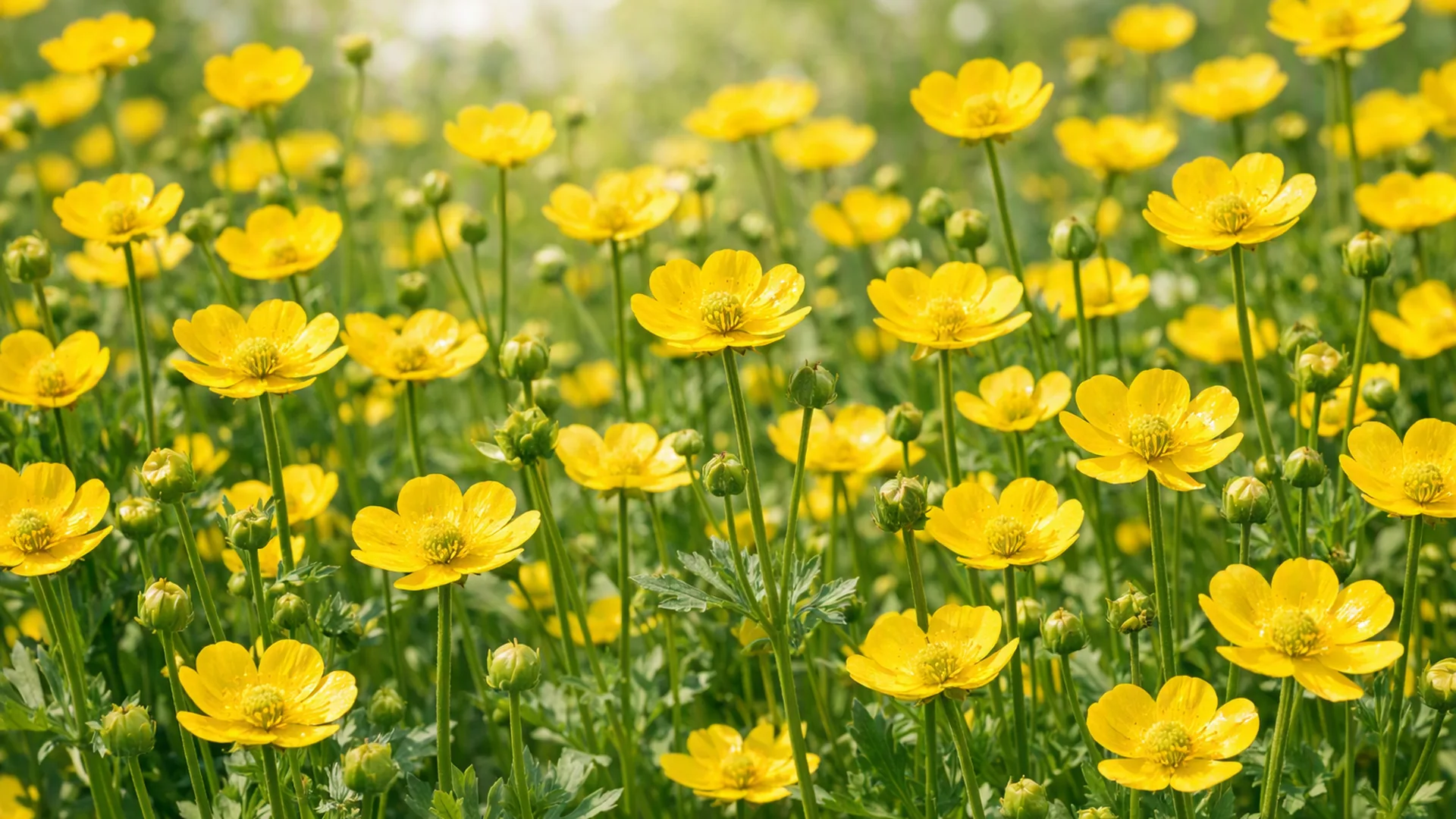
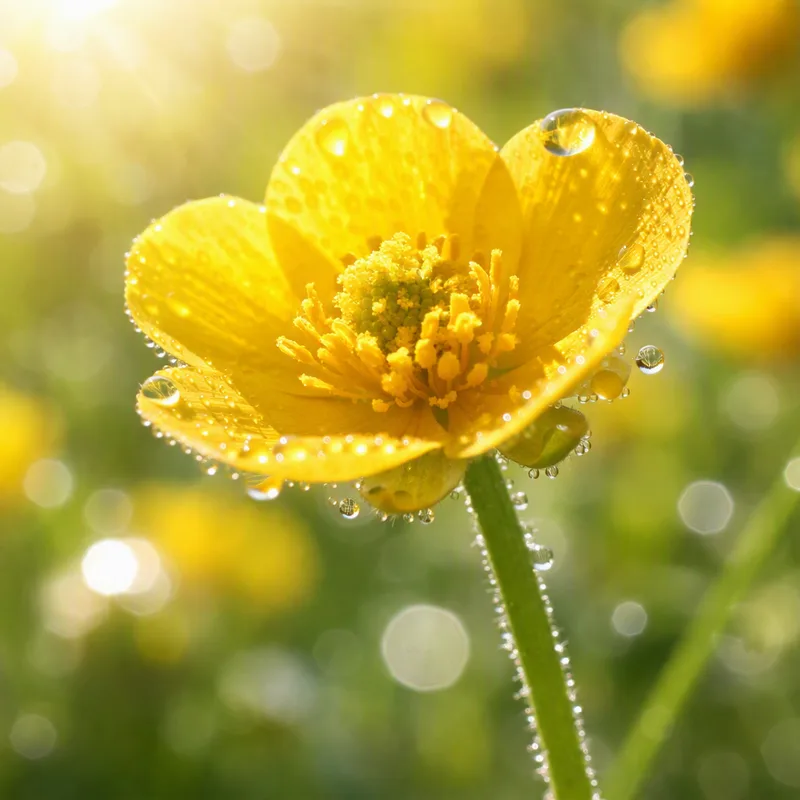
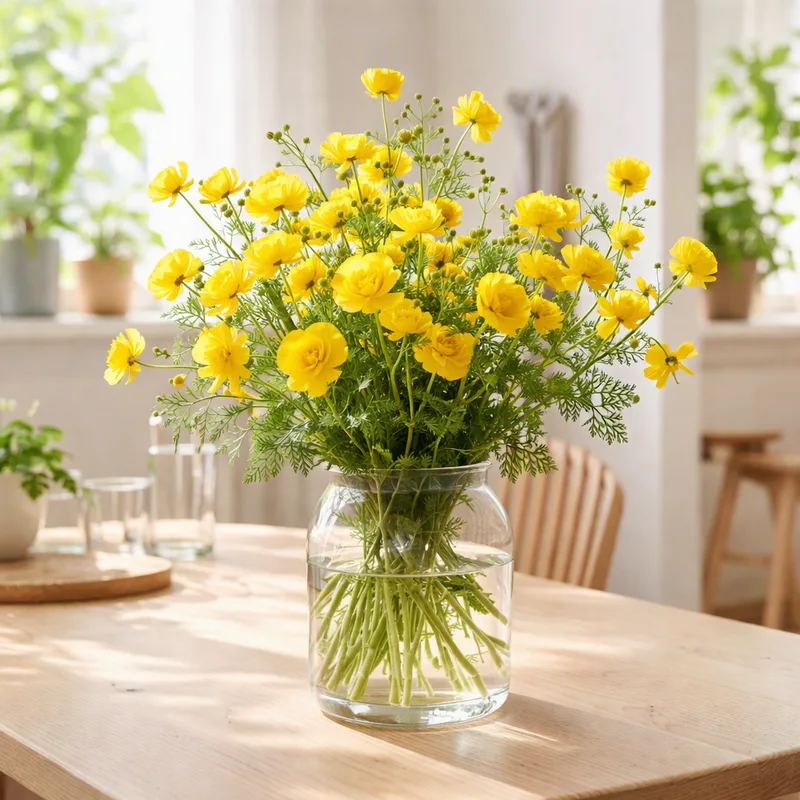
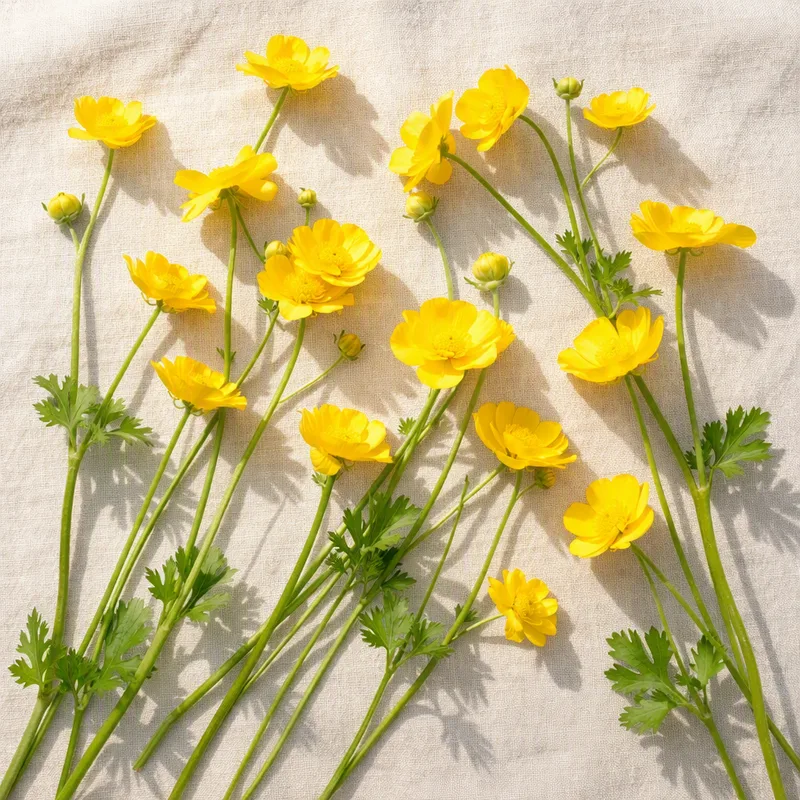
Ranunculus acris is a herbaceous perennial that grows 30 to 100cm tall, bearing glossy yellow flowers some 25mm wide, each with five overlapping petals. It is native across Eurasia and is one of the more common buttercups in Europe. The leaves are compound and finely cut, with hairy leaflets.
An old playground test has a child holding a flower to a friend's chin: a yellow glow supposedly proves a love of butter.
Buttercup or bouquet?
A bouquet sold as buttercup is usually the Persian buttercup, Ranunculus asiaticus, a layered garden flower. The wild meadow buttercup is a single-flowered plant. Close relatives include the creeping buttercup, Ranunculus repens, which the RHS describes as spreading rapidly and becoming a nuisance in gardens, and the lesser celadine, Ficaria verna.
In the countryside you will often see meadow buttercups in golden drifts from May to July, growing among grasses and other wild flowers. To tell them apart from creeping buttercup, look at the stems: meadow buttercup stands upright, while creeping buttercup sends out runners that root along the ground.
In the garden
Buttercups do well in damp, grassy places. In a wildflower meadow they add summer colour and food for insects. In a lawn or border they may be unwelcome, as seedlings and runners spread. Hand-pull small plants and mow late in the season to let seed ripen only where you want it.
What the sap does
Livestock find the plant's juice mildly poisonous, and it can blister; grazing animals therefore usually avoid it. The ASPCA lists buttercup (Ranunculus) as toxic for dogs, cats and horses, producing mouth irritation and stomach upset the usual signs. People with sensitive skin may react to the sap, so wash your hands after handling.