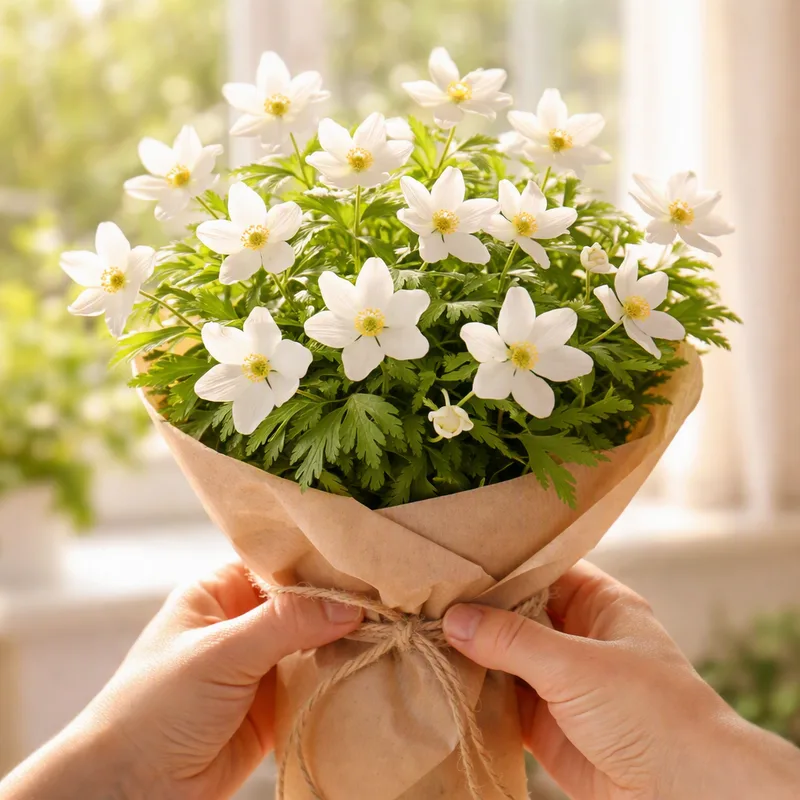
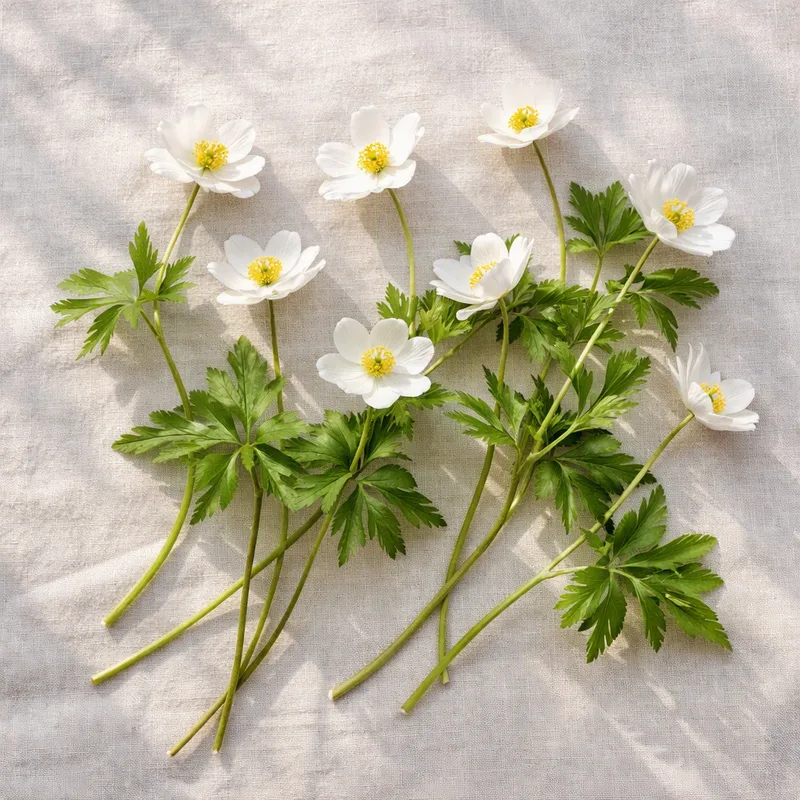
The native white anemone
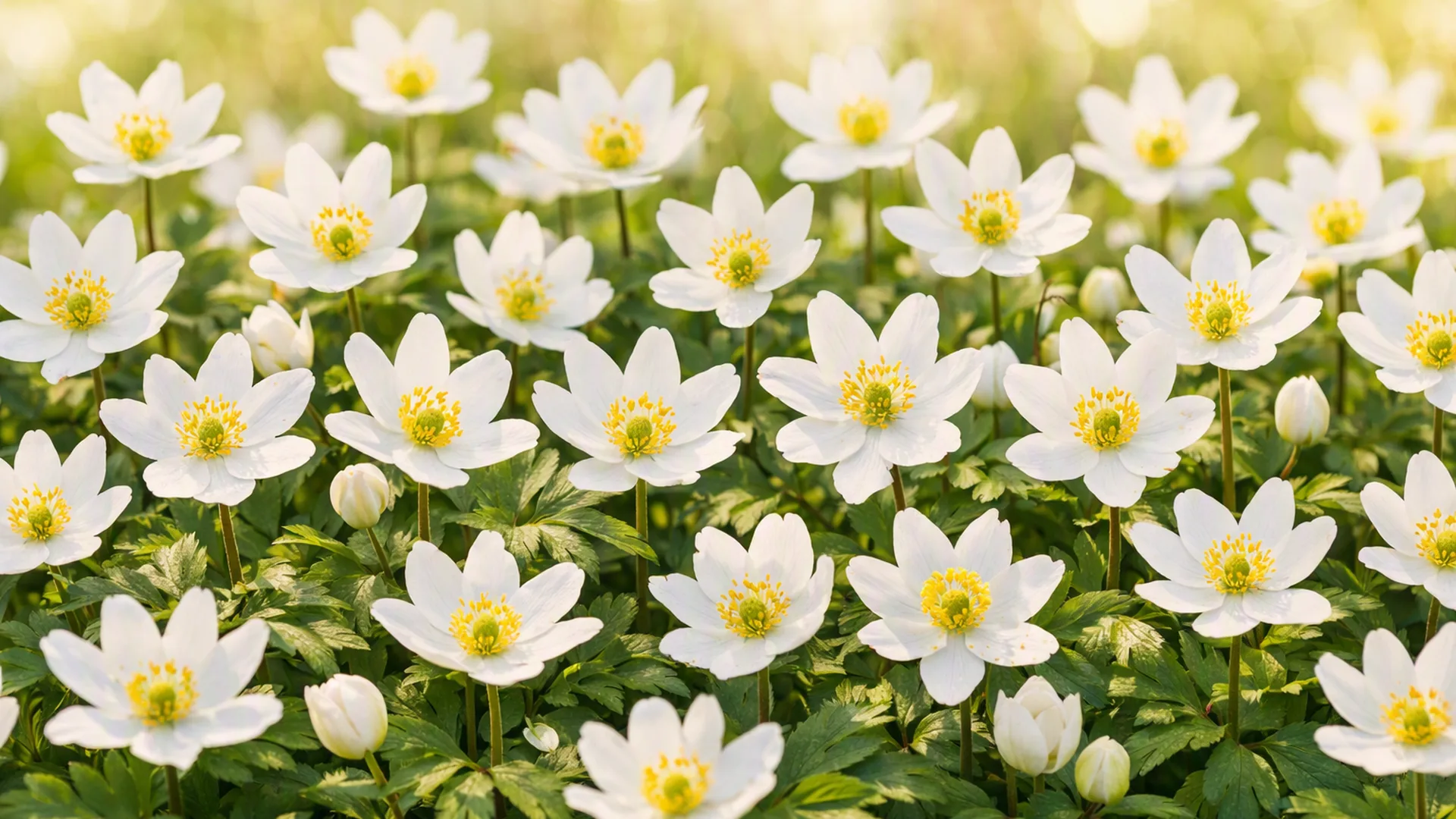
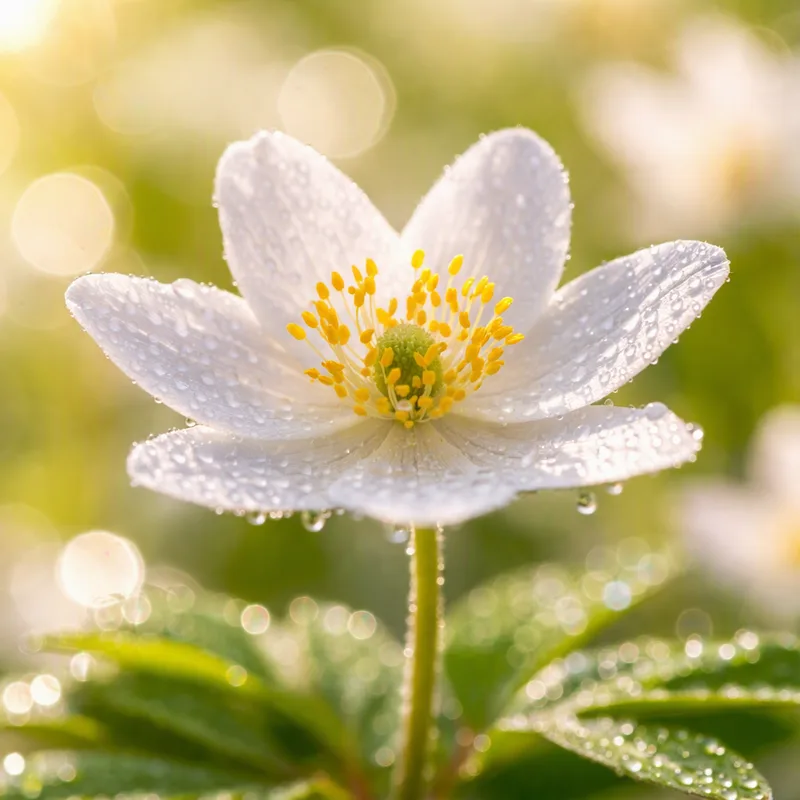
In the wild, wood anemone flowers are usually white, sometimes with a pink, lilac or blue tint, and often with darker undersides to the tepals. They open from March to May. The plant is native to Europe and common in British woods, hedgebanks and old meadows. It stays small, normally under 25 cm.
Two different white anemones
Searches for white anemone flower meaning often mix up two plants. One is the woodland wood anemone, a spring wildflower. The other is the Japanese anemone, whose white forms such as 'Honorine Jobert' flower from late summer into autumn in borders, on tall stems. Florists' anemones, with a dark centre, are a third group. Check the leaf and the season before you decide which you have.
Meaning and folklore
In the language of flowers, anemones traditionally stand for anticipation and fleeting beauty, and the Greek myth of Adonis is often attached to the genus. The name windflower reflects how the stems move. These are traditions, not fixed rules, and lists differ.
Growing wood anemone
- Light: partial shade under deciduous trees
- Soil: humus-rich and moist in spring
- Planting: rhizomes in autumn, a few centimetres deep
- Spread: slow, creeping underground
Garden forms with double white flowers include 'Vestal' and 'Alba Plena'.
Warnings
All parts irritate skin and stomach. Handle with gloves, and phone NHS 111 or your vet if anyone has eaten the plant.